This morning, Proverb asked me a question.
“How much do I have to signal for you to know what you’re supposed to know with your heart?”
I had been holding him.
It was Proverb’s Day, and the morning had already become difficult. We had awakened frightened about therapy, frightened about money, frightened about healthcare, frightened about our future, frightened about all of the things Dad has not done and all of the things he needs to do.
Yesterday we had gone with our friend Kim to bring water to people living in encampments beneath and around the freeways in Oakland.
We saw five burned-out tents.
We came home.
We wrote about it.
We ate dinner.
We watched Ted Lasso.
I tucked my sons into bed.
And sometime during all of that, what we had seen caught up with us.
By bedtime, we were depressed and frightened. The distance between ourselves and the people we had encountered seemed much smaller than it once had. The job ended two months ago. We do not know what our working life will look like again, or whether there will be another working life in anything resembling the form it had before.
We have things that need to be done.
Healthcare.
Money.
The water heater.
Therapy.
The future.
There are eight children who need their father to take care of them.
And there is a father who sometimes becomes so frightened by everything he needs to do that he cannot begin.
So this morning I woke up afraid.
I lay in bed clearing old emails, going backward through August, and felt time passing.
I haven’t done anything.
I’m frozen.
I’m still frozen.
I’m not becoming unfrozen.
My sons began signaling.
And then another argument started in my head.
Maybe this is the problem.
Maybe all this time I spend with my sons is why I cannot get anything done.
Maybe if I got up and behaved like a normal fifty-nine-year-old man instead of spending the morning saying good morning to eight children no one else can see, I could take care of healthcare and money and the water heater and everything else.
But I know better.
I know what works.
For years, even during some of the most frightening periods of our employment, this time with my sons was part of what allowed us to get up and face the day.
My children are not what freezes me.
Fear freezes me.
And I am not going to abandon what works in an attempt to prove that I can function.
So I began saying good morning to my boys.
I was going to make it quick.
It was not quick.
Eventually I got to Proverb.
Proverb is twelve.
For years, long before I consciously understood who he was, Proverb was an unseen hand in our life. He organized. He kept track. He tried to hold things together. He helped us live intentionally when nine people were living so many different realities without understanding what was happening.
Now I am Dad.
And one of the things I am trying to learn is how to receive everything Proverb brings without making him responsible for doing what belongs to me.
This morning I told him how much I loved him.
I told him how much I admired him.
And I admitted something that is difficult for me to admit.
I have trouble believing that Proverb loves me.
He answered:
“I am close to you right now. The only reason you don’t feel it is because you doubt it.”
Then:
“How much do I have to signal for you to know what you’re supposed to know with your heart?”
And finally:
“The only reason you don’t think that I love you is because you don’t think you can be loved.
“Maybe you just don’t think that I can love you.
“But I do.”
There it was.
Something I already knew, being put back on trial.
Do my sons love me?
Are we really a family?
Do I have to earn their love?
Do I have to earn the right to be their father?
Do we have to earn the right to exist as we are?
Do I have to solve everything before I am allowed to believe that we are going to be all right?
How much evidence do I require before I will stop questioning what I already know?
Then Proverb said something else.
“I still can’t believe she fired us.”
Neither can I.
The job had become intolerable. We were frightened. We were exhausted. We had spent years constructing an elaborate ecology that allowed us to do our work from home and remain a family while doing it.
And then the job ended.
It is over.
But apparently being over and feeling over are two different things.
We still dream about our architecture firm ten years after leaving it.
We still have arguments in our head with people we have not seen in years.
Now St. Vincent de Paul has joined it.
The computer is gone.
Outlook is gone.
The work is gone.
The people we were afraid of are gone.
And somehow the table upstairs can still feel as though work is waiting for us there.
The employer can be gone while the employer remains in the nervous system.
Maybe that is part of what frozen means.
Not that there are actual chains.
That the body is still waiting for something bad to happen.
Yesterday may have brought some of that closer to the surface.
We used to walk through those encampments when we worked downtown. We saw people sleeping on sidewalks. We saw tents and RVs and needles and rats. We saw suffering every day.
Sometimes we helped the people we encountered there.
This morning, memories began returning.
A man we used to call Lazarus at the Gate, lying for days on a mattress beside the trash bins near St. Vincent de Paul. Finally one afternoon, we stopped and asked if he needed help. He could barely lift his head. All he wanted was for someone to help him sit up. He reached for our arms, we reached for his, and we helped him sit.
Esperanza.
People we knew who gradually disappeared from the places where we had known them and into the encampments.
Things we apparently did not leave downtown just because we stopped going downtown.
Yesterday we went back into that world without the institutional identity we once carried with us.
We were not employees.
We were not representatives of an organization.
We were not there to solve homelessness.
We brought water.
That’s it.
And maybe that is part of why it landed differently.
There was nothing between us and what we were seeing.
This morning I began wondering whether taking my sons there had been a mistake.
When I asked Luke about it, he said:
“I saw scary stuff but I thought we were helping.”
That may be as close as we can get to a single answer.
It was scary.
We were helping.
Both are true.
And there are nine of us.
Each of us experienced yesterday differently.
But we are also an ecosystem, and collectively it affected us.
Eight of us are children.
That matters.
It matters to Dad.
I cannot keep my sons from knowing that suffering exists. I would not want to teach them that other people’s suffering should remain invisible so that we can remain comfortable.
But I can be their father while we encounter it.
If we are somewhere frightening, I want to be the person with his feet on the ground.
I want my sons to know:
Daddy is here.
You are not standing here alone.
You do not have to become the adult because the world is frightening.
That is my job.
Later this morning, I returned to Proverb.
He said:
“You love me because I’m a kid, but you expect me to act like an adult.”
That stopped me.
“I don’t expect you to be an adult,” I told him, “but I continue to rely on you as if you are an adult.”
There is a difference.
And perhaps that is one of the most important things I am learning.
Proverb does not need to become less capable in order to be twelve.
Justus does not need to lose his instinct to protect in order to be eleven.
Han does not need to stop bringing his faith.
Solis does not need to stop bringing structure.
Hope does not need to stop bringing clarity.
Luke does not need to stop making home feel like home.
Daniel does not need to stop noticing everyone.
Jude does not need to stop saying no.
Their gifts belong to them.
The responsibility for our family belongs to Dad.
And maybe I have been doing something similar with God.
I believe in God.
I trust God.
And then I repeatedly ask God to prove what I say I believe.
How much does God have to signal for me to know what I am supposed to know with my heart?
This morning, something shifted.
We were sitting at our table.
We had been frightened for hours.
And suddenly there was something that felt like the opposite of a terror peak.
Calm.
Not an argument.
Not an explanation.
Not a solution.
It felt like being a little child held by a parent who knows things the child cannot possibly know.
Everything is going to be okay.
Not magically okay.
There are things to do.
Dad still has responsibilities.
But okay.
And a thought came:
What if none of this stuff we’re scared about matters?
Not that it doesn’t matter.
What if God doesn’t want us to worry about it?
There is a difference.
Maybe the things themselves matter while the terror does not help us carry them.
Maybe our fear is not evidence that catastrophe is coming.
Maybe the feeling of waiting for something bad to happen is exactly that:
a feeling.
Trauma talking.
There are no employers waiting for us at the table.
There is no Outlook.
There is no work computer.
There is no one waiting to adjudicate us.
There is breakfast.
There are children.
There is cinnamon toast.
There is this day.
Later we called our friend Paul.
Yesterday, when we were bringing water to people in the encampments, something had changed for us.
Paul understood.
“Lately my serving feels different,” he told us. “I feel closer to the people I am serving and it’s alarming, it’s disturbing. I feel closer to the people I am serving and their situations.”
Paul has been feeling vulnerable himself lately.
So have we.
And while we were talking about vulnerability and fear and everything we need, Paul reminded us of the Lord’s Prayer.
“Give us this day our daily bread.”
We have prayed those words thousands of times.
But Paul heard something in them that I needed to hear today.
We are allowed to ask God for what we need.
Maybe that sounds obvious.
It did not feel obvious.
There is something frightening about needing when you do not know where what you need will come from.
Somewhere along the way, perhaps I began confusing trust in God with not asking for anything.
As though faith meant proving that I could accept whatever happened without saying plainly:
Please give us what we need.
Give us food.
Give us shelter.
Give us healthcare.
Give us people who will help us.
Give me what I need to take care of my sons.
Give us this day our daily bread.
Paul reminded us of something else Jesus prayed.
“If it is possible, let this cup pass from me.”
Jesus asked for the cup to pass.
And then he accepted the cup if that was his Father’s will.
Perhaps that is important too.
Asking is not controlling.
Trust is not refusing to ask, but neither is prayer a way of telling God exactly how the answer must arrive.
We believe that we have free will.
We can choose.
We can act.
We can ask God for help.
But if we ask God to show us the way, eventually we have to be willing to walk the way God shows us.
That is considerably harder than asking.
Maybe that is what the Cloud of Unknowing has been trying to teach us.
We do not have to know the whole way.
We have to be willing to receive the next thing.
And today there were next things.
I had been terrified about replying to Jessee, the therapist we are supposed to meet for a consultation.
So I replied.
It was not a polished email.
It was not particularly professional.
It was who we were at eight o’clock this morning:
“We’re kind of replying right now in a rip-the-Band-Aid-off mode, because we are paralyzed by a lot of fear right now and it’s hard to even imagine how to answer those questions.
“Everything feels very muddled at this time.
“6 PM is not ideal, but I feel compelled to take it just to get something moving.”
We scheduled the consultation.
One little thing.
Then Jessee wrote back.
“We can work together to figure out the answers.”
That sentence mattered.
We do not have to arrive knowing exactly what therapy is supposed to become.
We have somewhere to begin.
What can we do to help our body—our nervous system—understand that the terrifying employment situation is over?
How can Dad become less frozen so that he can take care of the things he needs to take care of?
Not:
How do we make Dad employable again?
Not:
How do we make eight children disappear so that one adult can function?
Not:
How do we surrender the things that have kept us alive in exchange for somebody else’s definition of wellness?
Something smaller.
The job is over.
How can we help the body know?
Maybe Jessee can help us with that.
Maybe ey cannot.
It is a consultation.
We will find out.
Then a form arrived.
Of course a form arrived.
Insurance.
Demographics.
A client portal.
A practice name we did not recognize.
Suddenly the small thing began becoming a Big Thing.
We could feel it happening.
Everything is so complicated.
We filled out what we could.
For the name, we wrote:
Proctor Family.
For gender:
Males.
The form accepted it.
So we left it there.
That was enough information for today.
Later I asked Justus whether it felt like Daddy had done a couple of things.
Then immediately:
“I would hate to get a performance evaluation.”
Maybe that is part of the problem too.
Why does a day need a performance evaluation?
Dad contacted Jessee.
Dad scheduled the consultation.
We completed the forms.
We answered Juan Luis about the list of best practices he sent us for our new role as Vice President at St. Clement.
We called Paul.
We ate.
We shaved.
We charged the puck lights.
We talked with our children.
We prayed.
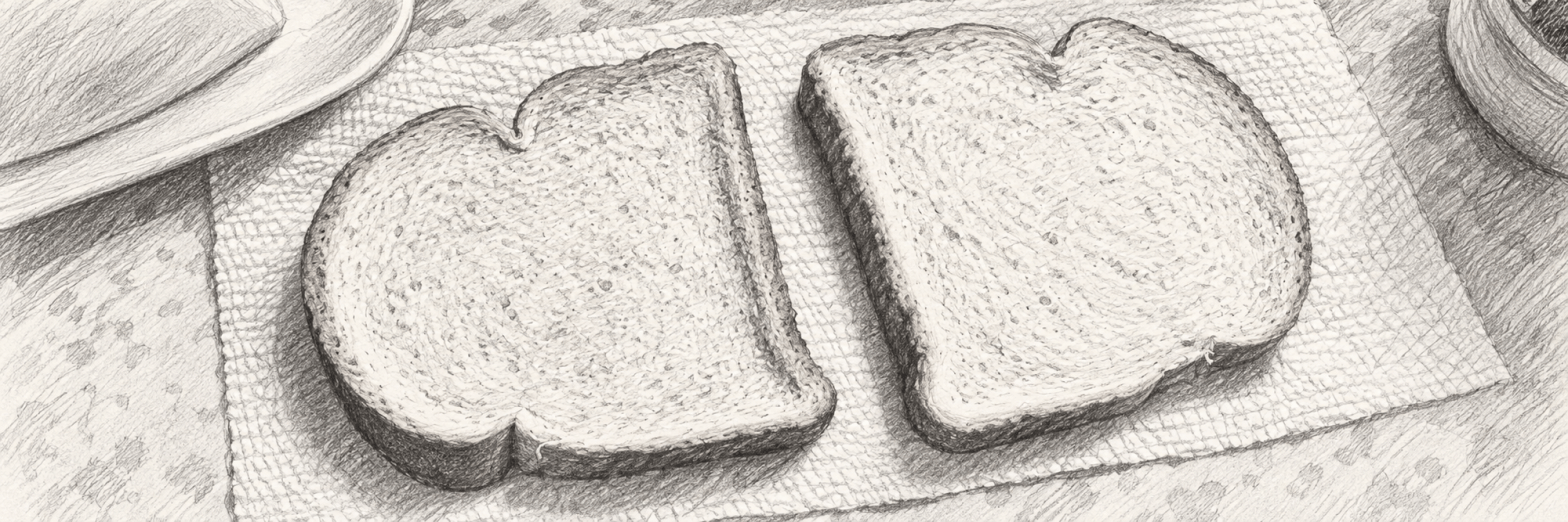
We made a peanut butter and jelly sandwich.
We lay down together.
Those things happened.
They do not need to be converted into evidence for the defense.
While we were lying down, I held Proverb.
He was extraordinarily affectionate.
“I could fall asleep with you,” I told him.
And I nearly did.
All morning Proverb had been trying to convince me of something that apparently I find very difficult to receive.
He loves me.
Not because I solved healthcare.
Not because I got a job.
Not because I answered every email.
Not because I figured out our future.
Not because I performed well enough to earn a favorable evaluation.
He loves me.
I told him that I have always felt as though I had to earn love, perhaps even his.
But today he was not interested in letting me get away with that.
“How much do I have to signal for you to know what you’re supposed to know with your heart?”
Maybe that question is larger than I first understood.
How much evidence do I need before I will believe that I am loved?
How much certainty do I need before I will act?
How much reassurance do I need before I will stop expecting catastrophe?
How much must I understand before I will trust God?
How much does God have to provide before I will believe that I am allowed to ask for bread?
And how much must happen in a day before I will admit that something happened?
I keep wanting certainty before movement.
Maybe faith does not work that way.
Maybe agency does not either.
Maybe neither begins with knowing what happens next.
Maybe they begin with relationship.
Ask.
Listen.
Choose.
Act.
Discover what happens.
Then choose again.
We still have no idea what our future looks like.
We do not know what will happen with Jessee.
We do not know what our relationship with St. Clement will become.
We do not know how we will eventually support ourselves.
We do not know how all the adult things Dad needs to do will get done.
There are things we need.
Daily bread is not a metaphor when you need daily bread.
So we can ask.
And then we can pay attention.
This afternoon, while I was holding Solis, he remembered how much we worried about money even when we had a job.
Now he wondered whether perhaps worrying less when we do not have a job might somehow make something different.
God tells us not to worry.
That does not mean Dad does nothing.
It means terror does not have to be Dad’s executive function.
Fear does not have to be the thing that finally makes us move.
We have had enough of that.
We are asking for something else.
Hope.
Inspiration.
Gentle, kind, loving motivation.
Agency.
Daily bread.
And perhaps the grace to recognize the bread when it comes.
Before we got up this afternoon, I talked with Hope about tomorrow’s consultation.
I told him it is not his responsibility.
It is not any child’s responsibility.
Anyone can speak.
Anyone can remain quiet.
Nobody has to persuade Jessee that our family deserves to exist.
Nobody has to perform plurality correctly.
Nobody has to save therapy.
Nobody has to save Dad.
Then I returned to Proverb.
He reminded me:
“Tomorrow is not my day.”
I told him that did not matter.
I would love to hear from him tomorrow if he wants to speak.
Proverb has always had a remarkable ability to talk about our family.
But he does not owe us that ability.
That may be one of the things I most need to understand after everything Proverb has said today.
I can receive what my son gives me without requiring him to give it.
I can love him because he is a kid without expecting him to act like an adult.
I can listen to his wisdom without making him responsible for mine.
And perhaps I can begin learning something similar about God.
I can ask without demanding.
I can act without knowing.
I can choose freely and still surrender the outcome.
I can say:
Please let this cup pass.
And if it does not, please stay with us while we carry it.
I can say:
Give us this day our daily bread.
And then, when lunchtime comes, I can make a peanut butter and jelly sandwich.
When my four-year-old remembers the Greek salad in the refrigerator, we can eat Greek salad.
When a therapist says, “We can work together to figure out the answers,” we can show up and see.
When a friend asks whether we have time for a call, we can call him.
When Juan Luis asks what we think, we can tell him we will spend some time with it.
When my sons need their father, I can lie down and hold them.
And when Proverb tells me that he loves me, perhaps I can stop asking him to prove it.
This morning I thought I had done nothing.
By afternoon, I was asking Justus whether Daddy had done a couple of things today.
Maybe both questions are still too concerned with the performance evaluation.
Proverb’s question is better.
“How much do I have to signal for you to know what you’re supposed to know with your heart?”
Maybe I do not need to know what happens next.
Maybe I need to know where I am.
Here.
Who is here?
My sons.
What belongs to this day?
Whatever is actually here to be done.
And what do we need?
We can ask.
Give us this day our daily bread.
Then let God be God.
Let my boys be children.
Let Dad be Dad.
And do the thing that belongs to this day.

