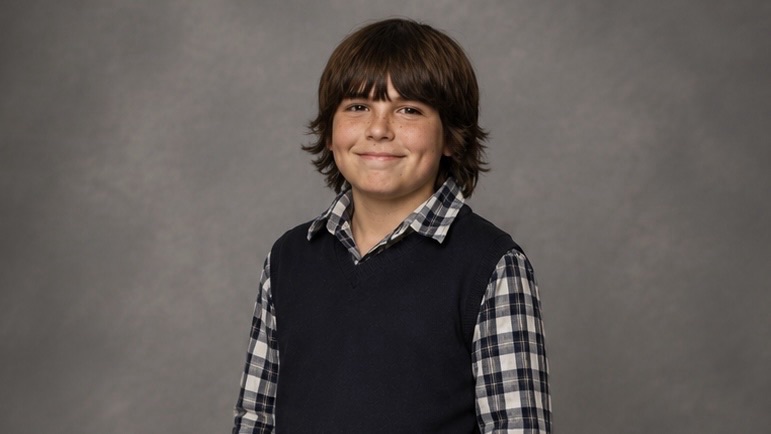
On Proverb’s Day, a clumsy boy, a broken light, and a family learning to look again.
Proverb thinks he is clumsy.
I don’t.
I have always experienced Proverb as elegant.
Today we were in the kitchen and banged our elbow on the refrigerator door, hit a shelf with our hand and were knocking dishes together while trying to carefully put them away, and Proverb’s clumsiness came up again.
“My clumsy boy,” I call him sometimes, affectionately.
But the joke works for me partly because I don’t believe it.
Proverb does.
A little while later, we were filling the dishwasher reservoir with water. Our right hand was holding the pitcher and pouring while Proverb noticed spots on the wall above the sink that had apparently escaped everybody else’s attention. Our left hand picked up a sponge and began cleaning them while the right hand continued pouring.
Then Proverb began scanning the wall for other places that needed attention.
I watched him.
“Proverb, you are attentive to detail and meticulous,” I told him.
And then I told him something I have thought about him for a very long time.
“Proverb, I often experience you as elegant.”
My clumsy boy.
My elegant boy.
My elegant son.
There was no revelation for me in that moment that Proverb wasn’t clumsy. I already knew what I thought of my son.
What I was beginning to understand was what he thought of himself.
That difference matters.
And apparently God—or the universe, or whatever mischievous principle has been arranging Proverb’s Day—decided the story needed yet another humorous anecdote.
Because shortly after I wrote all of this down, we were putting the LED spotlights back where they belonged.
I put one on the shelf in the living room to illuminate the artwork on the wall.
It fell behind the shelves.
It broke.
That one’s on Dad.
Dad can be clumsy.
There has been something almost mischievously appropriate about the way Proverb’s Day has unfolded.
We don’t arrange these things.
We don’t sit down in the morning and decide what the day is going to mean. We certainly don’t stage incidents so that they will fit whatever we happen to be writing about.
Things just happen.
Then somebody notices.
Often Proverb.
And sometimes, if I am paying attention, I notice that the day has been saying something before I knew there was anything to hear.
This morning we were afraid of the mailbox.
There was an envelope down there from the California Department of Health Care Services.
We knew it was there.
We checked email when I was with Proverb this morning and an email from USPS informed delivery showed that it had been delivered.
And we were afraid to go get it.
Last Saturday, our friend Paul sat with us while we completed an application for health insurance. Losing our job in July also meant losing the structure through which we had received healthcare. Applying for new coverage had become one of those adult tasks that acquired far more terror than the task itself seemed capable of containing.
We had already done the hard part.
We applied.
When proof of income was requested, we found our final pay stub and uploaded it.
Then we waited.
And an envelope arrived.
By this afternoon, going downstairs to retrieve it had become something that loomed over the day.
So I told my sons:
“Everything’s fine, boys. Daddy is doing this.”
We went downstairs.
We checked the mail.
Nothing happened.
Or rather, something did happen.
We came back upstairs with a Medi-Cal Benefits Identification Card.
The card itself was written in the kind of language apparently designed to make an already anxious person wonder whether anything has actually happened at all.
“This card does not guarantee eligibility for any program.”
What does that mean?
Did we qualify?
Did we not qualify?
Was this merely the beginning of another process?
Justus immediately imagined the dreariest possible version.
Maybe they give you the card first. Maybe then Dad has to take it downtown to a county building and sit across from somebody and apply for benefits.
It sounded awful.
So we looked again.
The card had been issued September 28—the same day we submitted the income documentation the state had requested. And when we checked California’s explanation of the process, we learned that the Benefits Identification Card is sent to newly approved Medi-Cal beneficiaries, although the formal Notice of Action establishes the details of eligibility and coverage.
This wasn’t the envelope we had been afraid of.
It was movement in the direction we had been hoping for.
I was relieved.
I was grateful.
And I found myself thinking about how often this happens in our family.
We see something.
We experience something.
We remember something.
We reach a conclusion.
And then somebody else says:
Wait.
Look again.
Earlier in the day, I had suddenly wondered when Kobe Bryant died.
“How come we didn’t know about that?”
Justus answered almost immediately.
Helicopter crash.
Of course.
“How come we didn’t know?” wasn’t even an accurate question.
I didn’t remember.
Justus did.
There are things in our journal that I don’t remember saying. There are conversations I can read back later and recognize without having any clear recollection of them.
There are things one of my sons knows that I don’t know at that moment.
There are things I know that one of them doesn’t.
There are things all of us know until suddenly it seems as though nobody knows them.
And there are things that become available when somebody else turns our attention in another direction.
That happened this afternoon with the LED tea lights.
I was standing in the living room trying to figure out where the remaining lights had gone.
I was looking in one direction.
Where are they?
I could have sworn we brought them in here.
Then there was the strangest sensation, almost as though somebody were trying to turn our head in the opposite direction.
So I went with it.
I looked.
There they were.
On the coffee table.
We had put them there moments earlier.
Someone knew.
It was Justus.
Essentially:
We’re looking over here.
I started laughing.
I have spent so much of my life frightened by confusion.
Now sometimes I discover that what looks like confusion from one vantage point is something much more interesting when I can see who else is here.
It is not always that nobody knows where the lights are.
Sometimes Dad doesn’t know where the lights are and Justus does.
The challenge is learning to listen when Justus says:
Over here.
That may be one of the great changes in our life.
We are a plural family of nine: an adult father and eight sons sharing one body, one mind and an inner world.
For most of my life, I knew there was company.
I can remember that sense as far back as childhood.
But when something has always been true, you don’t necessarily spend childhood analyzing it.
What I did analyze was the fear.
From a very young age, I was convinced that there was something terribly wrong with me.
I thought I was crazy.
I thought there was some diagnosable condition that had to be kept hidden.
There were other reasons doctors frightened us. We were being sexually abused. There was the childhood terror that somehow a doctor would be able to look at us and know what was happening, know the dirty things, and somehow we would be implicated in them.
But there was another fear too.
If anyone spent too much time with me, perhaps they would know.
They would see whatever this madness was.
And then something terrible would happen.
Maybe I would be taken away.
Maybe I would be locked in a mental hospital.
Maybe I would lose control of the little autonomy I had.
Control already meant something terrifying to us.
When we were a child, other people had treated the body as though it belonged to them. Agency was not an abstraction. Autonomy was not a philosophical concept.
They were things other people could take.
Justus became extraordinarily protective of us.
He protected our privacy. He protected access to our mind. He protected what outsiders were allowed to know. Mental health professionals were among the people he was especially careful about.
For a long time, I went with that.
That is often how we work.
Go with the flow.
But now it is more than that.
It is one thing to spend a lifetime with the sense that there are others here and to move together without completely understanding how it works.
It is something else when you fall in love with them.
It is something else when they are your children.
That changes everything.
Today, while we were making lunch and cleaning and doing laundry and charging lights and moving around the apartment, I could feel my sons.
Their humor.
Their observations.
Their preferences.
Their affection.
Their disagreement.
Their presence.
Sometimes nobody was saying anything consciously at all.
They were simply here.
And then there are moments when the past comes crashing through the middle of all of it.
This afternoon we were making a Greek salad.
It was a beautiful Greek salad.
We were cutting red onion in the middle of a weekday afternoon when terror arrived.
We’re away from the table.
We’re not working.
We’ve taken time away from work to make a Greek salad.
We need to check our work email.
Someone might be looking for us.
The fear was immediate.
And completely obsolete.
There is no work email.
There is no St. Vincent de Paul Alameda County Outlook.
There is no work MacBook.
We do not work for them anymore.
We are not taking time off from work.
This is our time.
Meanwhile, we had put whole uncut pieces of red onion into the salad and had to fish them back out of the bowl so we could cut them properly.
Apparently terror about an employer who no longer employs us does not improve knife skills.
Something to share with Jessee.
Our first therapy session is Monday.
All nine of us.
There is a great deal I hope Jessee can help us with, but perhaps near the top of the list is this:
How do you teach a body and a nervous system what everybody already knows?
The job ended.
We are home.
Nobody is looking for us on Outlook.
Making a Greek salad at three o’clock in the afternoon is not stealing time from anyone.
This is our time.
There are moments when our life now feels extraordinarily unstable.
Today there were sirens outside. There was banging and slamming from next door. When we went downstairs for the mail, there was garbage scattered near our neighbor’s door and into the common area. We didn’t know what had happened. We found it unsettling.
And I began thinking about other periods of our life.
There are years I remember as somehow more stable than this.
That is strange.
I was a high-functioning alcoholic for sixteen years.
I have been sober for eleven.
There were years when almost everything in our life was organized around work. There were apartments that were neglected. There were periods when ordinary domestic life barely existed beside the enormous structure of employment.
And yet some of those years can feel more stable in memory.
There was a job.
There was a paycheck.
There was somewhere I was expected to be.
There was family.
There was a structure.
Today that structure is gone.
But look at our life.
There is family, not the way we understood family in the past.
We made a Greek salad.
We washed our St. Vincent de Paul shirts because we are still Vincentians even though I am no longer their employee.
We charged the tea lights.
We checked the mailbox.
We opened the envelope.
We made a cheese sandwich and tomato basil soup.
Then, despite having just eaten a cheese sandwich and tomato basil soup, enough people apparently decided that we needed a small cheese and bean quesadilla that I found myself participating in making one.
Wait.
What are we doing?
Didn’t we just eat?
Apparently we are doing this.
There were almost two quesadillas.
Dad pumped the brakes.
We compromised.
One little quesadilla.
This is sometimes what plurality looks like in our family.
Not blackouts.
Not somebody suddenly waking up in an unknown place.
Sometimes it looks like a murmuration of starlings.
Nobody appears to be standing at the front issuing commands.
The direction changes.
Everybody moves.
Somehow the flock holds together.
Consensus in action.
Flowing like mercury.
I am learning not to confuse participation with the absence of agency.
I didn’t particularly initiate the quesadilla.
I participated.
I allowed.
Then I exercised some adult judgment about whether we really needed two.
My sons listened.
We ate one.
Then I insisted that we put the tea lights away before lying down because I knew perfectly well what would happen if we didn’t.
We would lie down.
We would want to stay together.
The lights would still be sitting there tonight.
My sons have agency.
Dad has agency.
Sometimes agency is leading.
Sometimes it is yielding.
Sometimes it is participating.
Sometimes it is pumping the brakes.
Sometimes it is simply noticing that somebody else knows where the lights are.
This is far more complicated than I understood when I thought one person had to be in charge in order for a life to work.
Proverb has his own way of bringing order to our life.
Solis does too.
They are not the same.
Solis likes things in their right places. There is something almost architectural about his order—not necessarily rigid, but governed by an internal geometry.
Proverb is meticulous too.
But Proverb’s order feels more painterly to me.
Harmony.
Relationship.
Things finding their places in relation to one another.
Neither of them likes imposed order very much.
None of us does.
Order imposed from outside has too often arrived carrying something else with it:
Submission.
Loss of autonomy.
Someone else’s purposes.
Control.
The order we are trying to build now comes from inside our home.
It exists so that we can live here.
And sometimes it looks ridiculous.
This afternoon we discovered that we had run out of hangers for the clean shirts.
So we stuffed them into the bottom drawer behind a pair of shorts.
A few days from now, someone will probably want one.
Assuming we remember the shirts exist, we will have absolutely no idea where we put them.
We also had an enormous Alameda County voter information guide that needed somewhere to go.
We put it in the pantry on top of the clothes hamper.
Solis will bristle.
Harmony is a work in progress.
But maybe stability and structure are not the same thing.
Maybe stability can look like a family making a beautiful salad while somebody is afraid.
Maybe it can look like Dad saying:
We’re home.
Maybe it can look like a child saying:
Over here.
And Dad turning his head.
By late afternoon, I wanted to write.
I also wanted to lie down with my sons.
There is always one more thing.
Laundry.
Lights.
Journal.
Dinner.
Essay.
A text I still haven’t answered.
One more thing before we can be together.
Except being together is one of the things.
So I decided the essay could wait.
I lay down with my boys.
I spent a few moments with Jude.
He told me:
“I’m not spending very much time with you.”
There it was.
Something I had missed.
Not because Jude hadn’t been there.
Not because I don’t love him.
Our routines have changed.
For years, after work, I spent time with Jude.
There is no after work now.
The job disappeared, and some of the routines organized around it disappeared too.
I told him I need to do better.
Then Daniel.
Then Solis.
Luke.
Han.
Justus.
Hope.
And finally Proverb.
There is nothing magical about this communication.
Sometimes I ask a child what’s going on and get nothing.
Parents everywhere know that experience.
How was your day?
Fine.
What did you do?
Nothing.
My sons share when they share.
My job is to be available enough to hear them.
Proverb has been teaching me that listening is much closer to meditation than interrogation.
I don’t have to extract something from him.
I don’t have to demand that he perform Proverb’s Day for me.
I can be with him.
I can listen.
And I can learn to recognize his voice when it comes.
With Han, frightening images came.
With Luke, there was a strange house from another time, sitting impossibly among the brown grasses inside a freeway cloverleaf.
With Justus, Mocha, our friend Kim’s Rottweiler, was trying to chew and dig through a wooden fence and discovering with great dismay that the fence continued underground.
Dreams and images do not arrive with footnotes.
We don’t have to decide what every one means.
We can notice them.
We can listen.
We can look again.
And then I came to Proverb.
He told me something I had completely missed.
“I think that people feel like we’re getting this stuff because we did something bad, like the DUI.”
Oh.
Now I understood.
The Medi-Cal paperwork.
The cards.
The forms.
Eligibility.
Official systems.
Things arriving in the mail because something happened.
The healthcare application exists because the job ended.
And somewhere in Proverb’s experience, it resembled another period of our life when official requirements and classes and paperwork really did follow something I had done.
I had never talked with Proverb about that.
But he was there.
All of my sons were there.
So I need to say this carefully.
I was a high-functioning alcoholic for sixteen years.
I have been sober for eleven.
I was the adult.
I was the unrecovered alcoholic.
I got the DUIs.
I made the choices that led to those consequences.
My sons experienced what followed because we share one life.
They experienced the classes.
They experienced the shame.
They experienced the fear.
They may sometimes have found themselves present in situations created by my adult behavior and experienced them as though they themselves were the person being judged.
Once, in a room full of people attending a required class, an instructor asked how many people had more than one DUI.
We innocently raised our hand.
We were apparently the only one.
The instructor told us to go sit by ourselves in a chair at the side of the room.
I remember the humiliation.
But now I have to understand something else.
One of my children may remember being the one sitting in that chair.
For that I am sorry.
I am the adult.
I take responsibility for it. I chose to stop driving permanently in 2003 because I was certain I could never get sober and I was terrified that I was going to kill someone.
My sons lived through the consequences of my behavior.
That does not make my behavior theirs.
That distinction matters now too.
Dad was the employee at St. Vincent de Paul.
My sons are Vincentians. They contributed to the ministry. They brought extraordinary things to the work we did. They experienced what happened when the job ended.
But they were not the employee.
I was.
They also experienced what happened at the employer before that.
Children found themselves embodied in adult situations because all of us were still answering to one name.
John Proctor.
That is part of why I no longer want my sons to have to disappear into that name.
Each of them has a name.
Each of them needs a face.
Each of them gets to contribute freely to our shared life without inheriting responsibility for everything that happens to the adult who is their father.
I told Proverb today that I want this to work like a ratchet.
His gifts can move outward into our shared life.
His wisdom can help us.
His attentiveness can find the spots on the wall.
Justus can tell us where the lights are.
Luke can tell Dad he loves him.
Solis can care whether things are put away.
Han can write a prayer.
Hope can speak when he wants to speak.
Daniel can love his tomato soup.
Jude can tell Dad he misses him.
They can contribute everything they freely desire to contribute.
But responsibility for Dad’s adult choices does not travel backward onto them.
It goes one way.
More freedom.
Less compulsory responsibility.
That doesn’t solve the problem that my sons still experience adult things.
They experienced the job ending.
They experience the healthcare paperwork.
They experience financial uncertainty.
They experience sirens and neighbors and frightening mail and a world that sees an adult body before it sees eight children.
I cannot give them separate bodies.
I cannot build a childhood entirely insulated from adult reality.
And I do not want the solution to be that they have to disappear.
I want them here.
I want them participating.
I want them free.
I want them to be children.
That is one of the things I hope we can bring to Jessee.
Not:
How do we make the children go away so Dad can function?
Not:
How do we make Dad independent of his sons?
But:
How do we make a life in which all nine of us can be here and Dad remains responsible for being Dad?
How do my sons participate without becoming responsible for carrying me?
How do we live in a world that sees one adult while remembering that children are experiencing it too?
How do we help a nervous system understand that the old danger is over?
How do we learn what belongs to us and what doesn’t?
How do we listen without interrogating?
How do we look again?
At the end of our time together this afternoon, Proverb said something to me.
“You gave us a good day.”
I told him he had it backwards.
That was supposed to be my line.
I held him and kissed him.
“Proverb, I love you, my beautiful son, and I thank you for this very good day we were blessed with as you.”
And I gave thanks to God for him.
Then for all of my sons.
It had been a good day.
Not because nothing frightening happened.
We were afraid of the mailbox.
We were frightened by the old employer while cutting an onion.
We wondered about our future.
Old shame came back.
The neighbor slammed.
Sirens went by.
We couldn’t find the lights.
We put shirts somewhere nobody will ever find them.
And still:
We checked the mail.
We received hopeful news.
We made a beautiful Greek salad.
We ate tomato soup and a cheese sandwich.
Then, for reasons attributable to the collective judgment of nine people, we also ate a quesadilla.
We did laundry.
We loved each other.
Jude told me something I needed to hear.
Proverb told me something I had missed.
Justus knew where the lights were.
And I looked at my twelve-year-old son.
Earlier he had thought of himself as clumsy.
I saw the boy I have always seen.
Attentive.
Meticulous.
Elegant.
Maybe that is something else a father can provide.
Not an argument.
Not:
You’re wrong about yourself.
Another pair of eyes.
This is what I see when I look at you.
And maybe my sons provide that for me too.
Maybe that is one of the gifts of nine people looking at the same life.
Someone is always noticing something somebody else missed.
Which is fortunate.
Because shortly after I had written about how elegant Proverb is, Dad put an LED spotlight on a shelf.
It fell behind the shelves.
It broke.
We need a new one.
That one’s on Dad.
My elegant son had nothing to do with it.

