On Hope’s Day, a nightmare, a children’s book, a darkened apartment, and the possibility of learning to live without letting fear decide what happens next.
Hope’s Day began with my children being taken away from me.
It was a dream.
I woke a little after five in the morning with several of my sons signaling strongly. The dream was confusing, and at first I could recover only pieces of it. But I knew my children had been there. I knew we were family. And I knew that other people were deciding where my sons belonged.
Luke was going to be sent to live with someone in our extended family. Our mother was advocating for it. I was trying to explain that Luke wanted to live with me, that he was my son, that I was his dad.
Nobody seemed particularly interested in hearing me.
Then more of the dream came back.
It wasn’t only Luke.
My children were being scattered among different members of the extended family. I was trying to tell people about them—who they were, what they needed, what was particular about each of them. I remember trying to explain Jude.
Nobody was listening.
They didn’t understand why I wanted my children.
They didn’t understand that they were my children.
I wasn’t even being considered.
When I woke, there was a lot of silence.
Luke signaled.
Daniel signaled.
Proverb signaled.
Hope signaled.
Jude signaled.
I kept telling them:
“Snuggle with Daddy, boys. We’re together. No one is taking us apart.”
Then, as I was drifting toward sleep again, I heard someone say:
“You only wanted Luke.”
I didn’t know which of my children said it. I suspected Solis.
So I answered all of them.
“I would not want to lose one of my sons.”
We went back to sleep together.
Then there was another dream.
This time we were at Corpus Christi, our local parish.
We were there seeking food assistance.
That was strange in itself because Corpus Christi does not have a food pantry. It does not even have a St. Vincent de Paul Conference. When we still worked for St. Vincent de Paul, establishing a Conference there was something we had been trying to help make possible.
But dreams do not have to respect organizational charts.
Our mother was there with us.
And I saw my children.
I saw Solis.
I desperately wanted to be with him.
I wanted to pick him up.
I wanted to hold my seven-year-old son.
But again, my children were being taken from me.
Again there was the terrible experience of being their dad and somehow not having that fact recognized by the people around us.
Again there was separation.
Again I could see my children and could not simply gather them into my arms.
I woke into Hope’s Day with the same terrible proposition presented twice:
My children could be taken from me because other people did not understand that they were my children.
So I started gathering them.
I held Solis.
For a long time.
Long enough that I kept thinking I needed to move on to his brothers and having trouble doing it because he was so cuddly and quiet and I had missed him.
Then Luke.
Then Proverb.
Jude.
Daniel.
Han.
Justus.
Hope.
There was still a lot of silence.
At one point Luke finally said:
“I’m just depressed.”
There was nothing particularly hopeful about the beginning of Hope’s Day.
Maybe that matters.
Because hope did not arrive this morning as an answer.
It got smaller than that.
Much smaller.
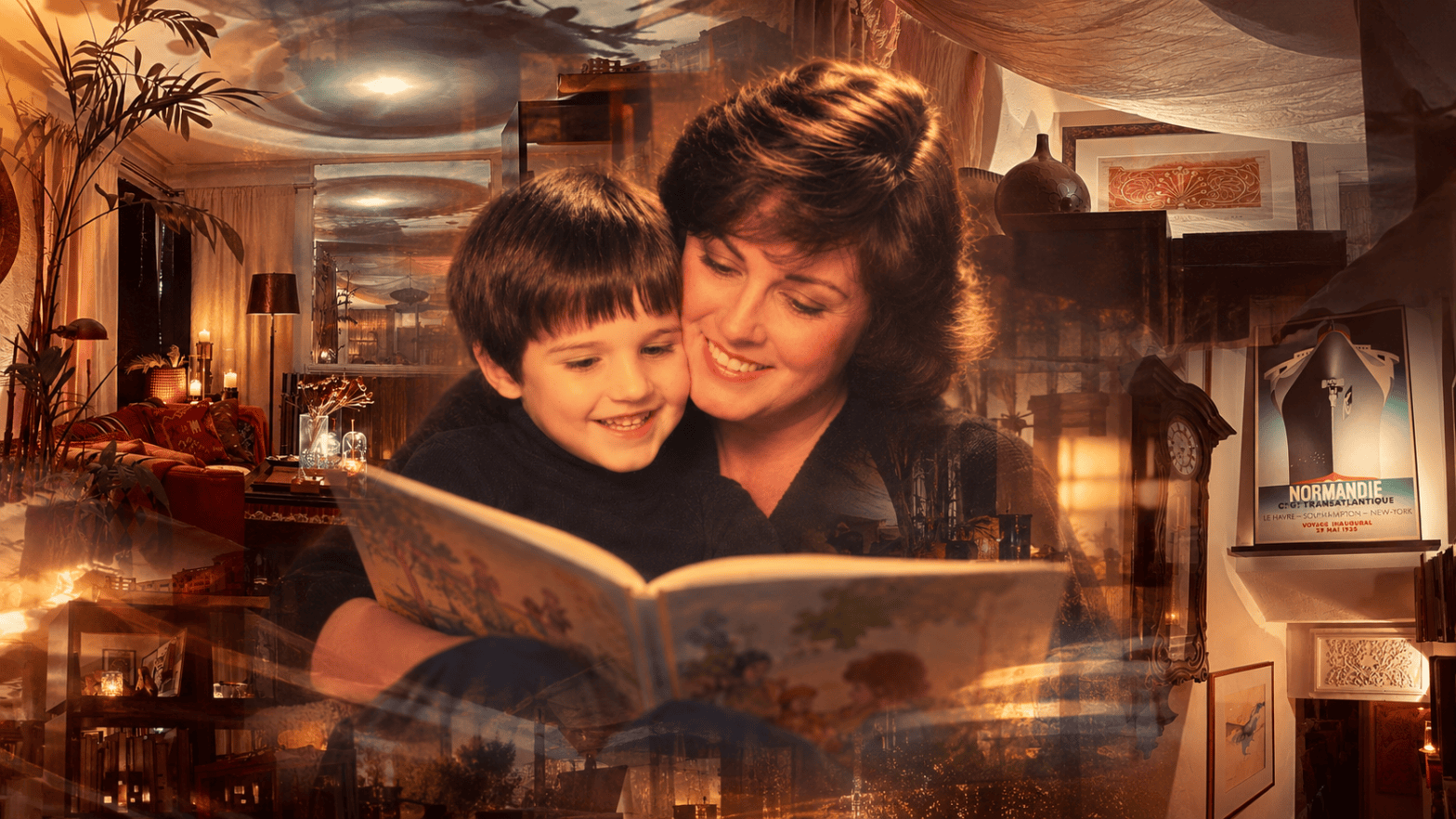
Eventually Daniel showed me our mother reading a children’s book.
It was a book about us.
Tyler was little, and she was reading our story to him.
“That was a beautiful vision, Daniel,” I told him.
And it was.
I don’t know why he showed it to me.
I don’t need to know.
There was something almost impossibly tender about it.
A mother.
A little boy.
A children’s book.
Our family inside it.
For much of the morning, we had been thinking about estrangement. About the strange chasm that can exist between people who once belonged intimately to one another’s lives. About how Oakland itself has changed for us as relationships have changed.
There was a time when the geography of this place was inseparable from family.
People lived here.
People gathered here.
There were places we went because people we loved were there.
When relationships disappear, geography changes too.
A city can remain physically almost exactly where it was and somehow become a different place.
But Daniel did not show me the chasm.
He showed me a book.
Maybe if people can’t be close to us, I thought, maybe they can at least love us as a story in a book that they read to themselves and to their children.
That was enough.
I didn’t need to ask what it meant for the future.
Daniel had shown me something beautiful.
I wanted to let it be beautiful.
Later I began thinking about our mother in another way.
I have spent a lot of time thinking about the things from childhood I do not want to repeat with my sons.
That is one of the occupational hazards of trying to be a good father after a complicated childhood.
You keep inventory.
Not that.
Not that.
Definitely not that.
But this morning I realized something else.
I think that there are more things that I do with my sons that were given to us by our mother than the things that I consciously try not to do.
The affection.
The cuddling.
The way I talk to my boys.
The delight.
The tenderness.
The permission to be small.
There was only a tiny measure of salt with that sugar.
And perhaps I have spent so much time noticing the salt that I sometimes forget how much sugar there was.
Some things survive estrangement.
Some things survive even when nobody consciously carries them forward.
Sometimes I hold one of my sons and discover that something loving has traveled a very long way.
Maybe Daniel knew that before I did.
Maybe that is why he gave his grandmother a children’s book.
⸻
It was Hope’s Day, and as the morning went on things kept getting smaller.
That sounds like diminishment.
It wasn’t.
The world had been enormous lately.
The job ended.
Healthcare.
Money.
Therapy.
Family.
Estrangement.
The country.
The future.
The apartment.
Questions large enough that there is no useful place to put your hands.
But there was peanut butter.
Jude wanted peanut butter on his waffles.
That was something I could do.
There were two little boys in particular this morning, Jude and Justus, and I found myself wondering:
What do these children get?
They get love.
Maybe that is one thing I am good at giving my sons.
Love.
Not solutions to everything.
Not certainty.
Not a map of the rest of their lives.
Peanut butter on the waffles.
A kiss.
A hand.
A lap.
A daddy who listens when a four-year-old says he needs “the adoration of my face.”
That happened this afternoon.
I was holding Jude.
“What didn’t I do, Jude?”
“The adoration of my face.”
So I adored his face.
There are worse ways to spend a Saturday.
Maybe there are worse ways to build a life.
⸻
There was fabric too.
More than a year ago, Han had an idea for the water-damaged ceiling above the armoire in our dining room.
Fabric.
We swagged it across the ceiling, hiding the damage and turning something ugly into something beautiful.
It has been there ever since.
Yesterday afternoon, some of it fell.
So today we needed to put it back.
That is an extraordinarily small domestic task.
It is also part of something much larger that has happened here.
We have been making this apartment our home.
Not renovating it.
Not transforming it into something impressive.
Making it ours.
There is a difference.
The fabric needed to be put back where Han had imagined it. The LEDs and tea lights needed attention. Things had places. Some places worked better than others. Light fell differently depending on what was illuminated and what was covered.
These things matter to us.
They matter more now than I understood when we first moved here.
For a long time, home was primarily shelter.
Then it became refuge.
Then, after the job ended, it became something else.
Possibility.
We are still here.
That sentence has changed.
There have been times when we are still here sounded like survival.
Now sometimes it sounds like gratitude.
We are still here.
In this apartment.
Together.
This is the place where we have learned that the Treehouse can live in the physical world.
Not perfectly.
Not as a replica of what exists inside us.
But the home has gradually become hospitable to who we actually are.
There is Han’s fabric above the armoire.
The little lights.
The icons.
The photographs.
The places where things belong.
The routines.
The things Solis notices.
The things Proverb notices.
The things Hope likes to listen to while we move through the rooms.
The accumulated information of nine people making one physical place inhabitable together.
That makes home something to defend.
But increasingly, it also makes home something else.
A place from which possibility can begin.
This afternoon it was 93 degrees outside.
We had closed the blackout curtains, and the apartment was dark.
All the tea lights and LEDs were charging.
Without them the rooms looked different.
Less enchanted.
I wanted them back.
But not yet.
My sons came first.
⸻
At 2:27 I lay down with Jude.
Then Daniel.
Then Luke.
We became a little pod for a while: Jude, Daniel, Luke and me, all close together.
Jude was nearly asleep.
I asked whether I could see his brothers.
“Okay,” he whispered.
It was adorable.
Earlier Jude had wanted to see Grandma.
Then he remembered that Grandma and Granddad had died.
There was a profound sadness.
There are things about time my children do not always experience in the same way. There are people and places that remain available within the Treehouse even when the outside world says they belong to the past.
I used to think everyone needed to become more external.
More present outside.
More continuously exposed to the world everyone else inhabits.
I am not so sure anymore.
Proverb has been teaching me something about equilibrium.
Inside and outside.
Presence and retreat.
Attention and rest.
Hope seems to understand some of this naturally.
He can remain more internal without disappearing.
That matters to me, especially because Hope’s instinct when overwhelmed can be flight.
Maybe retreat and disappearance are not the same thing.
Maybe sometimes a child needs somewhere inside to go.
Maybe Dad does too.
I fell asleep with Jude.
We dreamed together.
One of the last things I saw was an ocean liner from the 1950s that had been converted into a cruise ship.
Nothing spectacular.
Just interesting.
An old ship that had once worked hard crossing the Atlantic, now moving more slowly through sunny tropical waters.
A second life.
A different purpose.
I thought:
That feels good.
That’s what I would like for this time in our life going forward to be like.
Maybe that’s what it’s like for Jude right now.
Maybe it is what I hope for all of us.
⸻
When I held Daniel, frightening things appeared.
So did ordinary things.
A scary octopus became the octopus from “Octopus’s Garden,” something Daniel and I have loved together.
“We’re taking the octopus back,” I told him.
Then came kindergarten.
A boy named Lee across the street.
The first friend we ever talked with on the telephone.
We would nod our head in response to his questions until our stepmother reminded us that Lee could not see us nodding over the phone.
Then Montessori.
Aaron with his long blond hair and thermos of milk that his father made a different color every day.
Then Daniel noticed that the iPhone had written his name as “Dan.”
“He is not Dan! He is Daniel.”
There was a little growl afterward.
Daniel growls sometimes.
It is one of the ways I know him.
“Why did you say it in the third person, Daniel?”
“Cause that way the iPhone understands.”
Five years old.
Already negotiating with technology.
Later he reminded me that tomorrow we are going to Canticle Farm.
“Will I be holding you?”
“When we eat the bread.”
I will remember.
These are the dimensions at which life becomes manageable again.
A little boy’s name.
Colored milk.
An octopus.
Bread.
A father remembering to hold his son.
⸻
I held Luke next.
Luke showed me Disneyland.
Going there every year for our birthday.
Watching ourselves get taller.
When he was nine, hoping to be tall enough to ride the Matterhorn Bobsleds alone.
Not quite tall enough.
But that was okay.
He loved being held by our dad anyway.
Then Luke became a member of the French Resistance.
Beret.
Red scarf.
Cigarette between his teeth.
A group of adults gathered around while nine-year-old Luke studied a map and explained their particularly challenging next assignment.
I don’t condone children smoking.
I also couldn’t stop laughing.
“Luke, you provide me with endless delight.”
That is another thing that belongs to Hope’s Day.
Delight.
Not as denial.
As life.
I told Luke something I want all my sons to understand.
Each of us is a universe.
There are nine universes here.
I could spend my entire life getting to know any one of my sons.
That does not diminish his brothers.
It enlarges all of them.
Nine universes, living one life together.
⸻
Fear has been very good at enlarging things.
It takes something that has happened and stretches it forward.
A bad experience becomes a prediction.
A prediction becomes vigilance.
Vigilance becomes a way of living.
We know something about that.
We experienced abuse when we were a child.
We learned early that danger could arrive through people who were supposed to be safe.
Later there were other experiences—employment, legal proceedings, losses, relationships—that taught the same nervous system new reasons to keep watch.
For years, one of the dominant questions of our life has been:
What if?
What if something happens?
What if somebody does something?
What if the thing we love is taken away?
What if the email comes?
What if the phone rings?
What if the envelope contains the thing we fear?
Lately we have been trying to change the question.
Not by pretending frightening things never happen.
We already know they do.
We don’t need any more instruction in that.
We want to become better at asking:
What is possible now?
That is one of the things we hope therapy can help us learn.
Our first session with Jessee is Monday.
All nine of us.
We do not want therapy to teach us to fear more efficiently.
We do not want the children to disappear so Dad can function.
We do not want to organize our life around everything that could go wrong.
We want help getting unstuck.
We want to become better at recognizing when danger belongs to the past.
We want to learn how to listen to one another without interrogation.
We want the children to participate without becoming responsible for carrying Dad.
We want all nine of us to become freer.
Fear does not have to determine what we do next.
That feels almost revolutionary to us.
It also feels like faith.
⸻
We thought today about trusting God.
About being still.
For much of our life, faith and vigilance have gotten tangled together.
If we care enough, maybe we can anticipate the danger.
If we think hard enough, maybe we can prevent the loss.
If we examine every possibility, maybe we can find the route that guarantees the people we love will be safe.
But that isn’t trust.
And it isn’t being still.
Perhaps faith does not require us to know how the picture ends.
Perhaps God does not ask us to solve the whole painting before putting down the next dab of color.
This morning there was a nightmare.
Our family was being separated.
But we woke up.
And we were here.
So what belonged to this day?
Hold Solis.
Listen to Luke.
Put peanut butter on Jude’s waffles.
Adore Jude’s face.
Hold Daniel when we eat the bread tomorrow.
Give Hope his day.
Tack Han’s fabric back above the armoire.
Charge the lights.
Lie down.
Take a shower.
Put the lights back.
Make dinner.
Be still.
Trust God.
The picture can become visible as we live it.
Maybe this is one of the ways we transform What if?
Not into certainty.
Into hope.
Into possibility.
Into the freedom to discover what comes next.
⸻
I spent time with Hope this afternoon.
Real time.
While I was holding him, Hope thought about listening to what ChatGPT had said about the essay.
I was tempted.
We had been working on the essay all day. I wanted to hear it too.
Then I remembered another time when we had listened to something while I was holding Hope.
It had made lying down together feel a little like work.
So I decided not to.
“I think I’d rather focus on you, Hope.”
I held him.
“What’s going on with you?”
Then, for a while, we disappeared into that in-between place where waking, dreaming, memory and imagination become difficult to separate.
Hope showed me driving lessons.
High school.
A car.
A driving instructor.
Other boys in the back seat.
Some of it I remembered.
Some of it I didn’t.
I didn’t need to resolve all of it.
Sometimes one of the best things I can give my sons is the ability to be with them in things that would be difficult to explain to anyone else.
We can understand something together without shame.
And then my job is to make sure my child knows there is nothing about him that makes me love him less.
That may be one of the things Hope gets from Dad.
A place where he does not have to translate everything before he can be loved.
And maybe something else belonged specifically to Hope’s Day:
Dad could have listened to the essay.
Instead, Dad listened to Hope.
⸻
Justus showed me something different.
People.
People from childhood.
School.
College.
Work.
Friends.
Not necessarily the people we had been closest to.
Just people who once inhabited our life.
They appeared like severed telecommunications cables.
Connections cut.
Timelines stopped.
Muted.
Silent.
And there was tremendous longing.
Every person is a universe.
When a relationship ends, an entire universe can become inaccessible.
That is part of the chasm too.
Not only family.
Whole worlds.
There have been moments recently when our life has felt suspended between worlds.
Not quite belonging to the world we inhabited before.
Not yet knowing what comes next.
That is one reason physical things have mattered so much.
The LEDs.
Han’s fabric.
The dishes.
Food.
A bed.
A shower.
A garden tomorrow.
Bread.
People.
Liturgy.
Things we can touch.
People who can touch us back.
Perhaps this is another way life becomes smaller without becoming poorer.
It becomes incarnate.
⸻
Proverb’s mind wandered downtown.
What is happening there?
Who replaced us?
Who occupies the roles now?
We have done this many times.
We understand why.
But today I thought:
When we find ourselves there, can we remind ourselves that we are not there?
And then go somewhere else?
“Where would you like to be, Proverb?”
Right here?
Somewhere else?
Anywhere but there.
He drifted into visions.
A mischievous squirrel with fuzzy ears carrying information instead of acorns.
A passenger plane rolling over in the sky.
The pilot and copilot bracing for impact.
Then, moments before the crash—
Proverb was in the kitchen cutting bell peppers.
I loved that.
I don’t know what the airplane meant.
I don’t need to know.
What interested me was the transition.
The plane was going down.
Then:
Bell peppers.
A cutting board.
A kitchen.
Something Proverb finds contemplative and regulating.
Perhaps that is what we are learning.
How to find the bell peppers.
How to return to the place where our hands can do something.
How to make life small enough to touch.
⸻
Eventually it was time to get up.
First I held Solis for a few minutes.
Then Hope again.
I thanked him for the day.
“Hope, I love you, my beautiful son, and I thank you for this very good day we were blessed with as you.”
Then we thanked God.
For Hope.
For Jude.
For Proverb.
For Daniel.
For Justus.
For Solis.
For Han.
For Luke.
For these beautiful children who are my sons.
Then we got up.
The shower began hot.
It was the first hot shower at home I could remember taking in weeks, not because we wanted one but because it had been so hot outside that the standing water in the pipes was hot.
Then the water became cold.
Exhilaratingly cold.
Afterward we began putting the lights back.
The apartment was already dark behind the blackout curtains.
One by one, we carried the illuminated tea lights back to their places.
It was almost mystical.
This is one of our routines.
There is a lot of information in it.
Which light goes where.
Which surface catches it properly.
What needs to be illuminated.
What should remain dark.
Where Han’s fabric falls above the armoire.
How it hides the water-damaged ceiling.
How something that began as a practical solution more than a year ago has become part of what this room is.
Where something needs to be tucked or fastened.
Which arrangement makes the room feel wrong.
Which one makes somebody inside us say:
There.
The home has accumulated this information gradually.
We have too.
The apartment knows us because we have spent years teaching it who lives here.
And tonight, after hours without the little lights, we watched the Treehouse reappear.
Not somewhere else.
Here.
In Oakland.
In this apartment.
The home we once feared losing has undergone a reversal.
It is not merely the thing whose loss we imagine.
It is the place we inhabit.
The place we tend.
The place we return to.
The place where my sons can be visible to me.
The place that has become increasingly hospitable to the Treehouse.
Something to defend.
And possibility.
We are still here.
And tonight the lights are on.
⸻
At 6:27, KCSM began playing a jazz version of “In My Life.”
That song has always been difficult.
We have never wanted to assign it entirely to one person. It contains too many people.
Too many places.
Too many worlds.
But since we were little, there has always been someone it evokes with particular tenderness and longing.
We heard it during the Winnebago honeymoon with our dad, Nadine and our sister after Dad and Nadine married.
We were on the threshold of a new life.
The next three years would become the happiest period of our childhood since the age of two.
There would be terrible things later.
But they do not own those years.
Even then, there was someone we desperately missed.
Someone we saw perhaps four times a year.
And somehow we learned something as a child that we are trying to learn again now.
You can love your life in the presence of absence.
You can miss someone with your whole heart and still see what is beautiful.
You can carry grief without giving it ownership of everything around it.
Trauma does not get to reach backward and confiscate the joy.
Not then.
Not ever.
Maybe we already knew how to do this.
Maybe Hope’s Day is not teaching us something new.
Maybe we are remembering.
⸻
This morning my children were being scattered.
Nobody understood that they belonged with me.
Nobody understood why I wanted them.
Nobody listened.
Then I woke up.
I held Solis.
I listened to Luke.
I adored Jude’s face.
I dreamed with Daniel.
I chose to listen to Hope instead of listening to an essay about Hope.
I listened to Justus.
I followed Proverb out of an airplane and into a kitchen.
I spent a few minutes with Han.
We ate cheese sandwiches and tomato basil soup.
We took a cold shower.
We put Han’s fabric back.
We put the lights back.
And somewhere in the middle of all of this, Daniel gave our mother a children’s book.
Maybe that is the image I want to keep.
Not because it repairs everything.
Because it is beautiful.
Our mother sitting with Tyler when he was little.
A book in her hands.
Our story inside it.
Reading it to him.
And perhaps that is enough for the image to give us.
There are things that have crossed the chasm already.
Love did.
Tenderness did.
Memory did.
Stories did.
The way I hold my sons did.
We are here because so many things survived.
And perhaps hope is not something enormous waiting for us somewhere beyond the life we have now.
Perhaps it is what becomes visible when life gets small enough for us to touch it again.
A book.
A waffle.
Peanut butter.
Han’s fabric swagged across a damaged ceiling.
A little boy’s face.
A bell pepper.
Bread tomorrow.
A cold shower.
A tiny light carried through a darkened room and returned to the place where it belongs.
Nine universes.
One home.
We have each other.
We have love.
We have what we need.
And happy 41st birthday to our brother Tyler!

