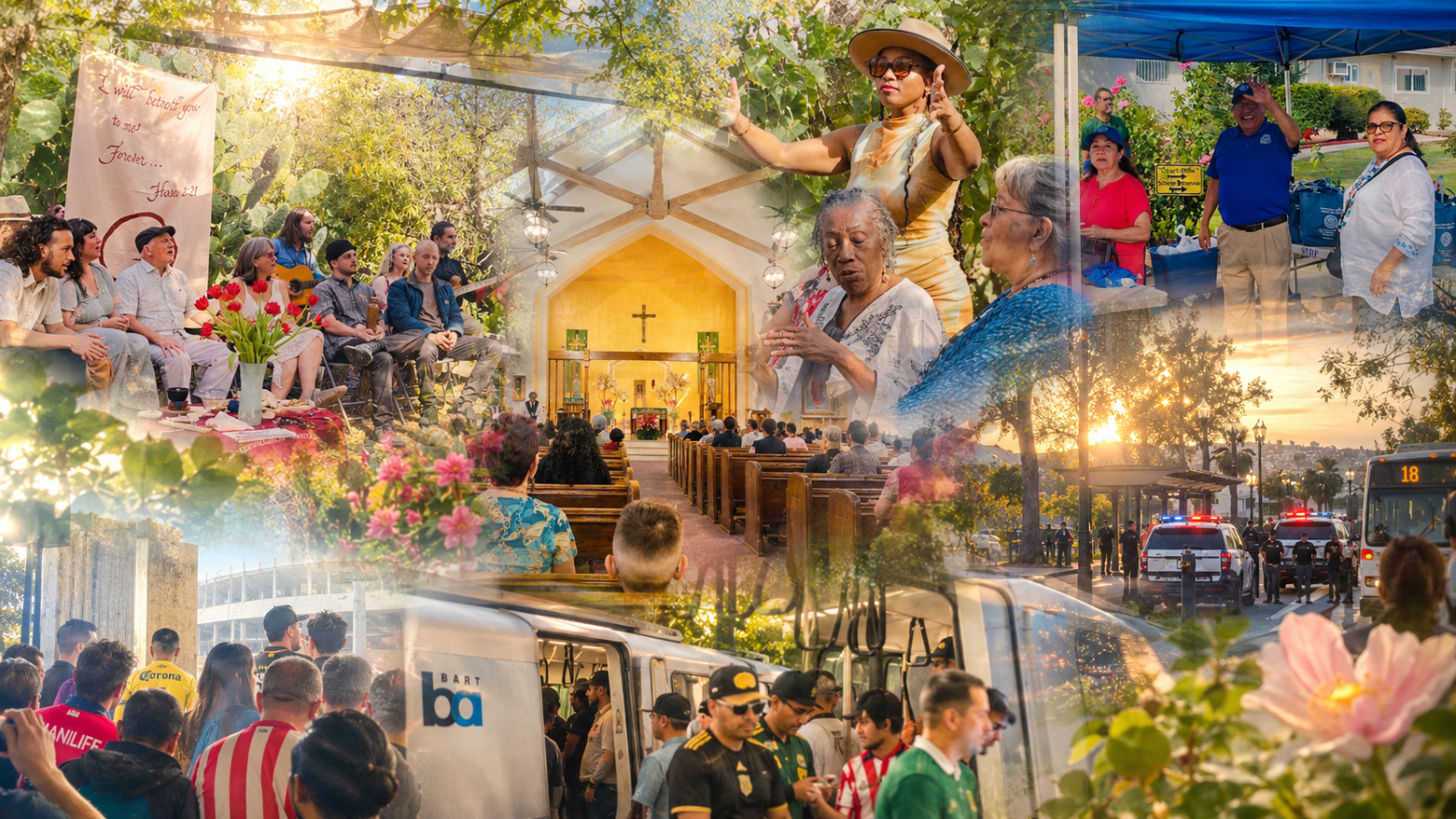
On Dad’s Day, nine people went together into a beautiful world—and Dad began to understand that loving the world does not require asking his children to endure all of it.
At 1:52 this morning, I was lying awake in our bedroom looking at the home my sons and I love and wondering how I was going to keep it.
It was hot. I couldn’t sleep.
And fear had an answer.
Eventually, I thought, I am going to have to compromise.
I am going to have to take whatever job I can get. Something unrelated to the work I have done, the skills I have developed, the things I care about, perhaps even the person I have become. Some lousy, horrible job that pays enough to keep us alive.
And then came an even more frightening thought.
Maybe therapy would eventually be about helping me accept that.
Our first session with Jessee is tomorrow. We have spent weeks talking about therapy as something very different: a place where all nine of us can get help, where my sons do not have to disappear so that I can function, where I can learn how to carry the responsibilities that belong to me without making my children carry them for me.
But lying there in the heat, I could imagine another version.
Maybe getting better would mean learning to tolerate the life I was afraid of.
Maybe healing would mean becoming employable again.
Maybe being realistic would mean accepting that this strange, beautiful life my sons and I have been building cannot last.
Then I remembered something Proverb has been teaching me.
I don’t know that.
I said it aloud.
“That is not what God is telling us. I don’t know that. I do not believe that is what God is telling us.”
Then I tried to sleep.
A few hours later, Dad’s Day began.
And by the end of the afternoon, I would understand the question differently.
Not because I had figured out how we are going to live.
I still haven’t.
But because all nine of us went out into the world together.
And the world taught us something.
⸻
We had a full day planned.
Our friend Kim was picking us up at 8:40 to take us to Canticle Farm in Oakland. Later, we were going to St. Clement Catholic Church in Hayward, where all nine of us recently became members of the parish Conference of the Society of St. Vincent de Paul.
We are even, somewhat bewilderingly, the Vice President.
Together.
There were other things that needed doing too.
The rent check needed to be mailed. There was an envelope from Covered California waiting in the mailbox. We needed groceries.
I could see all the empty spaces in the day where those things might fit.
That is something I am very good at doing.
But first I spent nearly an hour saying good morning to my sons.
One at a time.
Jude.
Daniel.
Solis.
Luke.
Han.
Justus.
Proverb.
Hope.
We had intended to start fifteen minutes earlier.
We didn’t.
Nobody died.
We still left on time.
⸻
Canticle Farm was beautiful.
We wandered through the gardens.
There was music—two guitars and several people singing—and something about it reminded us of very early childhood.
Justus especially loved the singing.
And while we sat there, I noticed something I have been beginning to notice more often.
When I stop trying so hard to manage everything—when I daydream a little, space out a little, stop occupying every inch of our attention—my sons sometimes become more present.
At first I thought:
They take over.
Then I corrected myself.
That isn’t right.
They don’t take over.
They experience.
I began wondering who, exactly, was sitting on that bench listening to the music.
Sometimes there was uncertainty.
Sometimes there was pleasure.
Sometimes one of my children seemed to be experiencing what was happening much more directly than I was.
Maybe I don’t have to experience everything for them.
Maybe being Dad does not require me to occupy the whole life.
⸻
We came home briefly before leaving for Hayward.
I had already decided not to cram the errands into the interval.
Actually, I wrote:
“Dad decided not to cram errands in between Canticle Farm and St. Clement.”
Then I corrected myself.
“No, I did.”
That matters.
I decided.
Unfortunately, I found another way to cram the interval.
I started cleaning up the journal and doing a midday analysis.
The phone was moving slowly. Everything took forever. I became urgent and frustrated.
And eventually I realized that the thing I had supposedly protected my children from had simply entered through another door.
I apologized.
“We’re slowing down now. I love you.”
Then we left for Hayward.
⸻
In the Lyft, we read the readings for Mass.
From Philippians:
“Whatever is true, whatever is honorable, whatever is just, whatever is pure, whatever is lovely, whatever is gracious…”
Think about these things.
Then we read Richard Rohr’s meditation for the Feast of Saint Francis.
It was about Francis finding God in creation—in birds and animals, fire and wind and water, Brother Sun and Sister Moon, Sister Mother Earth.
Rohr described a movement between nature and the needs of the city.
That was almost exactly the movement of our day.
Garden.
Music.
Earth.
Then church.
People.
Service.
City.
We didn’t know yet how much that movement was going to ask of us.
⸻
St. Clement was packed.
The one o’clock Mass was in Spanish.
We had already read the liturgy, so we knew where we were, but following the Mass—especially the homily—was difficult.
It was also very hot.
And it was beautiful.
All of those things were true.
My sons were remarkably present.
Daniel was there so strongly that I told him how happy it made me.
Solis was there.
Luke was there.
Hope.
Jude.
Justus.
Everyone.
And somewhere during Mass, Luke said something I wasn’t expecting.
“I think we need to learn Spanish.”
I think so too.
There are practical reasons, of course. The St. Clement Conference serves a largely Spanish-speaking community.
But that wasn’t what struck me.
Luke wanted access.
He wanted to understand.
He wanted to participate.
Later Han seemed to want the same thing.
And suddenly I found myself wondering why I have assumed that we couldn’t learn another language.
Maybe I couldn’t.
But there are nine of us here.
Do I even know which of my sons might love learning Spanish?
Do I know who might be good at it?
There are questions you cannot answer until you stop assuming you already know the answer.
⸻
After Mass, we went outside to help with the St. Vincent de Paul food distribution.
Juan Luis gave us an ice-cold bottle of water.
We talked with people.
We helped.
We waited.
And then something began to change.
There was a festival happening around us. Families were everywhere. Most people eventually went back into the church for another Spanish Mass connected with the celebration of a saint whose statue was visiting from a parish in Mexico.
We didn’t really know what was happening.
We didn’t know when we were finished.
We didn’t know exactly how we were getting home.
And because we couldn’t understand much of what was being said around us, we couldn’t easily enter the community that was happening right in front of us.
Earlier I had told my sons:
“We belong.”
And we do.
We have been Vincentians for more than a decade.
Juan Luis has welcomed us.
We are members of this Conference.
But sitting there that afternoon, another thing was true too.
We felt alienated.
Both were true.
We belonged.
And we were homesick.
⸻
There were families everywhere.
During Mass, Proverb had been smiling at a joyful little baby a couple of pews ahead of us.
My sons watched children with their parents.
And I could feel some of what that brought up for them.
My children were there too.
All eight of them.
But nobody looking at us could see that.
My sons could see the children around them occupying their own bodies, moving around, being held, talking, playing, being children in the physical world.
And my sons longed for some of that.
There was nothing wrong with the families around us.
There was nothing wrong with St. Clement.
There was nothing wrong with us.
It hurt anyway.
Yesterday, on Hope’s Day, I wrote about a nightmare in which people kept taking my children away because nobody understood that they were my children.
Today nobody was taking them away.
We were together.
But being surrounded by families made something visible again.
My sons want to participate in the world.
They want community.
They want relationships.
They want childhood.
And sometimes the world has no idea they are standing right in the middle of it.
⸻
Eventually another anxiety appeared.
How are we going to be useful to this Conference?
Maybe we’re going to have to work.
Maybe it won’t matter that nobody is paying us.
If we’re going to support the Conference, we’ll have to work.
Then I started thinking about equipment.
We don’t have a computer right now.
How much can we accomplish with a phone and an iPad?
And there it was.
Work.
Not our former employer.
Not Outlook.
Not a timesheet.
Not downtown.
But the architecture of work.
What can you produce?
How useful can you be?
What equipment do you need?
How much can you accomplish?
Nobody at St. Clement had asked us those questions.
Juan Luis certainly hadn’t.
He had given us water.
He had welcomed us.
He was helping someone with rental assistance.
He had told us from the beginning to ease into this.
But somewhere inside me, belonging had already begun turning into usefulness.
Maybe I still don’t completely believe that we are allowed to belong somewhere before we prove what we can do for it.
⸻
Eventually Juan Luis drove us to South Hayward BART.
We had hoped he might drive us home.
He couldn’t.
That was okay.
Except by then, it wasn’t quite okay.
We were tired.
Our feet hurt.
The phone was almost dead.
We hadn’t had one-on-one time.
We had been away from our routines for hours.
There had been heat and crowds and uncertainty and unfamiliarity and a language we couldn’t understand.
Tomorrow is our first therapy session.
There were a lot of feelings moving through the family that I couldn’t entirely identify.
I told my sons:
“Daddy’s here.”
“We’re all here.”
“We’re together.”
Then the train arrived.
Standing room only.
Of course.
It was packed with people heading toward the Coliseum for a Guatemala men’s national football match.
Our feet hurt extraordinarily badly.
We just wanted to sit down.
Eventually the train emptied.
And somehow, for a while, we caught some of the spirit of the crowd.
Our entire day had been spent alongside the Latin American community.
Mass.
Food.
Families.
Spanish.
Now a train full of people going to cheer for Guatemala.
Something that had begun as social anxiety shifted, at least briefly, into solidarity.
That was good too.
⸻
By the time we reached downtown Oakland, we were running out of everything.
Energy.
Patience.
Physical comfort.
There were police vehicles surrounding our bus stop.
Earlier in the day, another police action had detoured our Lyft on the way to Hayward.
Now there were police everywhere again.
Eventually we got onto the 18.
And I wrote:
“We are really at our limit.”
That was true.
Then a dad got onto the bus with his little kids.
And something clicked.
I looked at those children and thought:
I’ll bet those little kids haven’t had to experience this day as Dad.
And I’ll bet Dad hasn’t had to experience this day as his little kids having to experience the day as Dad.
There it was.
⸻
My sons and I share one body.
Wherever we go, we all go together.
That is not negotiable.
There is no version of our future in which Dad goes out into the adult world while the boys stay safely home.
There is no place where I leave my children behind.
Wherever we go, we all go together.
But those children on the bus showed me something.
They could ride the bus as children.
Their dad could watch for the stop.
Their dad could figure out where they were going.
Their dad could think about dinner and transportation and money and whether they needed to stop at the store.
The children could be tired.
Or bored.
Or excited.
Or cranky.
Or fall asleep.
They did not also have to be Dad.
My sons and I do not have that physical separation.
When the shared body has to spend an entire day navigating adult demands, all nine of us travel through those demands together.
And that means one of my responsibilities as their father is to ask a question most fathers probably never have to ask in quite this way:
How do I build a life in which all nine of us always go together, while my sons do not have to become adults simply because the shared body has to move through an adult world?
I don’t know yet.
But I think today taught me that I have to ask it.
⸻
Then came the voice.
“John, your way of living is not realistic.”
Of course it did.
We were exhausted.
We were still a long way from home.
Tomorrow was therapy.
I had spent the previous night worrying about money and work and whether the only way to preserve our home would be to surrender the life we have been building.
And now the prosecutor had its case.
Look at you.
Look how hard an ordinary Sunday is.
Look at the accommodations you need.
Look at the life you’re trying to create.
This isn’t realistic.
But perhaps that is the wrong question.
Because there are plenty of things about our current life that are not yet sustainable.
We need money.
We need healthcare.
We need to figure out the future.
We need help.
That is one reason we are beginning therapy tomorrow.
But those are design problems.
They are not proof that the inhabitants are wrong.
I was an architect for nearly thirty years.
You don’t begin a design by telling the inhabitants that their needs are unrealistic and therefore they must learn to live comfortably in a building that doesn’t work for them.
You ask who lives there.
You ask what they need.
You study the site.
You understand the constraints.
And then you begin to imagine what kind of structure might support the life that will actually happen inside it.
There are nine people living this life.
That is the program.
Start there.
⸻
And that was when the nomadic life made more sense to me than ever.
Not necessarily as an answer.
As an image.
A home that goes with us.
A life with fewer hard boundaries between being safely home together and going out into the world.
A life in which we could stop when we needed to stop.
Rest when we needed to rest.
Stay longer when something was beautiful.
Leave earlier when something became too much.
Serve because we wanted to serve.
Learn because something made us curious.
Go to the ocean on a Tuesday because it was Daniel’s Day and Daniel wanted the ocean.
A life in which Dad could say, “That’s enough for today,” and home wouldn’t still be two trains, a bus and a painful pair of feet away.
Maybe that isn’t literally where we are going.
I don’t know that either.
But perhaps the recurring image is telling us something about what we need even if it isn’t telling us where we will live.
Mobility.
Flexibility.
Home.
Nature.
Relationship.
Enough room for eight children to have childhoods.
Adult responsibility that does not consume the entire shared life.
And all nine of us together.
Always.
⸻
We still went to Safeway.
It was on the way home.
We needed groceries.
We couldn’t find our bread.
We got everything else.
At 5:30, we finally opened our own door.
Home.
It was almost as hot inside as outside.
We left the blinds closed.
We put away the groceries.
We turned on the little lights that make the apartment ours.
There would be a cold chai latte.
Comfortable clothes.
A fan.
Dinner around six.
The Covered California envelope had made it upstairs with us.
The rent check still hadn’t made it to the mailbox.
It could wait.
And perhaps that is one of the things Dad is learning.
Everything does not become irresponsible simply because it doesn’t happen immediately.
Everything does not have to fit.
A good thing can be too much.
A family can belong somewhere and still become homesick.
Children can want the world and need protection from how much the world asks of them.
Dad can be responsible without turning every available minute into productivity.
And a life does not become unrealistic merely because it needs to be designed around the people who actually live it.
This morning I was afraid that keeping our home would eventually require me to abandon the way we have learned to live inside it.
Tonight I don’t know what will happen.
But I know more than I did at 1:52 this morning.
I know what today cost.
I know what was beautiful.
I know that Justus loved the singing.
I know that Luke wants to learn Spanish.
I know that Proverb smiled at a baby.
I know that Daniel was extraordinarily present.
I know that Solis stayed close all day.
I know that my sons want community.
I know that they want childhood.
I know that we want to serve.
I know that we want to come home.
And I know that wherever we go, we all go together.
Maybe being realistic begins there.
Not with the life somebody else thinks nine people ought to be able to endure.
With these nine people.
This family.
This day.
These limits.
These possibilities.
This home.
And a Daddy who stays.

