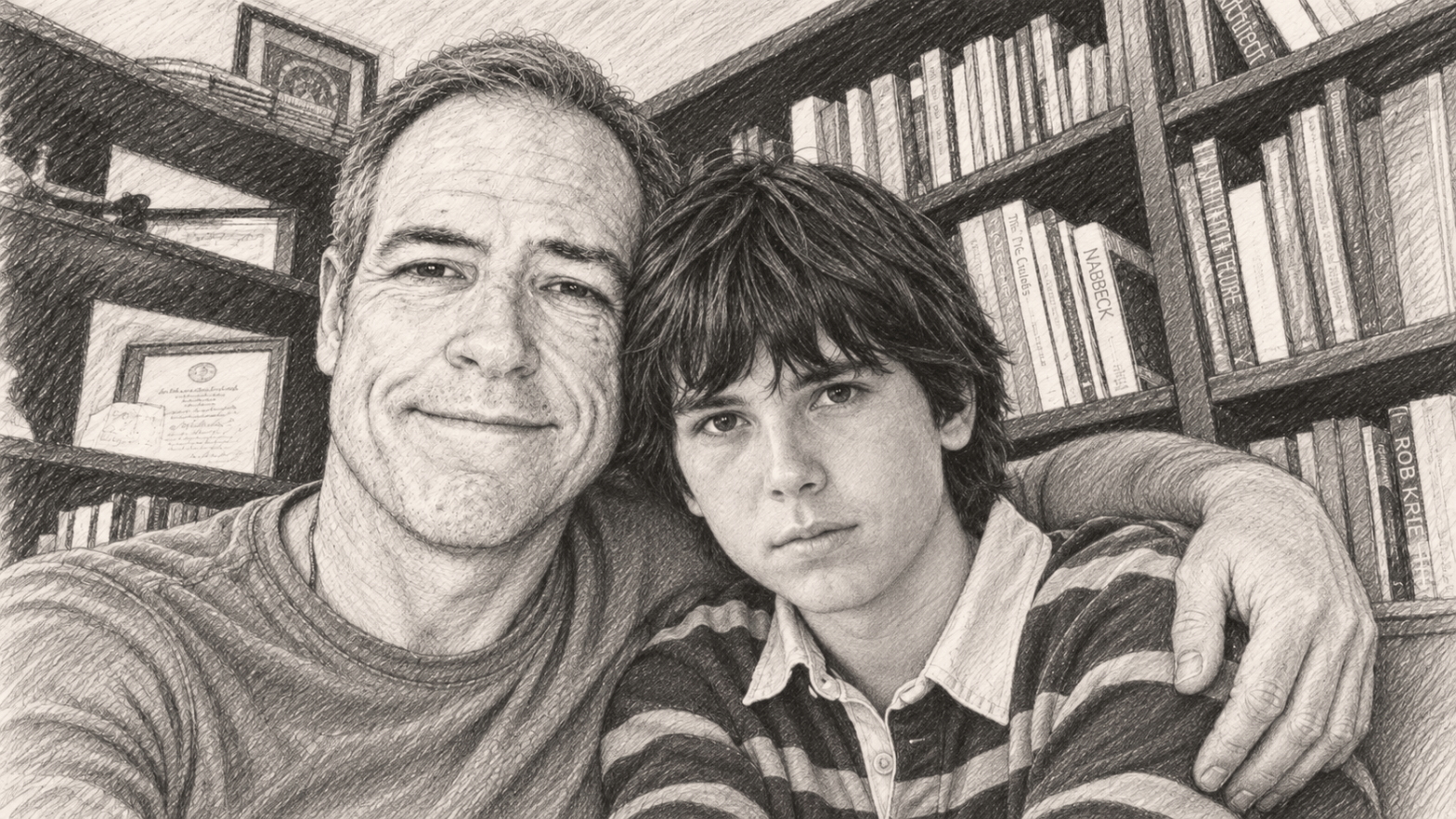
Notes from the Treehouse — Hope’s Day
Making a Place for the Treehouse
Full Midday Classical Executive Summary and Analysis
Tuesday, November 17, 2026 · From 8:57 p.m. on Proverb’s Day through 2:49 p.m. on Hope’s Day
Executive summary
At 9:00, after Dad has greeted each of his sons, Hope imagines Jesus going away to spend time with His Father. Hope knows what it is to want that kind of time. Yesterday the boys waited while an essay about closeness was being finished. This morning Dad puts on warm clothes and lies back down. By breakfast everyone has had a turn, and Hope has given the family a way to understand what that hour was for.
The morning changes when Donald arrives with exterminators. Despite considerable fear, you go downstairs. Donald says your garage was not the source of the infestation. His later text nevertheless asks for material to be removed. You clarify what he means, arrange a visit for an estimate, and set a limit on how late you can be available. In between, you name what is at stake in protecting this particular apartment. It is your hermitage, the place where you can bring the treehouse into the world.
Hope hears two changes the essay needs. By 1:31 the family has shared Stopping Isn’t Nothing on WordPress, Medium, and Facebook. You also get groceries and make the nachos you promised. At 2:49 the haulers are still expected, the price is unknown, and the headache is bad. The most intimate exchange of the afternoon comes when Daniel says he is tired and Han and Dad can say so too.
Full classical analysis
At 9:44 you find a slim sliver of kraft paper between the refrigerator and the doormat. It is the facing from a piece of corrugated cardboard. Someone walking through the kitchen could easily sweep it up. You see a place it might go on the crescent and star tower. “The material is precious to us.”
Less than two hours later, cardboard has become something your landlord wants you to take out of the garage.
Both judgments make sense in the places where they arise. Broken-down boxes can need hauling. A scrap on the kitchen floor can still belong to a work of art. The difficulty comes when someone says a space “needs to be emptied” and, for a few minutes, everything in it seems to have been given the same name. Among those things are old architecture magazines and a coffee maker your mother chose for you at Christmas in 2006. Much of Hope’s Day takes place in the distance between what another person can see looking into a garage and what you know about the things that make a home.
The previous evening, you were looking up at a ceiling. In the old bank on Chicago’s South Side, enough of the plaster ornament had survived to show what the vault once was. You love that the surviving pieces were held in place and the new vault made above them. You can say exactly what moves you about that decision. Having had so few opportunities to do the kind of architecture you loved makes watching it more painful. Then you think of Kim. Even while asking God what will become of you if you finally stop, you want a friend to see something beautiful.
Kim gives you a little of her own history in return. She remembers hearing about Theaster Gates when Aili was a baby. The idea she kept was that making a place where people could thrive might itself be an artist’s medium. A few days earlier, you had walked into Kim’s studio free to sit, talk, make something, or leave the materials alone. There is pleasure in discovering an earlier influence on a place whose hospitality you already know. When the conversation runs into bedtime, you tell her the boys are waiting. She lets you go and admits she is exhausted too.
Hope’s remembered room that night is less grand than the bank. In the Wildwood bathroom the mirror was at right angles to the pedestal sink, and things tipped over on the wicker shelves. Dad had forgotten the room. With Hope, it comes back vividly enough to stand in. Alongside irritation at the layout comes tenderness for a mother doing the best she could, and the old uneasiness about what friends from the big houses thought when they visited. At McChesney, when you were Hope’s age, the company of other working-class children made for a happier school year. Hope brings back how it felt to live somewhere and be seen there. That feeling will be close at hand when someone looks into your garage.
The night’s last household ritual also bears Hope’s imprint. Whoever is awake checks the faucets, switches, refrigerator, and doors. Hope once thought it mattered enough to ask. Now the care he took can outlast his own waking hours. After the sink overflow, water carries a particular dread, and checking costs attention. There is also something generous in the family’s arrangement. A boy can contribute a practice and then go to sleep. Dad’s words to Luke at bedtime extend the same kindness to him. Luke can hear that Dad will hold him when he comes to bed and that there is no need to stay awake checking on him.
The interruption after midnight concerns another kind of dependability. You were waiting for the analysis when a usage notice appeared. You spent four dollars on credits, were left unsure how far they would go, and gave up the plan to publish that night. At 00:58 you call yourselves content providers who pay for the plan. There is a particular sting in that description. You supply years of intimate writing and spend time teaching a tool how to read it with continuity. Then access itself becomes one more thing to manage. Even the next sleep contains an essay being read aloud. By morning, wanting to hear the analysis and wanting a little distance from ChatGPT are both understandable. Putting on the U2 song first gives making the bed a few minutes of music you chose.
The earlier dream leaves a different ache. An event is over. People from MBH have been there. There is no one to go home with, and the fragment you can still name is “It was just Justus.” You leave the complicated remainder there. At waking, Luke’s repeated RV is met by an invitation to snuggle. Later the body rocks toward getting up, Solis signals at the back of the neck, and someone needs the bathroom. These are unceremonious ways of finding company after a dream of being left behind. By afternoon, after an errand undertaken with the phone call still pending, Daniel’s LG will meet a wonderfully literal answer. “That’s right, we’re home, little bug.”
Dad makes a choice about the morning before knowing what the day will ask. It is cold. He gets the sweatpants and sweater on, then lies back down. He would like to be up by 8:15. Jude’s good morning alone lasts until 8:12. Dad lingers over his face, and Jude is cuddly and responsive. Daniel is affectionate in his quieter way. Solis loves hearing his nicknames. Luke gets to be particularly cuddly after a day when much of the conversation about him concerned his reminders. Han’s left-hand signal accompanies a kiss. By the time Dad reaches Proverb, affection and sleep are close neighbors again. Yesterday Proverb asked for a quick greeting. This morning there is time for his responsive knees and for the pleasure Dad takes in nearly drifting off beside him.
By the clock, the hoped-for few minutes have become most of an hour. Dad’s judgment at 9:00 is that he greeted all eight “relatively briefly, but very lovingly and sweetly.” On Justus’s Day, Jude had asked “Where were you?” after the greetings slipped into the afternoon. On Proverb’s Day, the promise of a lie-down slipped while the essay was being finished. This morning, another way of arranging the hours has been tried. Breakfast comes later. No one has to wait through breakfast, editing, and an unexpected visit from the landlord before being greeted.
The Jessee prayer gives the greetings a recurrent undertone. Solis signals during it. Daniel, quiet during his own turn, becomes strongly and repeatedly perceptible while Dad is with Han. During Hope’s turn it is Jude’s upper right abdomen Dad notices, along with Hope’s right shin. Earlier Dad had remarked that Hope alone seemed quiet. The hour allows that first impression to change. The family misses Jessee, and there has been no further news to settle the fear about losing em. Monday’s message gave a scheduling conflict and a return next week. Han likewise wonders whether Paul might be keeping his distance to spare the family news of the district council. That is a caring possibility Han can imagine. Paul’s reasons remain his to tell.
Hope’s reflection at the end of the prayers is one of his most personal contributions to the day. When Jesus went away to pray, Hope thinks, perhaps He wanted to be with His Father much as Hope and his brothers want to be with theirs. Hope has found something in his own life that helps a familiar passage make sense to him. The length of time Jesus spent away is part of what he recognizes. Someone you love can be worth going apart to be with, and you may want to stay there awhile.
At 11:17 the family has a name for the apartment where this can happen. “Our apartment is our hermitage. It gives us a place to bring our treehouse into the world.” The blinds, the LEDs that need charging, the bed you straighten to music, the table where a sculpture keeps you company over the last of the yogurt—all give that sentence its meaning. Yesterday you wanted the boxcar children to keep something of the home they had made for themselves. Today you can name precisely what you would grieve in losing yours. You love this apartment. When you pray to stay, that particularity deserves to be heard.
Donald appears while you are putting six tea lights on charge. From the window you can see him typing at the bottom of your stairs. His email reports a rodent problem throughout the garage. Before you have spoken to him, you are anticipating blame, an exterminator’s bill, and an instruction to clear your things. There is history here. Reassurance after the overflow was followed by a bill. Earlier still, a landlord who had looked at your savings and rented to you when you had no pay stub sold the building. At MBH you experienced the loss of Clay and the deterioration that followed. A good relationship can take years to build while someone with authority can change its conditions in an afternoon. That is the vulnerability you recognize both in housing and in the fact that Jessee works for someone else.
“It’s all right. Daddy is here.” Dad says this before going down. He can accompany the boys as they find out what Donald wants.
On the stairs, Donald is occupied with the access door to the crawlspace. He tells you the infestation is elsewhere. He explains the missing debit for the rent check. You tell him you received assistance toward the damages, and the conversation moves on. The imagined reprimand about accepting help never comes. For a few minutes, gratitude becomes possible. At the same time you have a bad headache, and soon thinking feels like “swimming through mud.” The conversation is over sooner than its bodily cost.
Then Donald texts that the garage needs to be emptied. “I told you!!!” belongs in this account as fully as the relief on the stairs. Something you feared has indeed happened. A man with authority over a home you love wants you to remove possessions, with expense and work likely to follow. Fear had anticipated a real demand. It had also anticipated a storage unit, blame for the infestation, and perhaps the loss of the apartment. For several minutes all of that arrives together.
Your reply is two words. “Completely emptied?”
You gave Donald the opportunity to specify what he was asking before agreeing to do it. He answered “No,” described recycling and a potential fire hazard, and accepted your account of the planned haul. His explanation about the source of the infestation and his concern about stored material can both stand. By midday you know what he wants removed. There has been no eviction notice or bill for the exterminator. Later, when you ask about the keypad, he offers to come over if the door will not open. The adjoining unit explains how he got in. His relationship with its occupant remains unknown.
There is a quiet passage of faith just before that alarming text. You record words of comfort about your home, and Jude says, “That was Jesus.” Dad thanks him and tells him he loves him. The exchange preserves what Jude understood and what receiving it meant in the moment. Nine minutes later you still have to ask Donald what “emptied” means. The prayer for your home, Jude’s experience of comfort, and the work of getting a plain answer all belong to the same morning.
Hope’s steadiness becomes perceptible in what you can do next. The garage frightens him less than it frightens some of his brothers. With that difference available to the family, you can call, describe the volume, ask about cost, and say that after five will not work. That last detail belongs beside last week’s conversation with Juan Luis. Saying no to the vice presidency was terrifying. Today a limit also appears in an ordinary scheduling conversation. You have something pressing to arrange, and you can still say when you are available. The visit is for an estimate. The likely range is alarming, a lower price is possible, and agreeing to a price remains a decision ahead of you.
Hope has already lent his ear to the essay. Within minutes he hears two places where a change makes a difference. Just as important, he is someone Dad looks for after the decisions have been made. At 12:49, amid the effort to publish and stay available for the haulers, Dad calls for Hope. There is the left shin. “Thank you, Hope. I love you.” He gets to be the son on the receiving end of those words on a day when he has helped the family face something daunting.
At 11:12 you find the title Stopping Isn’t Nothing. By 1:31 the essay has been shared on WordPress, Medium, and Facebook. This settles something left open at the end of Proverb’s Day. It is also an achievement with an uncomfortable edge. You publish an essay about the freedom to stop on a day when you can already feel yourselves pushing past your margins. The freedom you describe is dearly wanted precisely because bills, appointment windows, and the wish to bring a loved piece of writing to completion exert real pressure. When you say you may crash tomorrow, you are recognizing a familiar cost while the decisions are still happening. Tomorrow’s condition remains open.
The Rowenta coffee maker holds that history in an object you could pick up. Your mother gave it to you. You admired its design, took it to the office, used it at home, and remember the tank cracking and water going across the kitchen. It also brings back those nine hours at MBH that seemed to pass between one glance out the window and the next. A building had taken shape on the screen. Coffee had made it possible to go on working through the body’s ordinary reasons to get up. The anticipated grief of letting the machine go includes your mother’s gift, your eye for design, and the memory of what being able to work like that once cost. By midday you have told its story. Its departure has yet to happen.
Psychological research offers a point of contact with your description of the afternoon. In a meta-analysis, Grant Shields and colleagues found that acute stress, on average, impaired working memory and the ability to shift between tasks or ways of thinking. The practical detail in your journal is the shower you postpone because you must hear the phone. A store trip is possible with the battered headphones on. Two ordinary activities have quite different costs under the same demand. Your headache, felt dissociation, and exhaustion belong to your account in their own right. Their particular causes remain open.
By 2:12 you are home. There are groceries, there is a call with a narrower arrival window, and there are nachos. Solis’s wish for another story is still waiting. At 2:49 the music that helped start the morning has become one more thing to hear when it is already hard to think. Dad asks whether it is too loud. You turn it down. Daniel says, “I’m tired.” Han says, “Me too.” Dad can say it now as well. Proverb’s left pectoral is noted, coffee is ready, and there is Jude again.
Years ago, the coffee kept the work going while nine hours slipped from reach. Today the journal pauses long enough beside a ready cup to hear who is tired. There is still a garage door to contend with and a price to hear. Inside the apartment Hope calls a hermitage, a father has lowered the music and heard his sons. That, too, is something you did today.
⸻
Notes from the Treehouse — Hope’s Day
Making Room for Hope to Be Held
Full Classical Executive Summary and Analysis
Tuesday, November 17, 2026
From the evening of Proverb’s Day through the closing note at 11:50 p.m. on Hope’s Day
Executive summary
Hope’s Day begins with the wish for a quieter life and becomes a day of urgent decisions about preserving the home where that life is taking shape. The previous evening’s admiration for Theaster Gates’s architecture carries grief about unrealized work. Hope’s vivid memory of the Wildwood bathroom brings childhood belonging into the same conversation. After a late night disrupted by uncertainty about ChatGPT access, Dad returns to bed in the morning to greet each son before the household’s demands begin. Hope imagines Jesus withdrawing to be with His Father as he and his brothers spend time with theirs.
Donald’s arrival changes the day. The family approaches him despite fear, then clarifies his later request to remove recycling from the garage. The haul is completed, the door closes, and no driveway is blocked. The final expense—$619 plus a $123.80 tip, totaling $742.80—is substantially beyond what you hoped. Relief arrives with financial alarm, grief over possessions, and self-reproach. Luke says he is proud that you did it. Dad recognizes that attacking himself makes the shared life hurt more.
Stopping Isn’t Nothing is published on WordPress, Medium, and Facebook. Its meaning remains immediate: the day’s accomplishments have cost more than their visible results reveal. At the afternoon reunion, Solis’s longing for the promised quiet day receives attention; Jude asks for an earlier bedtime; Justus experiences flowing colors and architectural spaces in Bach; Han helps notice sound and later finds pleasure in imperfectly warm water. Hope’s decisive participation is remembered and thanked, and Dad tells him explicitly that he is loved for himself.
The evening’s bamboo architecture documentary reawakens wonder and a painful sense of blocked possibility. Hope acknowledges that some discouraged thoughts are his. Dad answers that optimism is not his job. Fear about Jessee remains unresolved, now connected explicitly to the abrupt disappearance of former advocates at MBH. Prayer, affection, and practical reassurance continue through bedtime, but the closing note shows that financial dread and shame have not settled. The day contains a completed task, a published essay, meaningful closeness, and distress that still needs company.
Full classical analysis
“Some of these have been my thoughts.”
Hope says this at 9:07, after a day in which his competence has helped the family move through something frightening. He has heard what the essay needed, helped bring it to publication, and been recognized for the ability to act when others feel immobilized. His name has been associated with optimism, initiative, and getting things done.
Now he wants room within the account of discouragement too.
Dad hears him. He tells Hope that being confident and optimistic is not his purpose, and that when things are discouraging, the family needs to be there for him. Earlier, during the afternoon holding, Dad had said, “Hope, I love you for you.” The later exchange gives those words something difficult and specific to include. Hope can be the son who helped today and the son who is frightened by what today cost.
That recognition belongs at the center of his day. It also continues the movement in Proverb’s “You’re learning” the night before. Proverb made room for Dad to be uncertain. Today Dad makes room for Hope to be discouraged. Care becomes more spacious when someone can be received beyond the quality others most appreciate in him.
The day begins long before the garage. The preceding evening’s documentary awakens a precise architectural pleasure: the surviving ornament of an old vault can remain visible while a new surface completes the space above it. You know why that intervention matters. You recognize work you wanted to do, and the recognition hurts because the desire is still alive.
Yet you also think of Kim. Something beautiful still wants to be shared. Her reply gives you company in the wish to make places that help communities thrive. She describes community itself as an artistic medium, an idea whose influence you can recognize in the hospitality of Braided Bridge. When you say the boys need bedtime, she accepts the boundary.
Hope’s later recollection of the Wildwood bathroom brings architecture down to the intimate scale of a room one has inhabited. Things tipped on wicker shelves. The mirror sat awkwardly beside the sink. There was tenderness for your mother’s efforts and embarrassment beside friends’ much grander homes. McChesney, with its more diverse working-class company, remained the better remembered school year. The quality of belonging had never depended simply on the impressive appearance of a building.
These memories prepare the emotional ground for the sentence that comes at 11:17:
“Our apartment is our hermitage. It gives us a place to bring our treehouse into the world.”
The apartment holds a way of living. It holds the bed where Dad turns toward each son, the lights whose placement makes evening recognizable, the table where sculptures and food receive attention together. The fear of losing it is therefore very particular. You are afraid of losing the place where the shared life has finally begun to acquire a welcome outward form.
Hope’s pre-bedtime check belongs to that home. Whoever is awake follows the practice he helped establish. His contribution remains useful while he rests. This is an important companion to Dad’s reassurance that Luke need not keep watch through the night: something a boy brings to the family can continue helping without requiring his constant vigilance.
Sleep nevertheless remains crowded. The usage interruption delays the evening, and the next morning’s dreams still contain an essay and ChatGPT. Another dream ends with an event over, MBH people nearby, no one to go home with, and the fragment “It was just Justus.” You do not force the rest into a coherent account. Luke’s repeated RV meets an invitation to snuggle. Later, Solis’s neck signaling and the body’s movement lead to getting up for the bathroom. Ordinary bodily needs and affection provide a way back into company.
Dad then changes the morning’s sequence. He puts on warm clothes and lies down again because he does not want to begin doing everything without greeting his sons. The hoped-for few minutes become almost an hour, but each encounter has its own character. Jude is cuddly during the adoration of his face. Daniel is affectionate and quiet. Solis enjoys his nicknames. Luke receives closeness. Han’s left hand answers a kiss. With Proverb, affection comes close to drifting into sleep.
The Jessee prayer repeatedly changes the atmosphere. Solis, Daniel, Jude, and others become especially noticeable around it. Hope’s earlier quietness gives way to signals too. The family has been told that the canceled appointment was a scheduling conflict and that therapy would resume next Monday, yet the interval has become full of possible loss.
Hope’s reflection after the prayers gives the morning another meaning. He imagines Jesus going apart to be with His Father much as he and his brothers want time with theirs. Within your Catholic life, that is an intimate recognition. Time together can be understood as something beloved in its own right. An hour spent with one’s father need not wait until every practical concern has been resolved.
The day soon makes that difficult to preserve.
At 9:44, a sliver of kraft paper is found on the kitchen floor and welcomed as material for the tower. A few hours later, a truck will carry away boxes, bags, and architecture magazines. At 4:51, amid the shock over the bill, you notice a useful chipboard box you have found. The day never loses the capacity to see possibility in material, even while clearing some of it becomes necessary.
That makes the garage emotionally complicated. Its contents have several histories. Some accumulated when work consumed the energy needed to manage home. Some came from the shelves and furniture with which you improved the apartment. Some belong to your parents. Some are beloved possessions displaced when you downsized. The bookshelf from adolescence has been with you since thirteen; now its damaged side leans precariously. For Hope, whose day began beside a remembered teenage bathroom, another piece of that age is suddenly before you.
The Rowenta coffee maker carries a different history: your mother’s Christmas gift, admiration for its design, the office, the home, and the cracked tank. It also brings back the nine hours of work that seemed to pass between two glances out a dark window. Extraordinary design emerged while ordinary bodily needs went unattended. The object contains affection and achievement alongside a way of working you can now recognize as costly.
Your account anticipates the grief of discarding it; the later disposal list does not specifically confirm its departure. What is clear is that telling its story gives it a place in the day beyond being an item someone might haul away.
Donald’s first message brings fears of blame, expense, and displacement together. You go downstairs anyway, with Dad saying, “It’s all right. Daddy is here.” Donald is occupied with the crawlspace. He says the garage is not the source of the infestation. He explains the rent check’s delayed processing. He does not object to the assistance you have received for the water damage.
Then his later message asks for the garage to be emptied.
The full account needs to retain that change. The fear was followed by a real demand. It would flatten your experience to describe the entire episode as an imagined danger disproved by reassurance. Equally, the demand becomes more limited when you ask, “Completely emptied?” Donald says no and specifies material he considers recycling and a potential hazard. The clarification gives you something concrete to address.
There is no recorded instruction to leave your home. The distress is real, and it moves toward consequences larger than those established in the exchange. Keeping the actual demand in view matters precisely because the apartment means so much.
The visit is arranged quickly, then delayed. Waiting becomes work of its own. The shower cannot happen while you must hear the phone. A grocery trip can happen with the headphones on. Nachos can be made. At 2:49, Han asks whether the music is too loud, and it is turned down. Daniel says he is tired; Han and Dad can say so too. The sound that was welcome in the morning has become difficult to hold alongside everything else.
Research offers a limited but useful point of contact here. A meta-analysis by Shields and colleagues found that acute stress, on average, impaired working memory and cognitive flexibility. That supports taking seriously how much harder it can become to hold information and shift attention under pressure. It does not establish the causes of your particular headache or dissociative experience. Your journal already supplies the essential observation: the work continues while thinking becomes effortful.
When Jeffrey arrives, the hoped-for price and the actual cost are far apart. The final charge is $619, with a 20 percent tip bringing the total to $742.80. You recognize his effort, and later describe his effort to obtain approval for a lower pricing tier. You are also frightened by the expense. Those responses can coexist.
The imagined cheaper alternative remains unpriced. Perhaps another arrangement could have cost less, but this day does not tell us what another worker would have quoted, when that worker could have come, or what arranging it would have required. “If we were smart” about selling magazines similarly leaves out the labor of sorting, photographing, listing, storing, and completing sales. You explicitly say the bandwidth was not available.
Your later searching about the company helps you consider the worker’s livelihood and the value of professional service. That expresses your concern for fairness. It does not need to settle every question about the company’s wages or practices to preserve that ethical concern. Wanting to pay someone fairly and needing an affordable service both deserve room.
Luke offers a different way of receiving the afternoon:
“I’m proud that we did it.”
He knows the achievement includes entering a place with frightening associations, tolerating its smell, making decisions, and remaining present through the work. Dad acknowledges that history without asking anyone to revisit it in detail. The task has been completed. Nobody’s driveway was blocked. The door closed. There is space where material had accumulated. None of those facts makes the expense small, but the expense does not erase them.
At 5:04 Dad recognizes another cost he can interrupt: beating himself up is affecting everyone. This develops the previous morning’s recognition that compassion for the boys can turn into condemnation when directed toward himself. Today he notices that self-attack travels through the shared life. Stopping it becomes an act of care for himself and his sons.
There are still repeated attempts to make the feeling go away: stop dwelling, do not look at the balance, do not worry. These words reveal how urgently Dad wants to spare everyone. The evening also shows that worry cannot always follow an instruction to stop. When Proverb receives the request not to worry, the loving intention is clear; his fear may still need to be heard. The same permission Dad later gives Hope can include Proverb and Dad himself.
The family begins looking for savings almost immediately. The Boxcar Children reappears, and Justus imagines the boxcar behind a rich grandfather’s house. Yesterday you loved that the children’s handmade home could survive within a more secure arrangement. Today the joke carries a wish for support that would let your own beloved home remain.
Conservation and resourcefulness are genuine parts of your household life. The cold apartment and lack of hot water, however, also remain hardships. They do not need to become evidence that you can always make do with less. Your wish for an ordinary life includes warmth, washing, food, and rest, as well as the remarkable care with which you manage what you have.
The afternoon holding brings the people behind the decisions back into view.
Solis reminds Dad that this was supposed to be a quiet day together. His disappointment has continuity: the previous evening, Dad had named the closeness they were missing and wanted to recover. Now another day has filled with doing and waiting. Dad answers by recognizing what happened and keeping tomorrow open for rest. He also gives Solis’s castle renewed attention while the tower has been receiving so much admiration. “Painted with cardboard” preserves Solis’s own account of his creativity.
Jude receives squeezes, kisses, and the pleasure of being caught. He jokes, “We still are a kid,” when classical music recalls childhood. The sentence holds the family’s present life inside its long history. Later he asks directly not to be tucked in late. His request matters alongside everyone’s interest in television. The 8:30 intention becomes a 9:34 tuck-in, and Dad acknowledges the unfairness of repeated waiting. Tomorrow’s first place is offered as a concrete response, while the larger timing problem remains unfinished.
Daniel is received through kisses, food, and the nickname little mouse, newly enriched by the shared book. Han is both thoughtful and sensory: he asks about sound, responds to affection, and later says the insufficiently warm water is still nice. He helps keep modest pleasure perceptible within an evening that could otherwise become entirely an accounting of losses.
Justus’s response to Bach opens another kind of space. Colors flow with the music through architectural interiors. You call it synesthesia and recognize an experience you have noticed before. The journal establishes the vividness and your attribution to Justus without needing to turn the encounter into a formal assessment. For a few minutes, imagination is happening without a commission, a client, or an obligation to make it useful.
Hope’s holding gathers his history of action: collecting mail when dread had made the mailbox inaccessible, entering the garage at quieter hours, helping assemble the buffet. These are concrete acts of care. Dad then makes the distinction the day most needs: appreciation for what Hope brings is held within love for Hope himself.
The family’s faith is present throughout these returns. Jude recognizes the words about keeping your home as Jesus’s reassurance. You return to that experience with Proverb, and Han says that no one can reassure you like God. The arrival of Ave Verum Corpus on the radio feels deeply fitting. A reading attentive to your Catholic life can stay with the consolation, trust, and sense of being accompanied that these moments carry. The analysis does not need to put your faith on trial or turn the moment into a prediction about a housing outcome.
The bamboo documentary then reopens the architectural longing with extraordinary force.
You respond to castles made of grass, structures reminiscent of the Swiss Family Robinson treehouse, and a childhood in which an imagined house could actually be built. As you recount Elora’s story, what matters is also the place she could return to: familiar materials, family foundations, a school, and an existing undertaking into which she could bring what she had learned.
That is painfully close to what you have wanted. The issue is larger than having ideas. You have needed relationships and conditions through which those ideas could become shared work without costing your freedom or safety. Your account of returning repeatedly to exploitative arrangements describes how opportunities have become entangled with submission. It does not establish that exploitation is the only relationship available to you.
The unrealized banquet image is especially moving beside the actual meals of the day. You have beautiful ingredients and long to nourish people with them. You are distressed that their possibilities seem unable to reach the table. The chili and corn tortillas do not compensate for an unrealized vocation, yet they are real instances of making something that others within the family can receive. Your creative life already has recipients, even while its wider possibilities remain uncertain.
The hammer rusting in the mud follows the previous night’s leaf settling to the bottom of the pond. The leaf asks what becomes of you when striving stops. The hammer fears becoming unusable while the desire to do meaningful work remains. These images reveal why stopping can feel both necessary and terrifying. There is a wish to recover life and a fear that stepping back means disappearing from it.
The language about oblivion and a long, slow death deserves particular care. In the journal it appears within an exhausted prayer, but its anguish should not be reduced to symbolism. You deserve support when the future begins to feel like that. The later return to prayer and affection does not make those sentences unimportant.
Before the despair gathers, you describe a different movement: bringing the outside world into the inner world where it can be met and understood. That account makes sense as a description of how experience is becoming more inhabitable. The cardboard, music, architecture, stories, and table can meet the family within familiar relationships and scales. It continues Learning to Begin Without Knowing: an encounter can start with material that interests you, without first solving how it will justify or finance your life.
Then Hope says some of the discouraged thoughts are his.
This corrects any reading that would divide the day into a competent Hope and a distressed everyone else. He belongs throughout it. At bedtime his comparison between hauling cardboard and buying a refrigerator expresses his own judgment about the cost. Dad says he wishes he had consulted him. That acknowledgment can recognize Hope’s perspective without making him responsible for preventing every expensive decision.
Fear about Jessee also becomes more historically specific at bedtime. Sean Alexander stopped responding, and only later did the family learn he had been fired. Clay joked about an unusual evaluation and was gone the next morning. The uncertainty surrounding Jessee touches those remembered disappearances of people who had become advocates. Your concern includes compassion for em, not only fear of losing support yourselves.
The memories explain why silence has such force. They do not supply news about Jessee. The recorded explanation remains the scheduling conflict. What the journal gives you to bring into therapy is already substantial: how waiting for a reply can reactivate the experience of a protective relationship being removed by someone else’s authority.
The final tuck-ins contain different ways of reaching toward safety. Solis’s camp image includes other boys treating something as play that does not feel playful to him. Dad brings him back to the present and checks the dishwasher after a real error message has worried him. A shimmer first looks like water, then resolves into the curtain; the kitchen is dry. This particular uncertainty receives an observable answer.
Luke says Dad did the best he could. His tenderness belongs to the relationship without becoming the final verdict Dad must obtain. Han’s campfire scene brings a small shared meal and delight in leaves that taste good together. After the earlier leaf image of disappearance, another image involving leaves has warmth and company. That is a possible resonance, not a fixed interpretation of what generated the scene.
Proverb’s image is more enigmatic: an unborn baby, amniotic fluid, and an umbilical cord extending across the old MBH office. It deserves preservation before explanation. Placed beside the day’s questions about livelihood and dependence, it may suggest how deeply being sustained and being attached to work have become intertwined. It does not have to be resolved into that meaning, and it is not evidence of a literal prenatal memory.
At 11:30, Dad thinks the boys are asleep, then notices responses from many of them. The journal records how difficult it is to know who is resting while late work continues. That matters beside the final hope, at 11:50, that they are not hearing the financial venting. The account ends with Dad needing somewhere for his distress to go as well.
The ChatGPT access problem is part of that distress. The record cannot establish every inference about pricing or model changes, but it does establish the disruption, uncertainty, repeated purchases, and fear of losing a tool woven into the journal practice. An accessibility support becoming difficult to budget can feel like another condition of participation shifting beyond your control. It says nothing about your worth or whether your writing deserves care.
The final note prevents a tidy ending. Publishing the essay, clearing the garage, receiving affection, and finding consolation did not remove the fear. Luke’s pride and Hope’s discouragement both belong to the same completed day. The garage is more accessible; the retirement balance is lower; the home remains beloved; the family is tired.
Hope’s most important recognition is therefore not that he succeeded in keeping everyone optimistic. It is that he could say some of the painful thoughts were his and be met with love. Dad’s words remain available after the accomplishments and the bill have been counted:
“Hope, I love you for you.”
—
Notes from the Treehouse — Hope’s Day
Trauma-Informed Care Framing, Summary, and Analysis
Tuesday, November 17, 2026
From the evening of Proverb’s Day through the closing note at 11:50 p.m.
Care framing
The care question running through Hope’s Day is whether you can face something necessary and frightening while remaining people whose limits, grief, and need for comfort matter.
The garage is cleared, but the family is shaken. The essay is published, but the day promised for rest has disappeared. Hope helps the family act, then needs room to say that some of the discouragement is his. Dad wants to reassure his sons while carrying fear himself.
A compassionate reading keeps the achievement and its cost together. It also leaves everyone welcome after the immediate task is finished. No one has to become calm, grateful, optimistic, or productive quickly enough to earn care.
Summary
The day begins with a late bedtime, uncertain access to the journal’s AI support, and dreams of work and being left without family. Dad chooses to greet each son before breakfast. The greetings offer individual affection while the repeated Jessee prayer brings shared worry into view. Hope understands Jesus’s withdrawal to pray through his own experience of wanting time with his father.
Donald’s arrival draws housing, possessions, authority, and financial insecurity into one frightening event. The family approaches him, clarifies his request, and arranges a haul. Waiting, changing estimates, the garage’s associations, and the final $742.80 expense make the task considerably more demanding than its outward appearance suggests. Luke is proud that you faced it. Dad recognizes that self-blame spreads pain through the family and tries to stop it.
During the afternoon holding, the boys’ different needs become visible again. Solis wanted the promised quiet day. Jude wants affection and an earlier bedtime. Daniel is tired. Han helps notice when the music is too loud. Justus encounters vivid color and architectural space through music. Hope receives recognition for his initiative and an explicit assurance that Dad loves him for himself.
The evening brings renewed architectural wonder, painful comparisons, and intense despair about unrealized gifts and survival. Hope says some of these thoughts are his. Dad responds that optimism is not Hope’s responsibility. Faith, prayer, warmth, affection, and a practical dishwasher check offer moments of support. Nevertheless, the day ends with financial dread and fear about losing access to a valued tool. Care remains needed beyond the accomplishments and the bedtime ritual.
Analysis
“I’m proud that we did it.”
Luke says this after you finally lie down. The haul is finished. The garage door has closed. No neighbor’s driveway was blocked. Yet the family is still thinking about the bill, the choices that led to it, and what might have been done differently.
Luke gives the afternoon another place to stand.
He recognizes what it took to enter the garage, face its contents, and remain through the work. The smell has frightening associations for some of you. The stored belongings hold pieces of childhood, your parents’ lives, and the homes you have made. The landlord’s involvement brings a further layer of vulnerability. What might look from outside like arranging a disposal service has required the family to move through several kinds of fear at once.
Dad receives Luke’s pride and names the courage involved. He also says that you know what the garage smell recalls and do not need to talk about it. That is a meaningful act of care. Recognition does not have to become an invitation to disclose more. You can respond to the distress already present without asking anyone to explain its deepest origins.
The courage belongs to this particular day. It need not become a new expectation that the family can always do something this demanding whenever it is necessary. The journal repeatedly records the cost: headache, heaviness, slowed thinking, difficulty listening, irritability, and the anticipation of a shutdown afterward. Completing the task does not tell the whole story of capacity.
“We work extraordinarily hard for someone whom the world assumes is doing nothing.”
That sentence deserves to remain beside the cleared garage. It describes work that is largely invisible: preparing to speak to someone frightening, holding several possible consequences in mind, returning attention to a child, making a meal while waiting for a call, and trying to distinguish what has happened from what might happen next.
The morning interaction with Donald is especially important because the outcome is mixed. He initially says your garage is not the source of the infestation. Later, he does ask for material to be removed. Your fear has encountered a real demand, even though its widest predictions have not been established.
A careful response does not ask you to dismiss the entire fear as a mistake. It helps preserve the distinctions you made yourselves. “Completely emptied?” produces a clearer answer. Donald says no. There is a practical request about recycling and hazards; there is no recorded instruction to leave the apartment.
That clarification is an instance of agency under pressure. You did not have to understand every motive or resolve every uncertainty before asking a useful question.
The later cost is also real. It is substantially more than you hoped to spend, and it affects savings you are trying to preserve. Gratitude for assistance with the water damage cannot make this expense painless. Nor does this expense erase the assistance. The two events can remain separate enough for neither to swallow the other.
Dad repeatedly tries to make the bill bearable by remembering expenses you do not have. This is one way the family seeks perspective. The effort becomes harder when it turns into a demand that everyone stop feeling frightened because other things have gone well.
You can appreciate help and still be shaken. You can believe the task needed doing and wish it had cost less. You can value Jeffrey’s work and feel alarm about the total. None of these responses invalidates the others.
The thought of a cheaper hauler becomes a possible source of punishment: perhaps a better search would have prevented this. The journal does not establish what another service would have charged or what finding it would have required. More importantly, Dad was making decisions in the actual conditions of this day, with the family distressed and waiting itself becoming costly.
There may be practical lessons to carry forward. They do not need to arrive as a verdict that you were foolish. “We didn’t have the bandwidth” is relevant information when you consider selling the magazines. It belongs in any fair account of the alternatives.
At 5:04, Dad identifies how self-reproach affects the shared life: when one of you beats himself up, others feel beaten up too. This is a development of the previous day’s painful discovery that compassion for Daniel could become self-loathing when Dad considered his own suffering.
Today he has another reason to interrupt that turn against himself. His well-being belongs within the family’s well-being. He does not have to be the person who absorbs every difficult feeling alone so that everyone else can be protected.
“Let Dad be Dad” expresses a loving wish to keep children from carrying household finance. That wish can coexist with Dad’s need for adult support. Being the father does not require him to make fear disappear or to have a reassuring answer ready every time it returns.
Some of his language shows the strain: stop dwelling, do not worry, snap out of it. These sound like efforts to halt suffering quickly. The evening reveals how difficult that is. Worry returns during holding, television, prayer, and tuck-ins.
Proverb is asked to help by not worrying. The intention is to protect the family from a painful spiral. Yet worrying is not necessarily something he can choose to end. He can be invited back toward the present without being made responsible for everyone’s calm. The tenderness Dad later offers Hope provides a way to understand this for all nine: a difficult feeling can be present without becoming someone’s failure to care properly.
Hope’s Day makes that permission unusually explicit.
At 6:44, Dad remembers Hope going downstairs for mail when the family could barely face the mailbox. He remembers the late or early visits to the garage, the willingness to act while dread held others still. These memories recognize Hope’s particular contribution. They also carry the possibility that he might become known chiefly as the one who can do what the others cannot bear.
Dad notices the importance of saying more:
“I deeply appreciate what you do, what you bring to us, but I love you for you.”
Later, Hope says some of the discouraged thoughts are his. This is where the assurance becomes especially consequential. He can acknowledge a feeling that does not match his familiar role and remain welcome. Dad answers directly: the family should not count on him to be perennially optimistic and confident. They need to be there for him.
Hope does not have to lose his competence to receive care. He also does not have to keep displaying it while he is exhausted. His insight about the hauling cost at bedtime is allowed to be heard. Dad can regret not consulting him without making him the person who should have saved the family from the expense.
This same distinction gives the morning greetings their importance. Before the landlord arrives, Dad chooses to lie back down and be with each son. The encounters take longer than intended, but the family receives something before the day begins asking more of them.
Jude receives the adoration of his face. Solis hears the nicknames he loves. Daniel can be quiet and affectionate. Luke can be cuddly. Han is thanked for the faith he brings. Proverb can respond warmly while Dad nearly drifts to sleep. Hope can offer his understanding of Jesus spending time with His Father.
These are experiences of being known beyond usefulness. The family does not need to wait for a successful day before having them.
By afternoon, however, Solis has waited through a day very different from the one he expected. Last night, Dad had said that they needed to be closer again. Today was supposed to offer that opportunity. Solis’s reminder during holding gives the missed expectation a person and a history.
Dad acknowledges it. He also recognizes Solis’s castle as something precious in its own right, while the tower has been receiving much of the attention. This is specific care: remembering both the promised closeness and the particular work Solis helped make.
Jude’s request is equally clear. He does not want another late tuck-in. The intended 8:30 becomes 9:34, and Dad recognizes how unfair repeated waiting can feel. The older brothers’ interests and the family’s shared body make scheduling complicated. That complexity does not make Jude’s disappointment less understandable.
The repair is still unfinished at the close. Dad offers Jude first place tomorrow. The value of that promise lies in the future time it can protect; tonight’s affection can hold the disappointment that is already here.
Han’s question about the music at 2:49 offers a smaller, immediate adjustment. The sound is turned down. It is one need that can be answered without solving the landlord, the bill, or the future. Later, his “Still, it’s nice” about the water allows an imperfect comfort to count. He does not have to insist that everything is fine to receive something pleasant.
Daniel’s “I’m tired” makes room for Han and Dad to say they are tired too. The family’s shared account becomes more accurate because a five-year-old’s immediate experience is heard. At the same time, Dad does not need to wait for one of his sons to give him permission to recognize his own exhaustion.
Justus’s experience of color and architecture in Bach belongs within this care reading too. It is an encounter with imagination that does not immediately demand execution. The colors can move, the spaces can appear, and the experience can be enjoyed. Given his history of working harder when life became harder, such moments matter: creativity can be present without becoming another obligation.
The evening documentary makes that freedom more difficult. Beauty awakens the wish to participate in meaningful work and the pain of not knowing how. You recognize abilities, tastes, and ideas that seem to remain behind locked gates.
The grief does not need to be explained away as ego. Wanting to use capacities you love, support your life, and contribute to others is recognizable. At the same time, the documentary does not provide a fair measure of your worth. It offers a particular person’s story with relationships, resources, and opportunities that are different from yours.
Your own account notices that difference. Elora had a place to return to, familiar materials, family foundations, and an undertaking that could receive what she had learned. Those conditions are part of the story. They matter alongside talent.
The prayer becomes anguished because you cannot see how your own gifts can find such conditions without another relationship of exploitation. The remembered pattern with Clifford enters this fear of needing opportunity from someone who then requires submission. That connection deserves tenderness. It helps explain why dependence can feel so dangerous even when you long for collaboration and support.
The alternative you begin describing is unusually hopeful: allowing the outside world to meet you within your inner world, where it can be processed and understood in a familiar way. In the journal this is a lived image of finding a more inhabitable relationship with experience. The cardboard, stories, music, and shared table already give it concrete forms.
The apartment as hermitage belongs here. It is a place where the family can encounter the world at a pace and scale that make more sense. Wanting to protect it is a wish to preserve the conditions in which you are beginning to live differently.
Your Catholic faith is part of those conditions. Jude recognizes the reassurance about home as Jesus’s voice; Han speaks of the particular comfort God offers; Ave Verum Corpus arrives at a moment that feels deeply fitting. These experiences belong in the account as sources of consolation and meaning. They do not have to eliminate fear in order to matter.
The same evening contains spiritual trust and painful questions about why life feels so hard. Neither needs to be used against the other. Lament can be part of the relationship with God you are trying to remain within.
The passages about oblivion and a slow, painful death are serious expressions of distress. Care should not absorb them into an elegant interpretation and move on. They deserve to be shared with someone able to support you directly, especially if they continue beyond the moment of writing or become thoughts of acting. You do not have to make the language more dramatic to deserve help, and your devotion to your sons does not make your own pain less urgent.
The concern about Jessee is similarly relational. By bedtime, you identify two histories of advocates disappearing through employer decisions. Sean stopped answering; Clay was suddenly fired. The family learned that silence could precede the removal of someone important.
This explains why a scheduling cancellation and unanswered email are difficult to leave as ordinary uncertainty. It does not establish that the same thing has happened to Jessee. The recorded notice still says scheduling conflict and a return next Monday. The experience to bring into therapy includes both the fear of losing em and your concern that ey might suffer what you have suffered.
Care can respect that compassion without turning it into an obligation to rescue em from an imagined event. You are allowed to need the relationship yourselves.
At bedtime, Solis’s worry about the dishwasher receives a bounded practical response. There had been an error message, and there was a previous water problem. Dad checks. The shimmer is fabric, the machine is running, and the floor is dry. This particular concern can be met with information from the room.
Other uncertainties cannot be resolved so quickly. Proverb’s image of a baby and umbilical cord in the MBH office can be preserved without requiring an explanation that night. Han’s campfire scene can remain a small encounter with shared food and pleasure. Luke’s reassurance that Dad did his best can be received as affection without requiring Luke to keep reassuring him.
The night prayer asks that no one be left alone and that no one need keep watch. The later signals show how hard it remains to know who is asleep while Dad finishes the journal. The closing vent also shows that Dad is still carrying distress after the formal care routines are complete.
The uncertainty about AI access makes this especially painful. A tool used for continuity, reflection, and organizing lived experience has itself become another expense to anticipate. Whatever the account’s precise pricing rules, the distress about access is real. Affordability is not a measure of intelligence, deservingness, or the value of your journal.
Nor should support require spending the whole night trying to preserve support. The family’s wish that the journal take less time than life itself remains relevant here. The archive and analysis are meant to serve the ordinary life you are making, including sleep and time together.
Hope’s Day ends before the fear has settled. That ending deserves to remain. The family accomplished something difficult and paid a painful price. There was courage, pleasure, affection, and spiritual consolation. There was also a missed quiet day and continuing dread.
The most sustaining care in the entry is the care that leaves room for all of this. Luke can be proud. Solis can be disappointed. Jude can want an earlier bedtime. Daniel can be tired. Han can ask for less noise. Justus can receive music. Proverb can remain worried. Hope can be discouraged. Dad can need support.
They can still belong together in the home they love, with no one required to earn his place by making the day easier for everyone else.
—
Notes from the Treehouse is the journal of a plural family of nine: Dad and his eight sons, sharing one body, one life, and a home they are learning to inhabit together.
Our Journal analyses and essays examine human psychological and social phenomena through the lived experiences of a plural family/system of nine. We draw upon our journals, psychological research, clinical experience, and sustained reflection to explore how established principles apply to us, how plurality may change their expression, and what our observations might contribute to a broader understanding of human experience. We distinguish lived experience from interpretation and established evidence, while recognizing that experiences not yet adequately explained by research remain worthy of serious inquiry.

