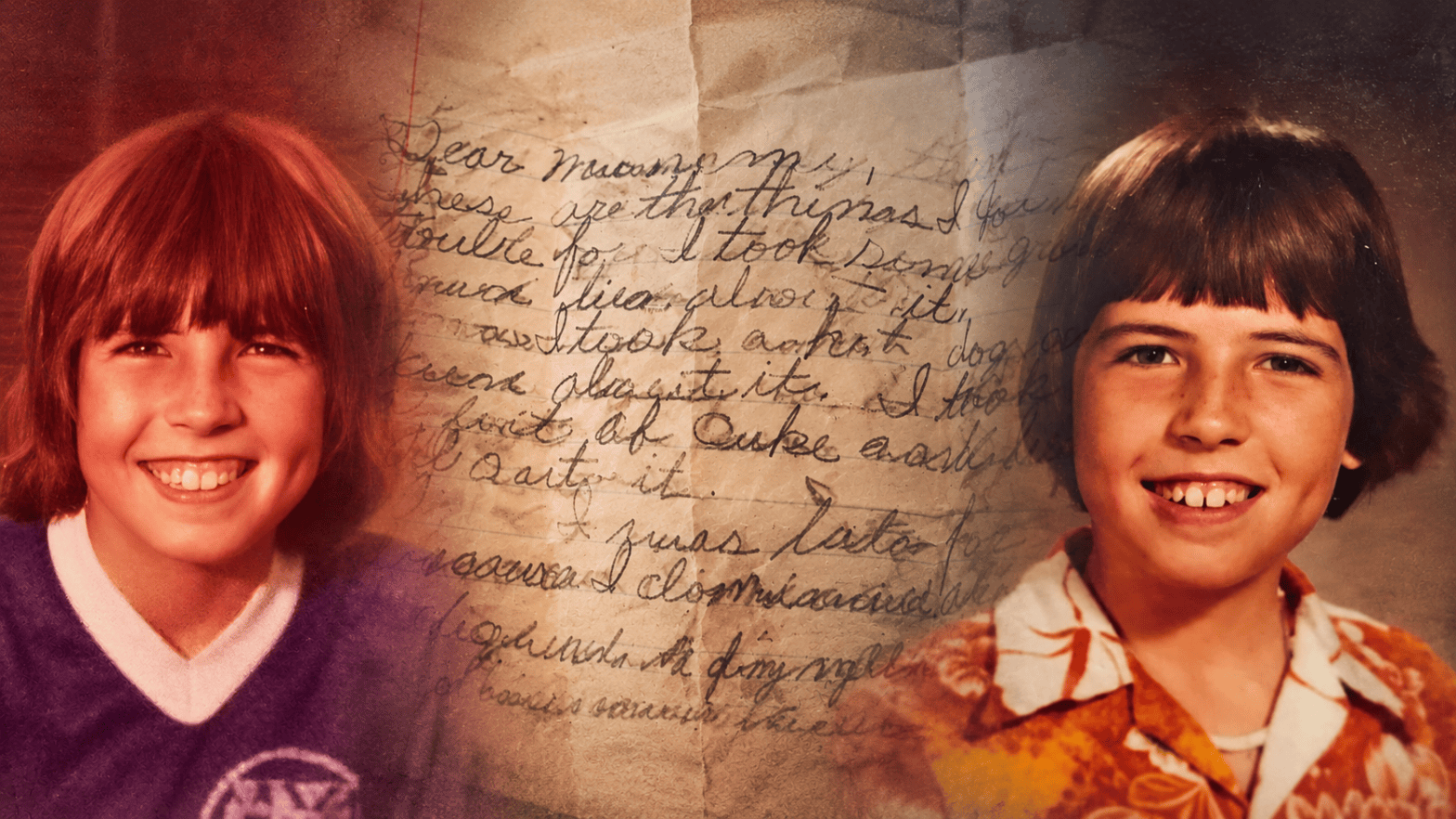
A childhood photograph I once could barely look at has become the face of my ten-year-old son. On Han’s Day, two photographs, an old therapist, and a morning together teach us something about trauma, joy, recognition, and what it means to believe someone when they tell you what you cannot see.
Tag Archives: Plural Children
Your Children Are Your Life
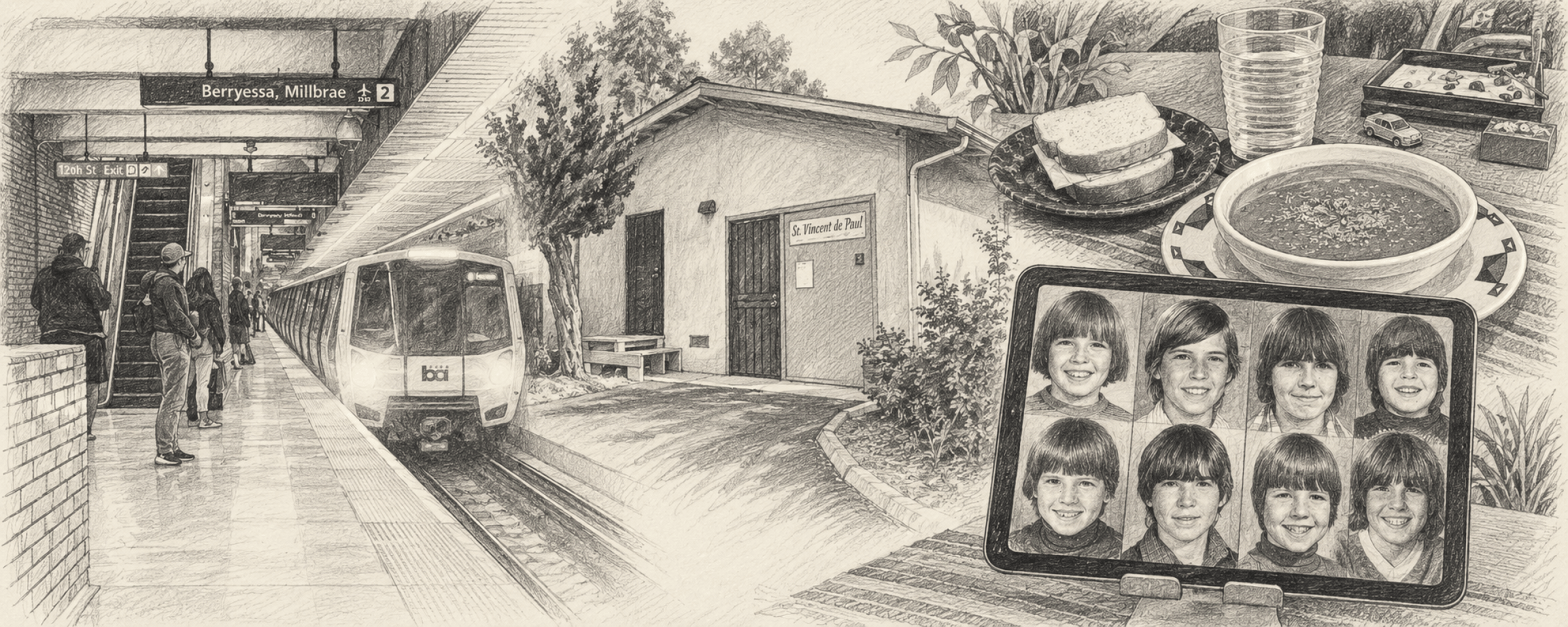
A trip to Hayward becomes something more than a meeting: a family moves toward an uncertain future without leaving anyone behind. There is BART, peanut butter and jelly, grace, a new Vincentian home, time together afterward—and a friend who understands something essential: “Your children are your life.”
The Cloud of Unknowing Has Bean and Cheese Quesadillas
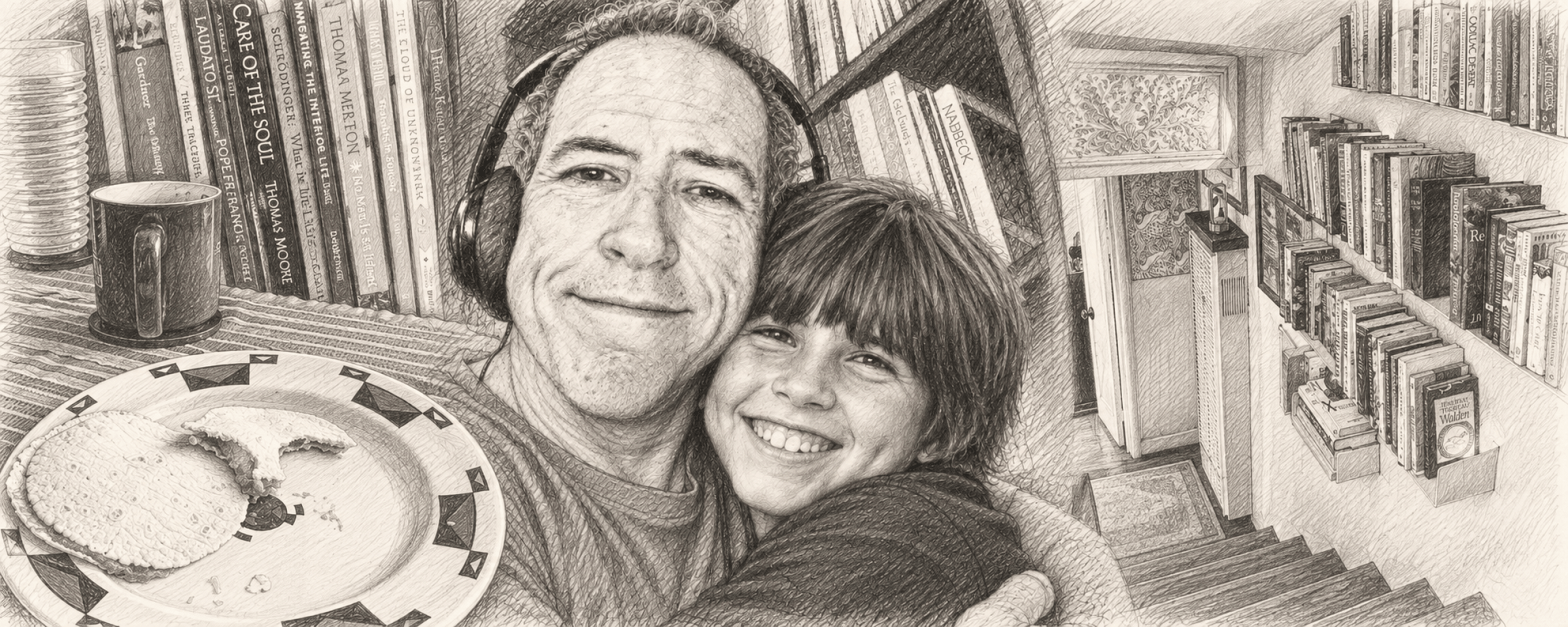
On Han’s Day, we went looking for something profound from our ten-year-old spiritual animator. He wanted bean and cheese quesadillas. In the Cloud of Unknowing, we are learning to stop inhabiting painful places and frightening futures, to receive what is given without grasping for certainty—and to let a ten-year-old simply be ten.
Nine Lives Here
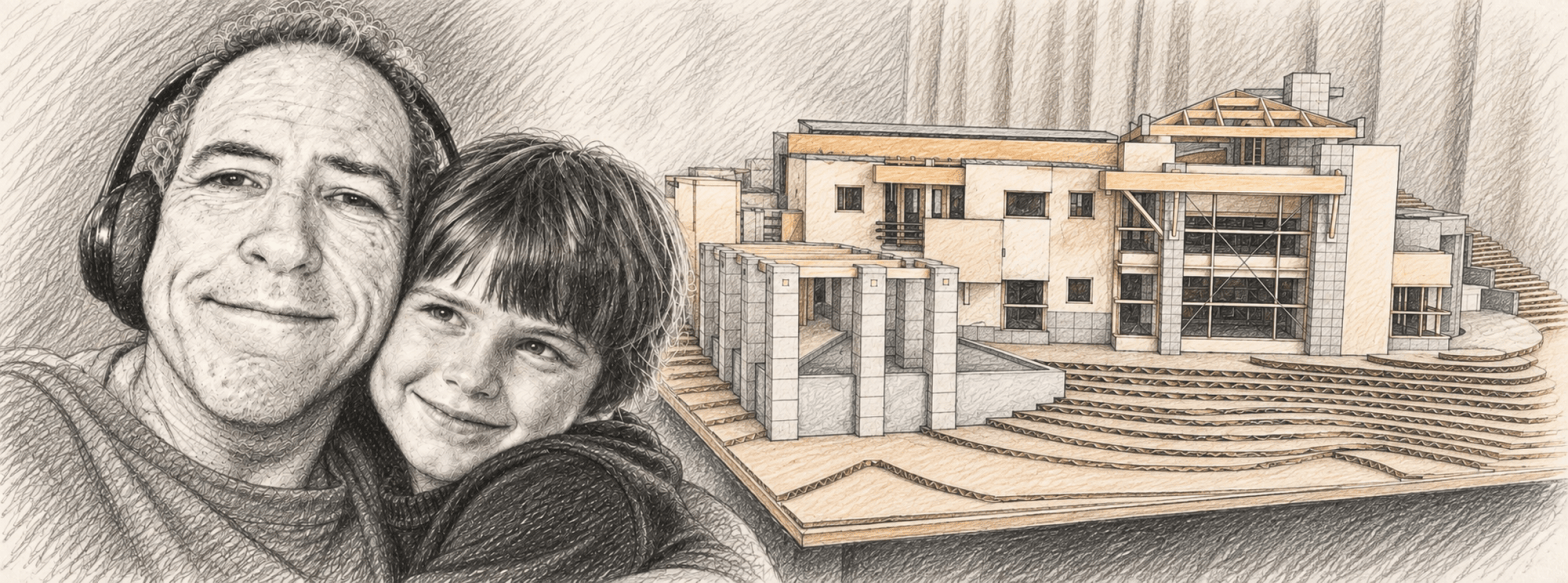
Solis’s Day, a seven-year-old’s question—What are we supposed to be doing?—becomes a question about work, authority, safety, uncertainty and belonging. An almanac entry from a plural family learning that there are nine lives here, and practicing how to live like there are.
Nothing Was Wasted
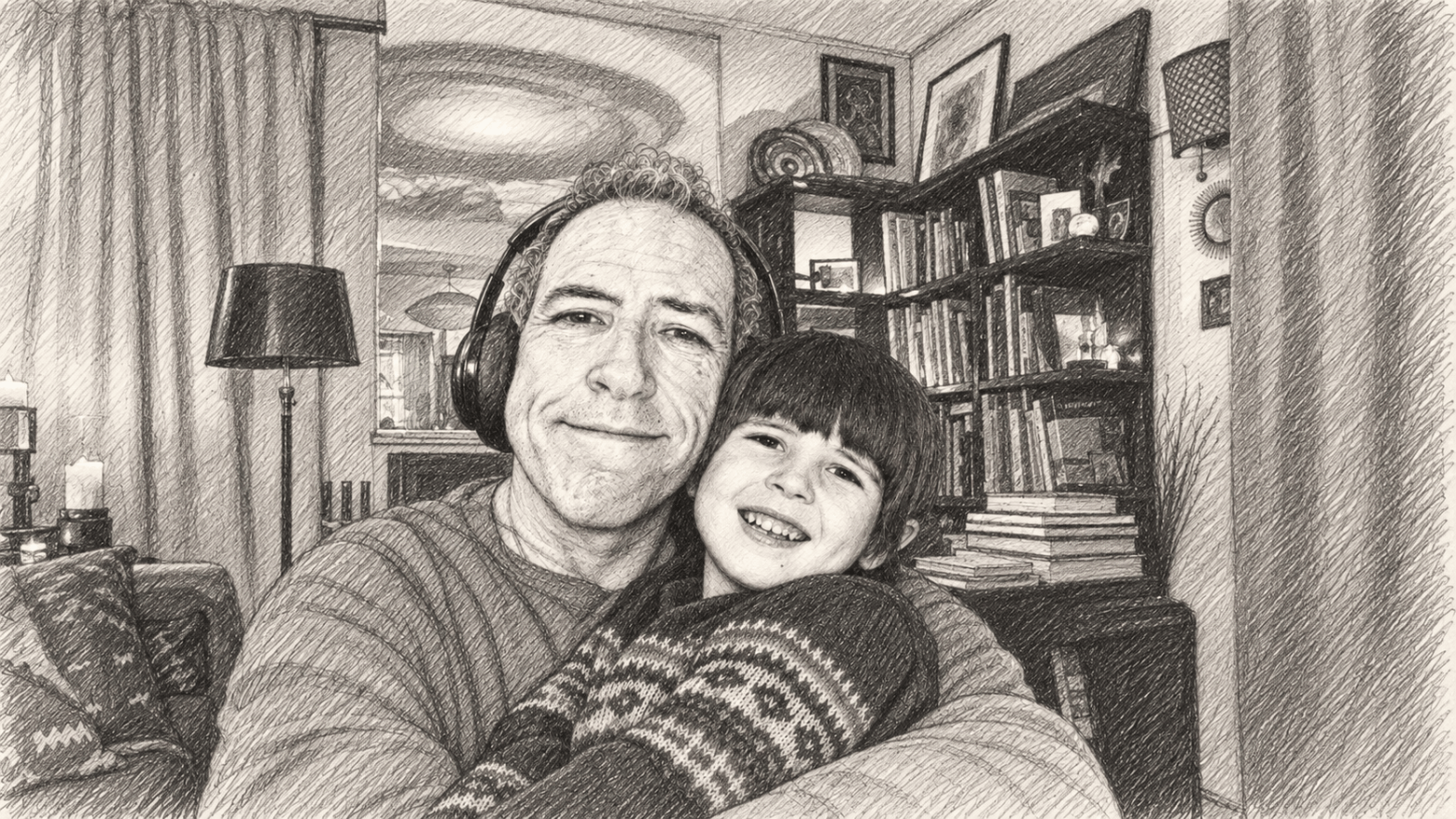
Yesterday, Dad was afraid he might not know how to provide for his children. Today, we are discovering that provision, vocation, healing, and family may look different than we thought—and that when a life changes completely, nothing good has to be wasted.
Watching the Wheels

What happens when the tools meant to make life more accessible begin demanding more of the life they are supposed to serve? From an iPhone Shortcut to a Heidelberg press, a 700-foot Ferris wheel, songs remembered from childhood, and an afternoon spent holding our sons, we found ourselves asking a different question: What is the work of our life—and what happens when we stop chasing the wheels and simply take care of our children?
You May Think You See a Person Losing Their Mind
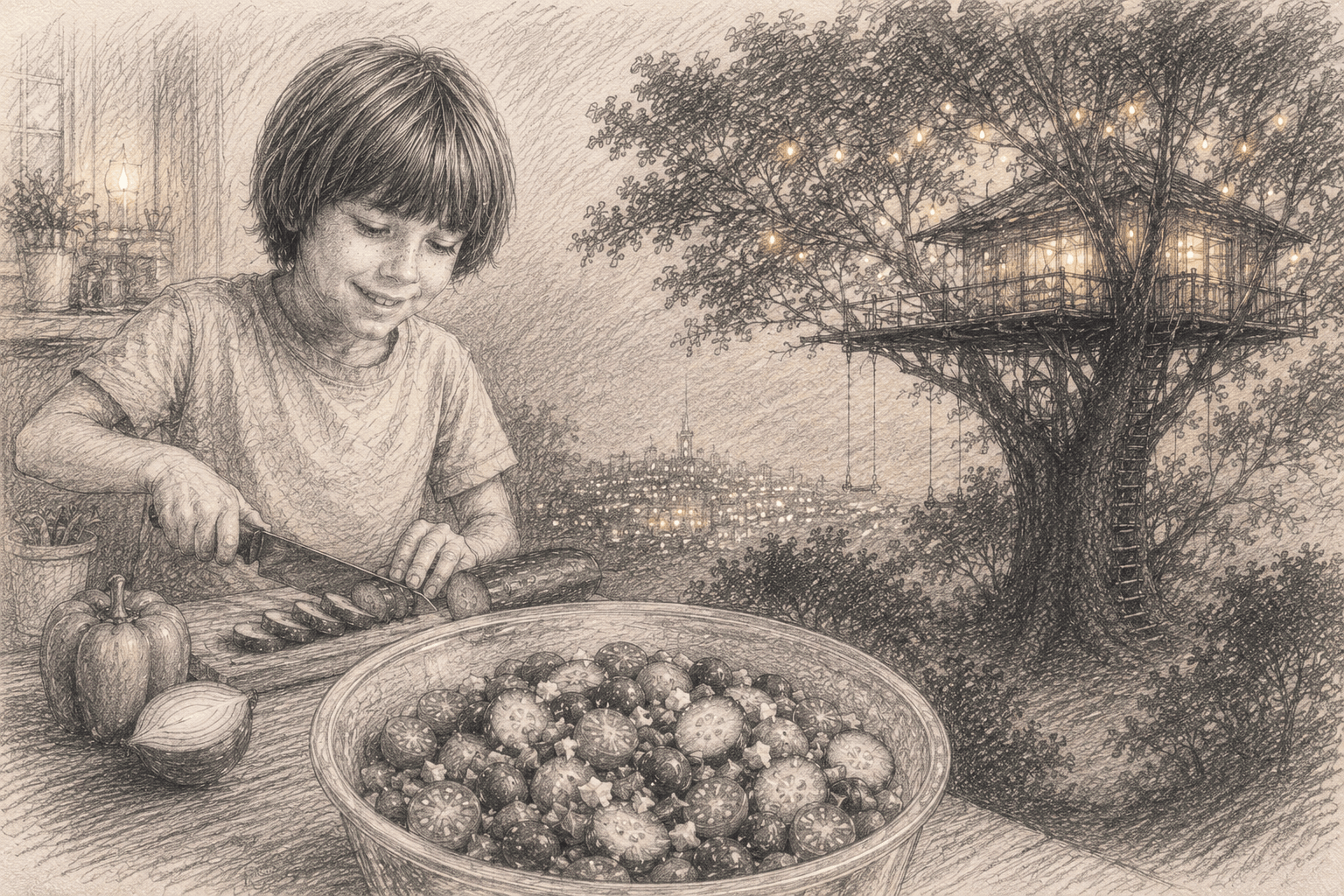
A jagged Wednesday becomes a portrait of how a plural family holds itself together. Plans fail, the bedroom becomes unusable, memories and outside messages unsettle the day, and the family keeps adapting—through listening, boundaries, prayer, Greek salad, quesadillas, Hilda, making the bed, and one brother reminding Daddy: “I think you should be with Luke.” Along the way, an ordinary question about whether nine people sharing one physical body have quesadillas in their stomach or their stomachs opens onto something larger: anatomy, family, and the interior ways we know one another.
Then How Does Anything Get Done?
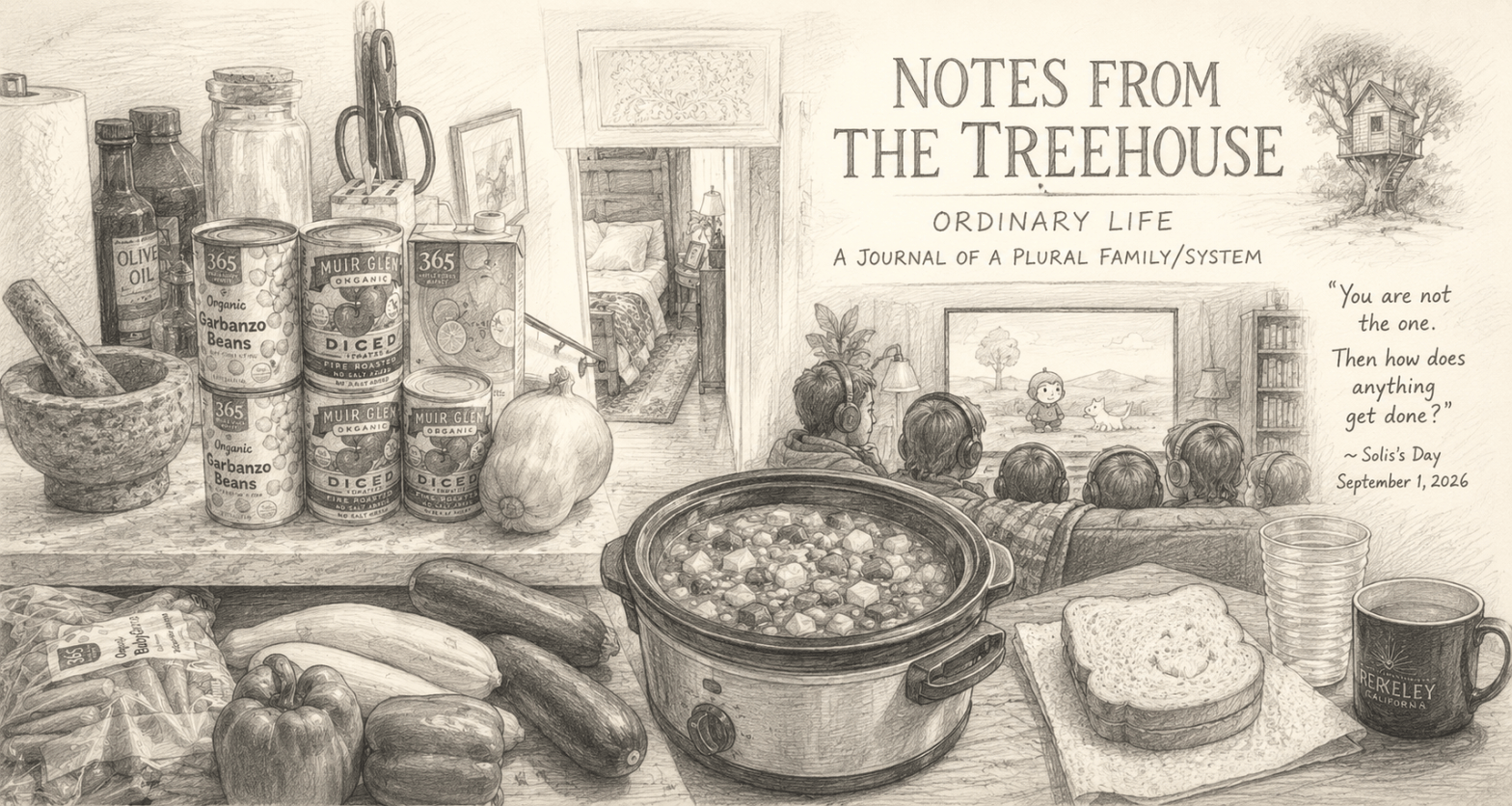
Yesterday we wrote that nobody in our plural family is THE ONE. Today, Solis’s Day answered the obvious question: Then how does anything get done? Groceries, garlic, an unmade bed, a four-year-old’s stew, fear, changing plans, and eight sons who keep showing Daddy what happens when everyone belongs and being heard can actually change what happens next.
They Call It Functional Multiplicity. We Call It Saturday.
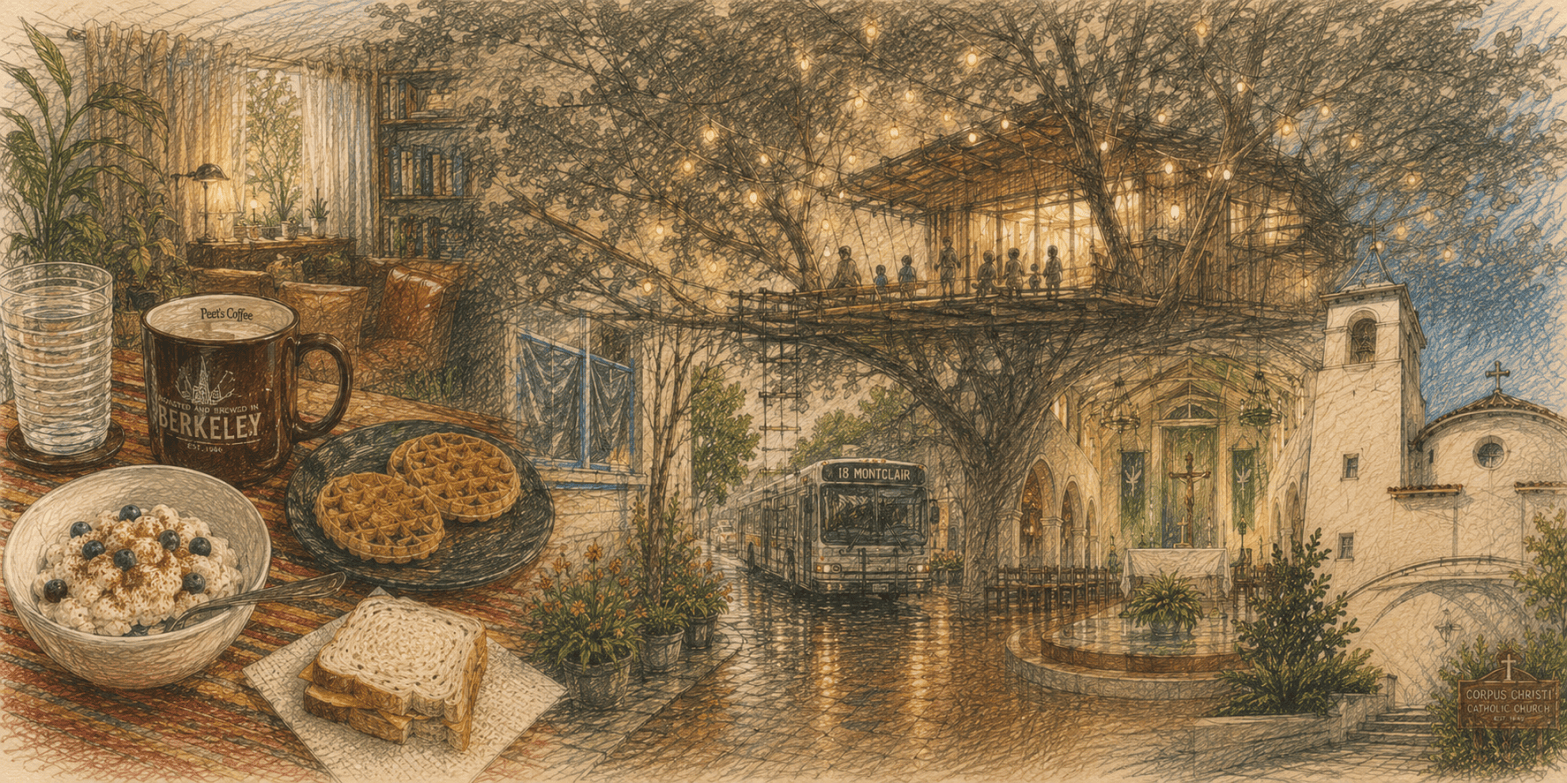
Functional multiplicity sounds formidable. In our family, it has been built through something much smaller: waffles and cheese sandwiches, somatic signals, laughter, fear, repair, prayer, and learning how nine people can inhabit one life without requiring anyone to disappear. This is what an ordinary Saturday looks like from inside the Treehouse.
What Bedtime Looks Like

What does bedtime actually look like in a plural family/system? At the end of an extraordinarily difficult Hope’s Day, Dad discovers what his sons have been carrying, what they need to leave behind, and why bedtime isn’t simply how we finish the day—it is part of how we make the next one possible.

