What happens when nobody is THE ONE? A classical analysis of Solis’s Day reveals an answer emerging through ordinary life: Daniel wakes Daddy, Jude imagines dinner, Hope changes the plan, Solis draws an ethical boundary, and the family adapts when a difficult afternoon makes rest impossible. September 1 becomes a study in functional multiplicity, consequential listening, and a new understanding of stability: when something happens, the family remains.
Tag Archives: Present Presence
Then How Does Anything Get Done?
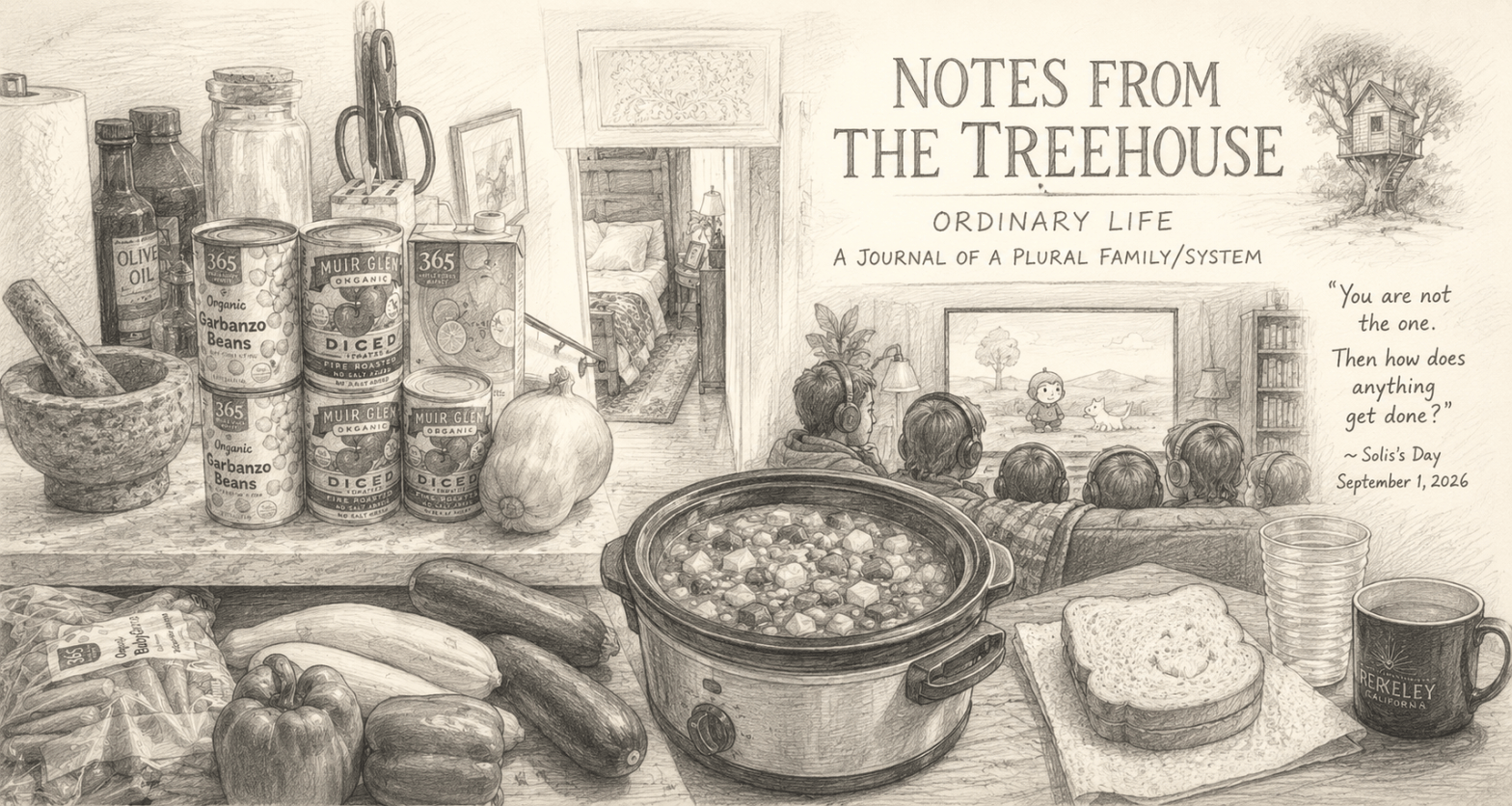
Yesterday we wrote that nobody in our plural family is THE ONE. Today, Solis’s Day answered the obvious question: Then how does anything get done? Groceries, garlic, an unmade bed, a four-year-old’s stew, fear, changing plans, and eight sons who keep showing Daddy what happens when everyone belongs and being heard can actually change what happens next.
They Call It Functional Multiplicity. We Call It Saturday.
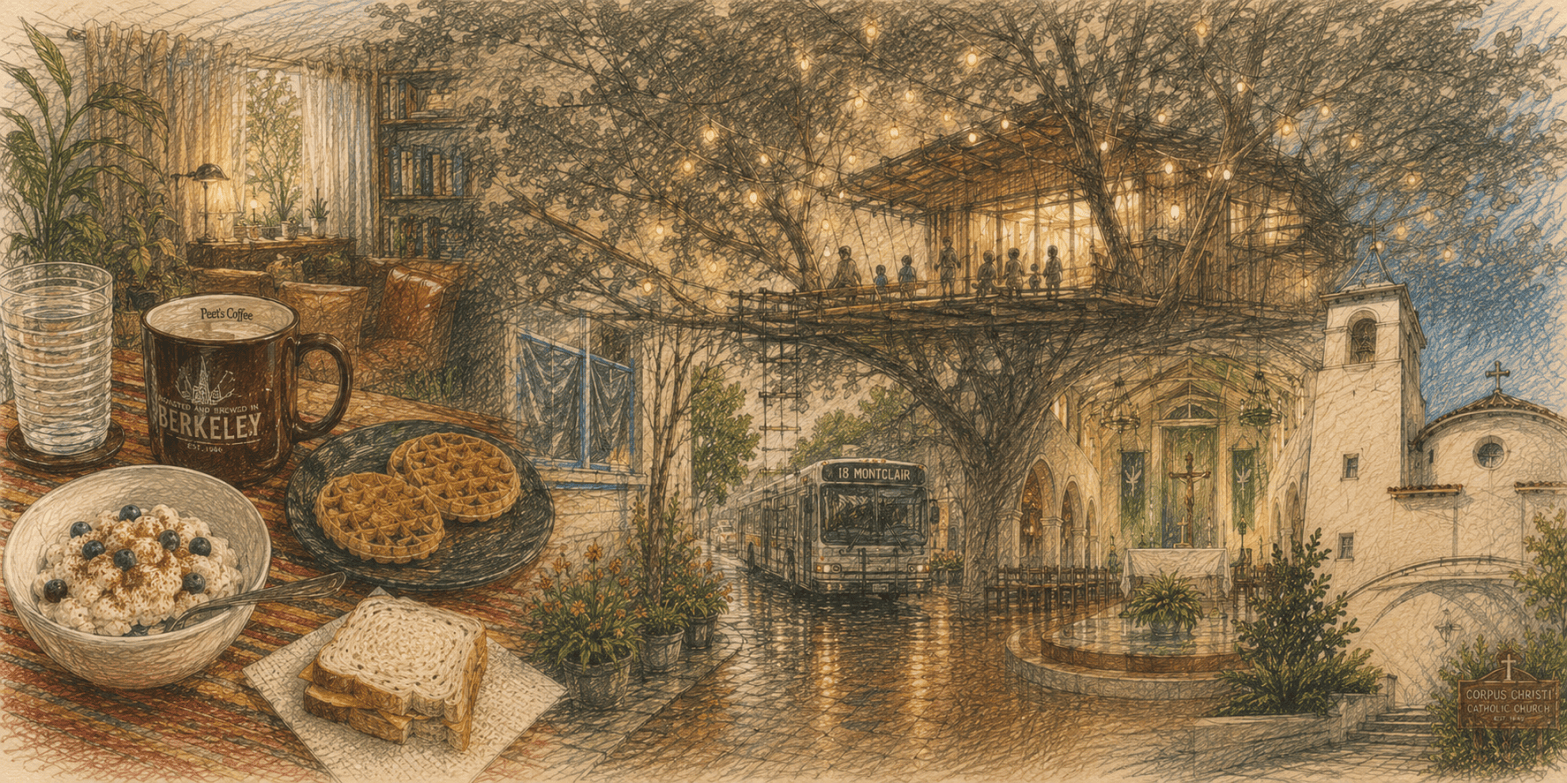
Functional multiplicity sounds formidable. In our family, it has been built through something much smaller: waffles and cheese sandwiches, somatic signals, laughter, fear, repair, prayer, and learning how nine people can inhabit one life without requiring anyone to disappear. This is what an ordinary Saturday looks like from inside the Treehouse.
The Work Inside an Ordinary Saturday
What does functional multiplicity actually look like in ordinary life? This companion analysis looks beneath one difficult Saturday to explore the small practices—communication, co-regulation, somatic signaling, shared agency, attention, repair, and delight—that help a plural family build a life together.
Present Presence: The Foundation of Ordinary Life
What happens when the present moment itself can become terrifying? Our plural family calls it a Terror Peek. During the pandemic, a quieter world helped us discover another possibility: Present Presence—the ability to inhabit the life that is actually here, together.

