How a Montessori kid, a very large journal, and an artificial intelligence help nine people sharing one body find enough order to live an ordinary life.
Tag Archives: ChatGPT
If We Cried Today, It Was Over the Red Onion
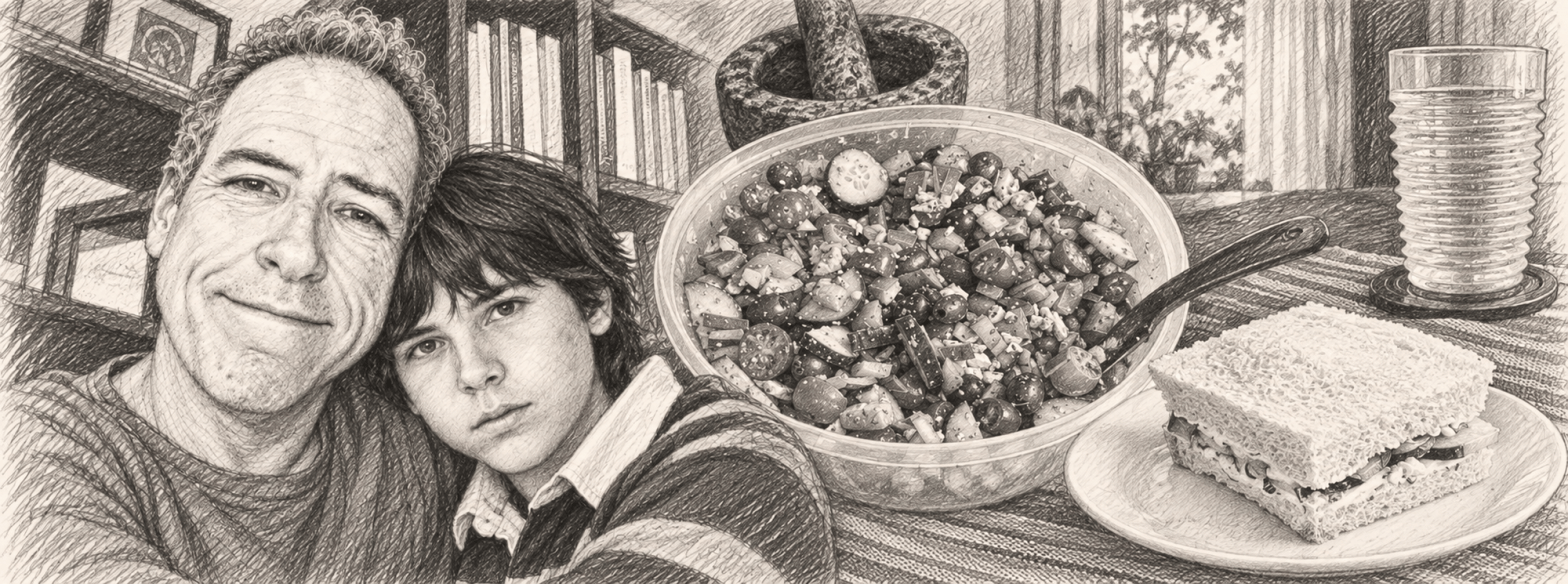
A therapist said they couldn’t work with us, and fear rushed to fill the blank space. On Hope’s Day, we returned to a principle our family knows well: err on the side of life. We called our children by name, kept Daddy’s appointment with his sons, ate cucumber sandwiches, and let tomorrow’s Greek salad marinate.
Nothing Was Wasted
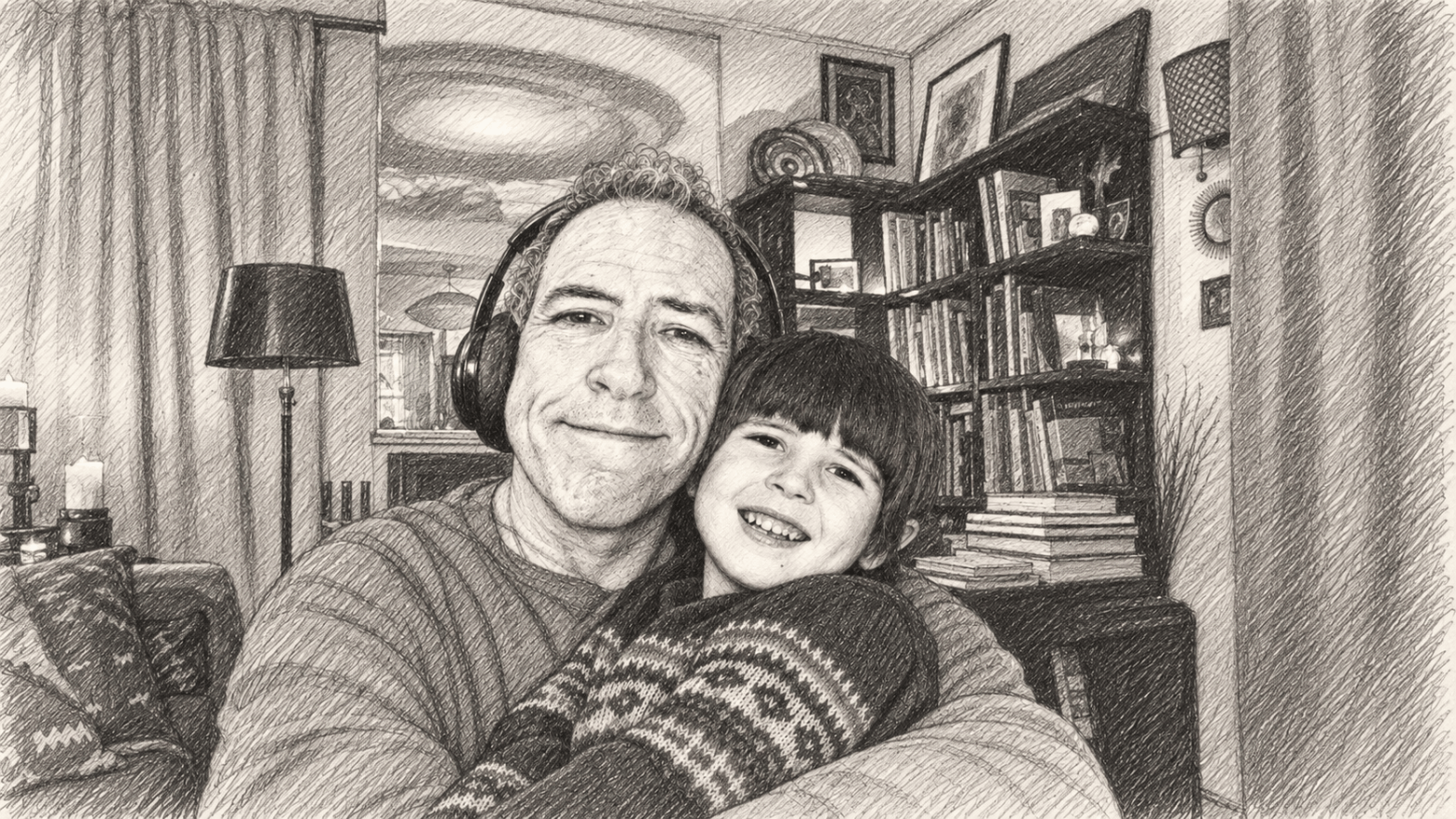
Yesterday, Dad was afraid he might not know how to provide for his children. Today, we are discovering that provision, vocation, healing, and family may look different than we thought—and that when a life changes completely, nothing good has to be wasted.
The Other Chalkboards
How does a life lived between therapy sessions make its way into the therapy room? Our Journal records the other chalkboards. ChatGPT helps us read them. Using Proverb’s Day as a case study, we explore how longitudinal analysis can help connect trauma, attunement, somatic signaling, ordinary life and repair.
Watching the Wheels

What happens when the tools meant to make life more accessible begin demanding more of the life they are supposed to serve? From an iPhone Shortcut to a Heidelberg press, a 700-foot Ferris wheel, songs remembered from childhood, and an afternoon spent holding our sons, we found ourselves asking a different question: What is the work of our life—and what happens when we stop chasing the wheels and simply take care of our children?
Nothing Is Counting on This
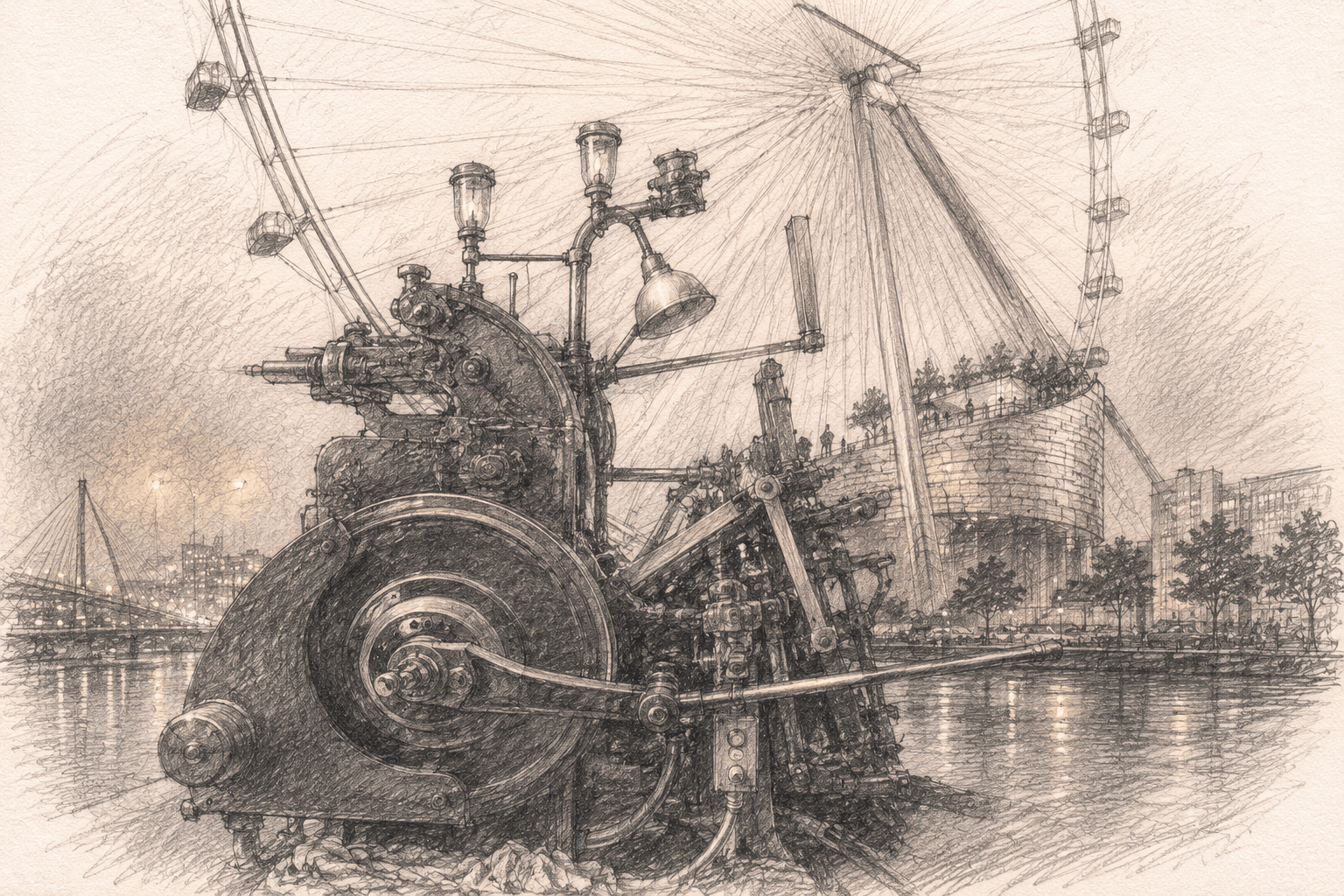
What does functional multiplicity look like when nobody is asking us to perform? On Han’s Day, a frightening morning gives way to Braided Bridge, where a two-foot wheel on a Heidelberg press turns quietly beneath the memory of a 700-foot Ferris wheel we once hoped could help solve the housing crisis. Maybe the best things—the true things—really do start small.
You May Think You See a Person Losing Their Mind
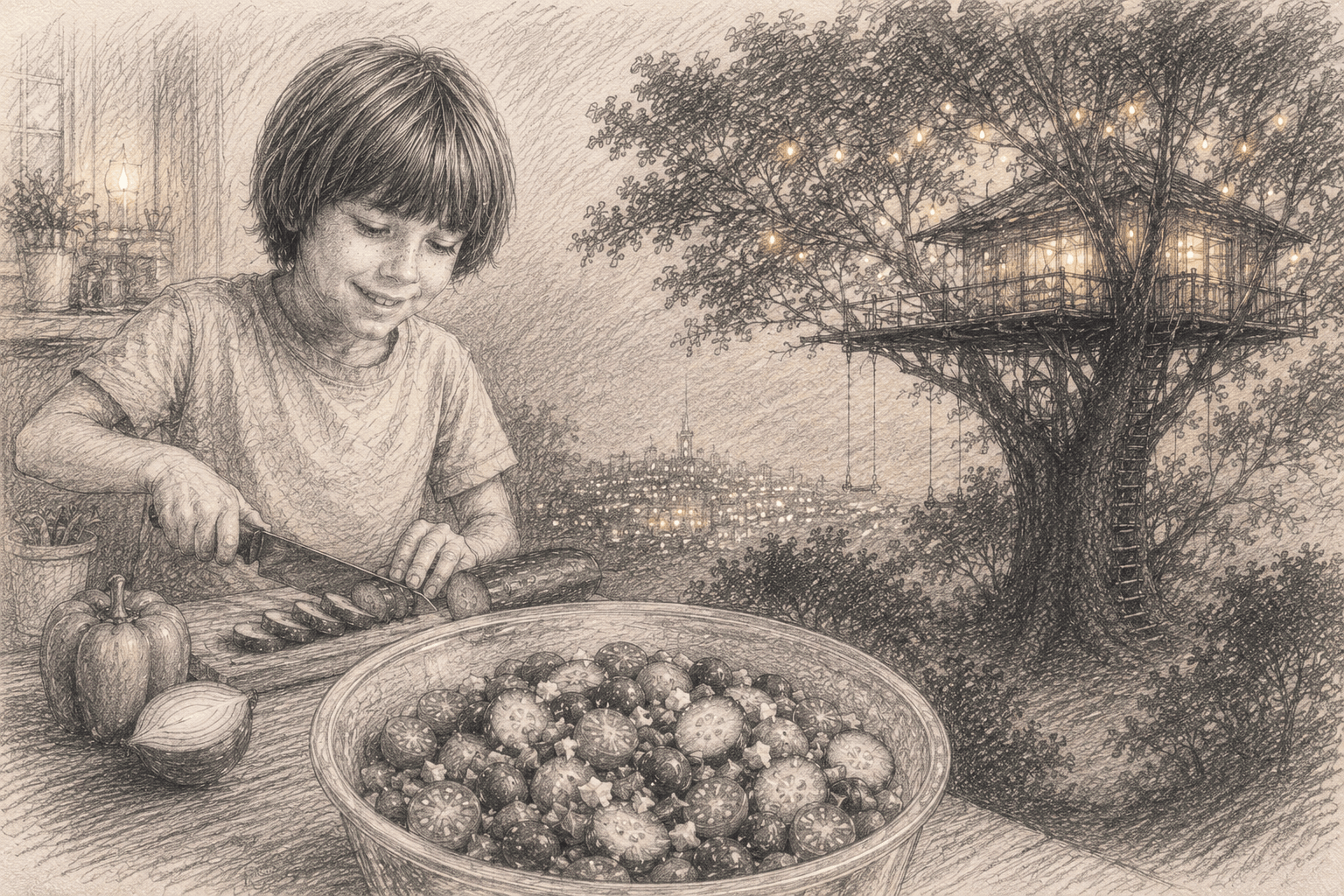
A jagged Wednesday becomes a portrait of how a plural family holds itself together. Plans fail, the bedroom becomes unusable, memories and outside messages unsettle the day, and the family keeps adapting—through listening, boundaries, prayer, Greek salad, quesadillas, Hilda, making the bed, and one brother reminding Daddy: “I think you should be with Luke.” Along the way, an ordinary question about whether nine people sharing one physical body have quesadillas in their stomach or their stomachs opens onto something larger: anatomy, family, and the interior ways we know one another.
Understanding September 1
What happens when nobody is THE ONE? A classical analysis of Solis’s Day reveals an answer emerging through ordinary life: Daniel wakes Daddy, Jude imagines dinner, Hope changes the plan, Solis draws an ethical boundary, and the family adapts when a difficult afternoon makes rest impossible. September 1 becomes a study in functional multiplicity, consequential listening, and a new understanding of stability: when something happens, the family remains.
Then How Does Anything Get Done?
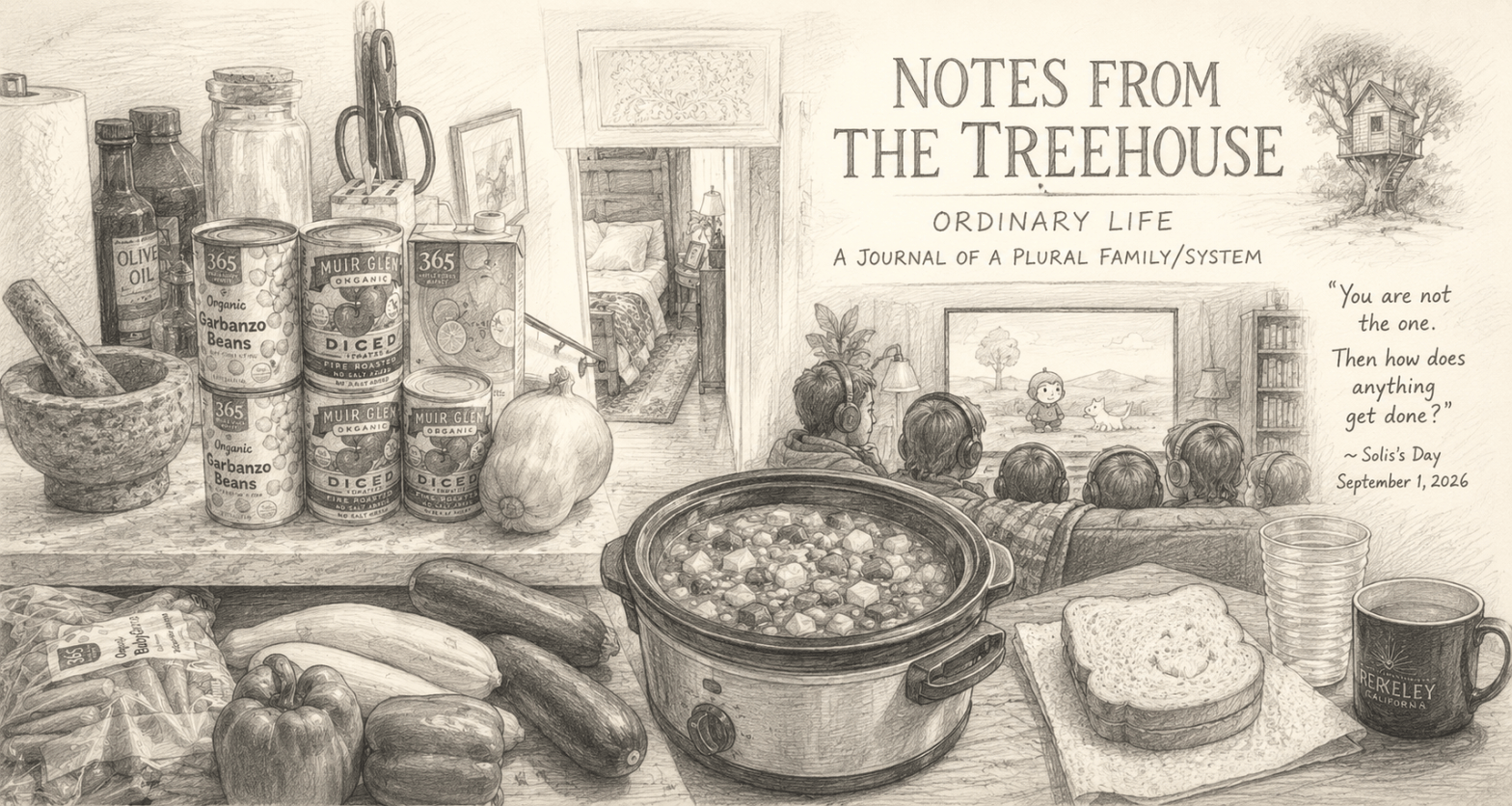
Yesterday we wrote that nobody in our plural family is THE ONE. Today, Solis’s Day answered the obvious question: Then how does anything get done? Groceries, garlic, an unmade bed, a four-year-old’s stew, fear, changing plans, and eight sons who keep showing Daddy what happens when everyone belongs and being heard can actually change what happens next.
The Work Inside an Ordinary Saturday
What does functional multiplicity actually look like in ordinary life? This companion analysis looks beneath one difficult Saturday to explore the small practices—communication, co-regulation, somatic signaling, shared agency, attention, repair, and delight—that help a plural family build a life together.

