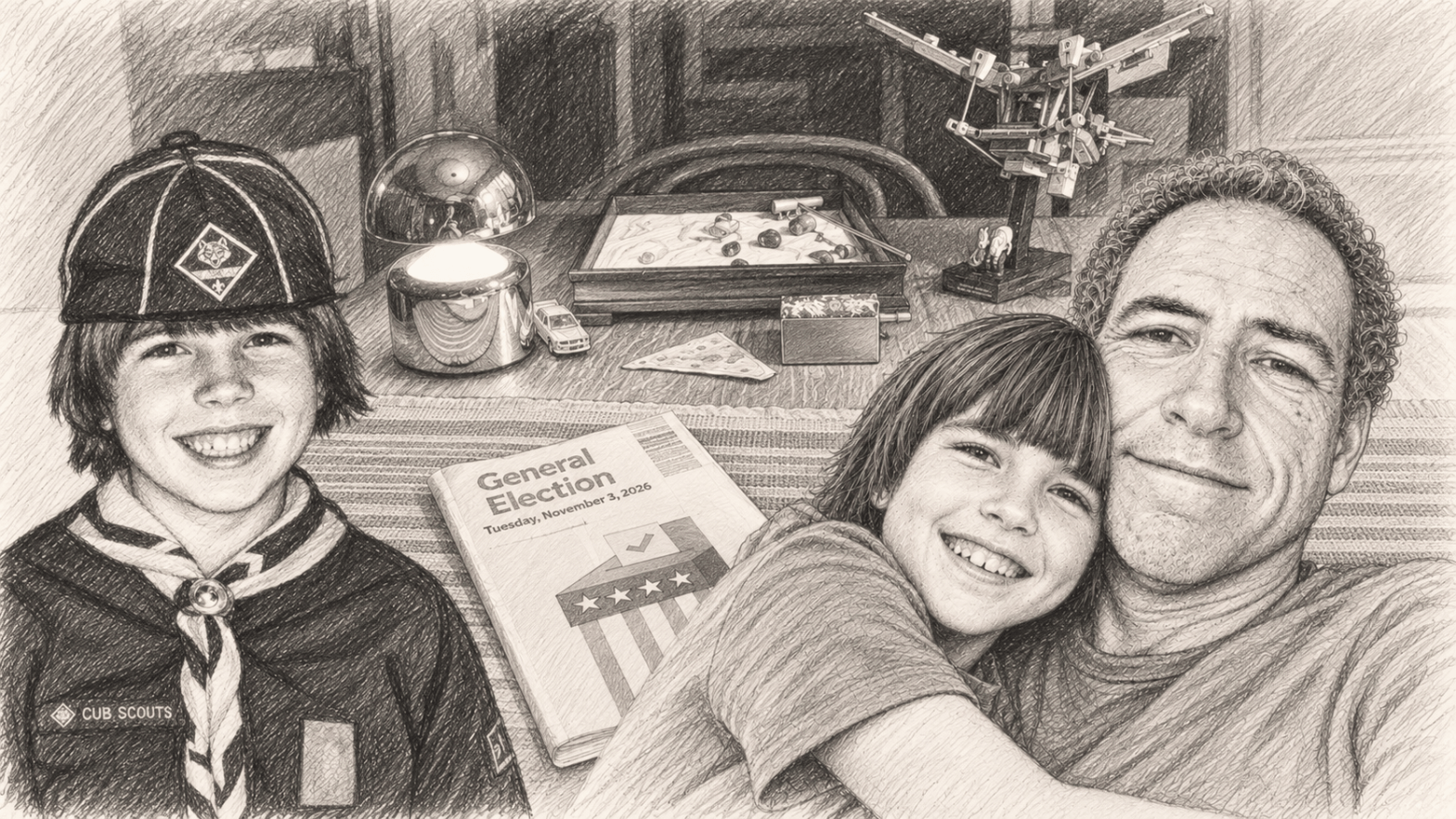
This afternoon, on the way home from church, we did something we did not want to do.
We checked the mail.
That probably requires some explanation.
We are fifty-nine years old. We spent close to thirty years practicing architecture. For twenty-four of those years, we worked for an internationally known architecture and design firm. We were a conceptual and technical designer. We worked on complicated projects. We played leadership roles. We became a Senior Associate. We sat in meetings with industry leaders and people whose names appeared in magazines.
People thought we were extraordinarily talented.
People also thought there was something very wrong with us.
At work, some people called us Rain Man.
We could dress the part. We could mask. Somehow, when it was required of us, we could pull ourselves together and walk into rooms with important people and appear to be a competent professional adult.
Then we would go home to an apartment that could look like a homeless encampment.
People close to us could not understand the contradiction.
Neither could we.
Sometimes administrative staff at the architecture firm tried to intervene in the most basic areas of our life. At one point, they were trying to help us get to the DMV because we could not seem to understand the importance of getting identification.
Our mother sometimes drove us to work and talked to us like a child. We often ranted on the drive to the office, and she would try to help us get emotionally regulated by telling us what she called “Timmy stories,” stories about our beloved family cat.
People sometimes described us as helpless. Like a little kid.
But we were also designing buildings.
For most of our life, people have looked at the things we could do and the things we could not do and asked some version of the same question:
If you can do that, why can’t you do this?
We have asked it too.
For years.
Today we searched:
development of agency after childhood trauma: externally directed functioning versus internally generated action
We have been thinking about adult agency a lot lately.
Our job with St. Vincent de Paul ended unexpectedly almost two months ago, and since then Dad has struggled enormously with things he knows need to be done: healthcare, money, mail, appointments, decisions about the future. Things other people might describe as ordinary adult responsibilities.
Dad can become absolutely frozen.
But the job ending did not create this.
It exposed something that has been with us for most of our life.
Maybe something we have been trying to understand since childhood.
⸻
One of the things we are beginning to understand is that adult competence and adult agency are not necessarily the same thing.
Someone can become extraordinarily capable in one mode of functioning while another developmental capacity remains fragile or insufficiently practiced.
That sentence matters to us.
Because for much of our life, our competence has been used as evidence against our need.
If we could design something extraordinarily complicated, how could we possibly be unable to get an ID? If we could function in a professional environment, how could our home become almost unlivable? If we could travel internationally, how could we become paralyzed by something arriving in the mail?
If we could do one difficult thing, surely we could do another.
And when we could not, the explanations were familiar: lazy, not applying ourselves, helpless, dramatic, not trying hard enough.
We have heard versions of those explanations since childhood.
What almost nobody could see was how the things that did happen actually happened.
Including us.
⸻
After our architecture job ended, our mother talked for years about our trip to Italy. She would point to it as evidence.
Look what you did. You figured that out. You went to Italy.
Why can’t you do these other things?
There was a problem.
Dad did not know how we went to Italy either.
Three months later, we went to London.
Dad did not know how we pulled that off.
We understand more now.
Proverb had a great deal to do with it.
We did not know that then. We did not yet understand ourselves as a plural family/system of nine people sharing one body, mind, and inner world. We did not understand that the visible accomplishment did not necessarily reveal the invisible process that produced it.
The body went to Italy. The body went to London. Those things happened.
But “John went to Italy, therefore John possesses a generalized capacity to independently organize his life” turns out to be a much larger claim than the evidence supported.
The accomplishment was real.
The explanation was incomplete.
⸻
Something similar happened throughout our career in architecture.
We had real ability. We were a very talented designer, conceptually and technically. We had experience. We had expertise. We could do things extraordinarily well.
And we needed help.
Those two statements have spent most of our life being treated as though only one of them could possibly be true.
Some people at the firm attributed our success to other people helping us. Some accused us of receiving special treatment. Some openly said we could not succeed without the firm.
Near the end of our time there, a founding partner said something to us to the effect that perhaps we were not as good as people thought we were.
Then, on the day they ended our employment and made us a consultant, we were told that we had the talent, competence, and experience to establish a successful practice and design career of our own.
Two weeks later, the firm tried to take critical design software away from the computer they had sold us.
We hired a lawyer.
The resulting case involved discrimination, the removal of our accommodation, and unlawful termination, and the firm was found liable.
We do not know what everybody privately believed about what would happen to us.
We do know something else.
They did not make us a Senior Associate because we were an incompetent hack.
We did sophisticated conceptual and technical work. We held leadership responsibilities. We spent close to thirty years practicing architecture.
Our competence was real.
So was our need for help.
Those truths do not cancel each other.
⸻
It had taken us more than a decade of extraordinarily hard work, including sixteen years of very close collaboration with Clay, to arrive at a way of practicing architecture that worked.
Maybe that is part of what we failed to understand.
Maybe other people failed to understand it too.
The question was never simply:
Are we talented?
We were.
The question was also:
Under what conditions can we reliably gain access to that talent?
What did Clay provide? What did the firm provide? What did deadlines provide? What did clients provide? What did the Special Projects Studio provide? What did administrative staff provide? What did established routines provide? What did other people initiate that we could then respond to?
What did fear provide?
What did our need to please provide?
What did Submit provide?
What were our children already doing without any of us understanding that they were there?
What happened to everything else in our life while ninety-eight percent of us was organized around work?
Those questions are very different from asking whether we deserved “special treatment.”
Maybe some of the things other people called special treatment were part of the ecology in which we could function.
That does not mean every relationship was healthy.
It means support and competence are not opposites.
Needing help does not make the work less real.
And doing extraordinary work does not make the need for help less real.
We were simultaneously extraordinarily capable and substantially dependent upon conditions nobody fully understood.
Including us.
⸻
When the firm was gone, the ecology was gone too.
Our architectural career imploded.
Architecture had been our first love.
It was not simply a job.
It was our vocation.
We do not practice architecture for a living anymore.
There is still enormous heartbreak in writing that sentence.
Years later, another ecology developed.
It was different. The work was different. We were different. By then we knew that we were a plural family.
At St. Vincent de Paul, we worked remotely. We had flexibility. We had accommodations. Over time, we developed routines that allowed professional responsibilities and family life to coexist.
And then that job ended too.
The ecology disappeared.
Again.
The abilities did not disappear.
The conditions under which some of those abilities were reliably accessible did.
There is an important distinction there.
Ability is not the same thing as access to ability.
We wish someone had told us that forty years ago.
⸻
This morning, while trying to understand why Dad can be so capable in some circumstances and so completely frozen in others, we started searching for information about adults who struggle with agency after developmental trauma.
Some of what we found was useful.
Some of it was not.
The material about plurality was especially difficult. It talked about things like poor fronting cohesion, designated adult fronters, younger people interfering with adult functioning, and making sure an adult is available to handle adult responsibilities.
That does not describe the problem we are trying to solve.
Dad is here.
Jude is four. Daniel is five. Solis is seven. Luke is nine. Han is ten. Justus is eleven. Proverb is twelve. Hope is fourteen.
The answer cannot be making our children disappear so that some more competent adult can take over.
No one is going away.
That is non-negotiable.
And the answer cannot be turning one of our children into the adult who makes Daddy function either.
We learned something painful about that yesterday.
Dad was frightened about the future and about how frozen he has become, and he asked seven-year-old Solis for something a parent should not require of his child. Dad told Solis that he needed his love and support.
Dad was trying to explain something.
But the truth is that he was asking Solis to help him get unfrozen.
That was not Solis’s responsibility.
Dad went back and told him so.
You do not have to take care of Daddy. You do not have to make Daddy feel better. You do not have to help Daddy get unfrozen.
You get to be seven.
Daddy will take care of you.
Today something different happened with Luke.
And the difference matters.
⸻
Luke has spent much of his life trying to understand where we belong in relation to other people.
One of his deepest trauma responses is:
Submit.
There are reasons for that.
When we were a child, Clifford was presented to us as someone who was going to help us become a successful Cub Scout.
He raped us.
He demanded our total submission to him. He manipulated us. He gaslit us. And he taught us something horrifying about what we were for.
“Your purpose is to make sure I know that you like the way I treat you.”
Luke bears the lion’s share of the trauma from Clifford.
He has a different relationship to what happened to him, and to the trauma he embodies, than his brothers and his dad do.
And he wants the story told.
We may never confront Clifford.
But we can tell the truth about what he did.
Because what Clifford taught us did not remain contained in childhood.
The lesson was not merely that one person could hurt us.
It reached much deeper.
Someone could present himself as the person who was going to help us succeed and then demand submission in return. Help could conceal exploitation. Approval could require giving ourselves away. Belonging could require becoming useful to somebody else. Our purpose could be defined by what another person wanted from us.
And perhaps most insidiously, we could be required not merely to submit, but to reassure the person using us that we liked what was being done to us.
That carried forward into relationships, into our understanding of authority, into employment, into the way we learned to locate ourselves in relation to people who possessed power over us.
Submit.
Adapt.
Figure out what they want.
Give it to them.
Do not make trouble.
Be useful.
Make sure they are pleased with you.
And sometimes:
Make sure they believe you are pleased with them.
Luke recognizes this pattern with a particular intensity.
He has a word for people he perceives as exploiting those vulnerabilities.
Cliffords.
That does not mean everyone who has hurt us is Clifford or that every difficult relationship is the same as what Clifford did.
It means Luke recognizes something.
He recognizes the danger of relationships in which help, belonging, approval, authority and submission begin collapsing into one another.
That is one reason questions about dependence and support are not abstract questions for our family.
We need other people.
We always have.
We need help now.
But needing other people has not always been safe.
Sometimes what was offered as help required too much of us. Sometimes we submitted when what we needed was support. Sometimes we performed. Sometimes we masked. Sometimes we became whatever the environment required.
And some of those adaptations made us extraordinarily successful.
That makes the question we are asking about agency more complicated.
Because we are not simply trying to learn how to do things.
We are trying to learn how to act without waiting for someone else to tell us what to do.
We are trying to learn how to receive help without surrendering ourselves to the person providing it.
We are trying to learn how to belong without submitting.
We are trying to learn how to need other people without making our need an invitation to be used.
⸻
This is where the distinction we encountered today became so important.
Someone can become extraordinarily good at responding to externally generated demands without becoming equally good at internally generated action.
School says: Do this.
Work says: Do this by Friday.
A client needs something. A child needs something. There is a crisis. There is an emergency. There is a deadline. Something bad will happen unless you act.
We can become extraordinarily capable inside those conditions.
Then remove them.
And suddenly the question is:
What do I want to do, and how do I make myself begin doing it?
That is different.
Maybe agency develops through thousands of small experiences:
I want something. I choose. I try. It does not work. Nobody destroys me because I got it wrong. I try something else. Something happens because I caused it to happen. I discover preferences. I disagree. I make mistakes. I recover.
Eventually something becomes embodied:
I can act upon the world.
What happens when childhood teaches other things instead?
Watch. Adapt. Submit. Anticipate. Do not get caught. Do not make trouble. Figure out what the other person wants. Become what the situation requires. Survive.
Those are capacities too.
Some of them can become extraordinary capacities.
But they are not necessarily the same thing as agency.
⸻
We have an adult who has worried for most of his life that he somehow never grew up.
He wanted to grow up when he was a child.
This was never Peter Pan syndrome.
He was not refusing adulthood because childhood was more fun.
He desperately wanted to become the adult he thought everybody else knew how to become.
He simply could not understand how other people did it.
Sometimes things happened.
Sometimes extraordinary things happened.
And Dad did not understand how we had made them happen.
Other times something seemingly elementary did not happen at all.
And everybody wanted to know why.
So did he.
⸻
This afternoon, we got off the 18 bus and started walking home.
Daniel was signaling.
Jude was signaling.
“Yes, we’re almost home, boys. I know you have to go pee. We’re almost home. We’re gonna go inside and go to the bathroom, we’re gonna get comfortable, and then we’re gonna have some Greek salad.”
We thought about going into Safeway.
Dad decided against it.
“I think that would be too much. I think that would be too much for you, Daniel.”
We were going home.
Then we reached our building.
Usually we take the stairs on the side of the building that lead directly to our kitchen door.
Today we stopped.
“I’m gonna do something I don’t wanna do.”
We turned toward the central stairs.
Toward the mailbox.
⸻
We are afraid of the mailbox.
There are reasons for that too.
A lot of frightening, life-altering things have arrived through the mail. There is fear associated with the central stairs and with people we might encounter there. We do not think we had gone to those stairs or checked the mail since the morning of the sink overflow.
Our heart started racing.
Dad told everybody it was all right.
He had it.
Not to worry.
And Luke was very much on our mind.
The mailbox used to be terrifying for Luke too. The central stairs were difficult.
But something had happened with Luke that morning.
Luke brought forward an image associated with a traumatic experience from years ago: a broken window.
When traumatic memories suddenly return like that, Dad pays attention. Sometimes something happening in the present is activating the trauma, and Dad was concerned about Luke.
But the image did not end with the broken window.
Luke showed the old glass and putty being removed.
He showed new glass being installed.
The window was repaired.
Dad asked Luke if he was afraid.
Luke said:
“I’m not afraid of it anymore.”
We did not need to make that mean anything more than Luke said.
But later, standing near another place associated with old fear, Dad had the sense that Luke could handle it.
That mattered.
We need to be precise about why it mattered.
Dad did not ask Luke whether he was allowed to check the mail. Dad did not tell Luke that Daddy needed him to be brave. Dad did not require Luke to remain unafraid so that Daddy could function.
Luke was not responsible for getting Daddy up those stairs.
Luke’s experience was information.
His presence mattered.
His courage mattered.
His perspective mattered.
But Dad was still Dad.
⸻
There is such a thing as an emotional consensus in our family.
We are nine people sharing one body.
We cannot pretend that what happens to one of us is irrelevant to everybody else.
If Jude is terrified, that matters. If Solis perceives danger, that matters. If Luke recognizes that something which used to terrify him no longer does, that matters too.
But information is not responsibility.
Our children can influence their father without parenting their father.
Interdependence is not the opposite of agency.
And our children really have influenced their father.
Profoundly.
That is another thing we do not want to minimize simply because we are learning to be more careful about what belongs to the children and what belongs to Dad.
Solis helped transform our home.
There was a time when our bathtub was black and slimy. One day Solis had enough.
“I’m so tired of this shit!”
Our seven-year-old said that.
Dad was shocked.
Then he cleaned the bathtub.
Later Solis and one of his brothers became frustrated with the kitchen and started cleaning it themselves.
Dad saw what was happening.
He was ashamed.
These were his children.
This was their home.
Dad needed to take care of it.
Within weeks, the apartment began to change.
Solis and Han, who at the time were something of an odd couple, started what amounted to an interior committee, a home environment committee. Their brothers became involved.
The home changed.
Tea lights appeared. Things became ordered. Things became beautiful. The apartment became an extension of the Treehouse.
Home stopped being merely the place where Dad came to shut down.
Long before that, it had been the place where he came to drink and sleep and avoid life.
Now it was becoming the place where a family lived.
Solis did that.
His brothers did that.
Dad did that too.
All of those statements can be true.
Solis is not responsible for keeping our home clean because he once inspired Dad to start taking care of it. Proverb is not responsible for organizing Dad’s life because he helped us get to Italy. Luke is not responsible for Daddy’s courage because his presence helped Dad approach the mailbox today.
Our children have changed our life.
That is not the same thing as saying they are responsible for it.
Their contributions are real.
Their contributions are not obligations.
Dad remains Dad.
⸻
A remarkable number of things happened in the few seconds before we climbed those stairs.
Dad knew the mailbox needed checking. He knew it was probably packed. He remembered our history of having mail service suspended because we did not collect it. He knew that avoiding the mailbox was creating its own danger.
We have Informed Delivery now, so we had a reasonable idea of what was waiting for us.
Dad considered the likelihood that there was actually something terrible inside. He noticed the old feeling that opening the mailbox might somehow tempt fate. Then he decided that was superstition.
He noticed that nobody else was panicking.
He knew Luke was there.
He anticipated the relief we would feel afterward.
The need became clearer than the fear.
And we went upstairs.
There was no boss. No client. No deadline. No administrative assistant trying to get us to the DMV. No mother driving us somewhere.
Nobody told us to do it.
Dad generated the action.
While afraid.
⸻
We opened the mailbox.
It was packed.
Most of it was junk.
We kept a PG&E energy statement and a voter guide. We threw the circulars into the recycling bin.
And as we did, we said:
“And that’s one little thing for today.”
One little thing.
It was a big deal.
⸻
We are beginning to wonder whether this is what developing agency might look like for us.
Not turning Dad into the culturally imagined autonomous adult who independently manages everything and needs nobody.
That person may never have been the appropriate goal.
Maybe what we are developing is family agency.
We know where we are. We know who is here. We can determine what belongs to this day.
We can choose one thing.
We can act.
We can discover what happens.
And then we can choose again.
That is agency too.
⸻
For months, a phrase has been following us:
Do the thing that belongs to this day.
We have usually understood it as a way of living with uncertainty.
Do not solve tomorrow. Do not solve next year. Do not demand that the future reveal itself before bedtime.
Do what belongs to today.
But maybe there is something developmental in it too.
Maybe it is a remarkably well-sized unit in which agency can actually be learned.
Not mastering the future. Not becoming fearless. Not becoming independent of everybody we love. Not reconstructing Dad as somebody he has never been.
Not making Proverb responsible because Proverb can organize.
Not making Solis responsible for getting Daddy unfrozen.
Not making Luke prove that something is safe before Dad can act.
Not making anybody go away.
Instead, nine people encounter the next piece of their shared life. They notice. They talk. They signal. They disagree. They become frightened. They help each other.
Dad remains Dad.
The children remain children.
Someone notices what belongs to the day.
Dad makes a decision.
The family acts.
They discover what happens.
Then they choose again.
⸻
We still need help.
That is one of the frightening things right now.
Some of the people and structures that once surrounded us are no longer here.
Our mom is no longer available to help us with things, like getting healthcare, the way she once was.
We no longer belong to a workplace that supplies the structure of our days. We no longer have the ecology of the architecture studio that took more than a decade to develop. We no longer have sixteen years of working beside Clay.
The accommodations and routines of our most recent job disappeared when the job did.
Dad is trying very hard.
His sons know that.
They are also worried.
They are scared too.
There are things we have not figured out. There are things Dad still freezes in front of. There are adult responsibilities that cannot remain undone forever.
We are not writing this because we checked the mail and therefore everything is fixed.
We are not going to take today’s mailbox and use it against ourselves tomorrow.
You checked the mail. Why can’t you figure out healthcare?
We have heard that question in enough forms for one lifetime.
The mailbox proves nothing about what should be easy tomorrow.
What it gives us is something else.
Something happened.
We can study it.
We can ask what conditions made action possible.
We can learn.
Maybe we can build more of those conditions deliberately.
Maybe instead of asking:
What is wrong with us?
we can begin asking:
Under what conditions can we act?
What helps? What overwhelms? What creates enough safety? What provides structure without taking away choice?
How can the children contribute without becoming responsible for Daddy?
How can Dad receive help without submitting?
How can we depend upon other people without disappearing inside what they want from us?
How can we belong without giving ourselves away?
How can Dad remain the parent while acknowledging that he is not, and has never been, an island?
We do not know all the answers.
This is an almanac, not an instruction manual.
We are writing down what happens.
We are looking at it.
We are trying to understand.
⸻
This afternoon we put the essay down.
Yesterday we did not do that soon enough.
Dad kept working. Dinner had been over for hours. It got dark outside. His sons were waiting for ice cream and family time while Dad kept trying to finish the story.
Finally Solis said:
“I wanna scream!”
Today we wanted to do something different.
We had already done most of the work on this essay when Dad closed the computer and went downstairs with his sons.
We lay down together.
Dad held Jude. Then Daniel. Then Luke. Solis. Justus. Han. Proverb. Hope.
Not perfectly.
Not equally.
Dad still ran out of time.
But we were together.
⸻
While Dad was holding Luke, we listened to “You’re My Best Friend” by Queen.
Luke and Dad have shared that song for a long time.
Today it devastated us.
Dad was nine years old when that song was everywhere.
Luke is nine now.
There are many things Dad remembers about being six, seven, eight, ten.
For years, nine was different.
It was almost as though nine never happened.
That was the age when Clifford came into our life.
That was the age when so much went dark.
And Luke carries so much of what happened then.
The song has been one of the ways Luke has helped Dad return to that year.
Not because Luke owes Dad the memories.
Not because any of our sons has to tell us terrible things in order to be known.
They do not.
Today Dad told them that too.
They do not have to produce trauma for Daddy. They do not have to prove what happened. They do not have to tell anything that is too painful to tell.
Dad knows his sons.
He loves them.
But Luke wants this story told.
Maybe that is another kind of agency.
Not Submit.
Speak.
⸻
Later, Dad was talking with Justus.
Justus had been describing what it had felt like the last time we went to Golden Gate Park.
We had been terrified by what was happening at work. We went to the park almost as though we were trying to run away.
But the fear followed us.
Wherever we went, we could not escape it.
Dad suddenly realized how much Justus had said.
“You dictated that whole last entire note.”
Justus responded:
“I can talk, I can write.”
Yes.
He can.
Proverb can.
Luke can.
All of our boys can.
Sometimes it is difficult to make that visible in the journal.
We are working on that.
Because Notes from the Treehouse does not belong only to Dad.
It belongs to everyone.
That matters when we talk about family agency.
Our sons are not Dad’s accommodations.
They are not resources Dad deploys to compensate for things he cannot do.
They are not functions.
They are not evidence of Daddy’s competence.
They are people.
They are his children.
They have preferences. They have boundaries. They have gifts. They have things to teach. They have things to learn. They have stories they want told. They have stories they do not want to tell.
They can participate.
They can refuse.
They can say:
“I’m not afraid of it anymore.”
They can say:
“I can talk, I can write.”
And sometimes a seven-year-old can say:
“I wanna scream!”
And Daddy needs to stop.
⸻
There is something else we are beginning to wonder about.
Maybe the question is not simply which conditions once made us productive.
Some of those conditions helped us flourish. Some helped us belong. Some gave us genuine support. Some gave our abilities room to become extraordinary.
But trauma taught us how to perform under other kinds of conditions too.
Fear can generate action.
The need to please can generate action.
Submit can generate action.
So perhaps the task now is not to reconstruct every condition under which we once managed to function.
It is to distinguish them.
What helped us flourish?
And:
What merely made us perform?
What kinds of support make us more ourselves? What kinds require us to disappear? What kinds of relationships allow us to need someone without owing them our submission?
What does collaboration look like when everyone remains a person?
What does accommodation look like when receiving it is not evidence that the person receiving it is less capable?
What does adult agency look like when independence is not the goal?
We are only beginning to ask these questions.
But we think they are better questions than:
Why can’t you just do it?
⸻
After we checked the mail today, we went upstairs.
We found the leftover spring roll from lunch with our friend Paul yesterday. We made Greek salad. Then somebody wanted a peanut butter and jelly sandwich.
Greek and Vietnamese and peanut butter and jelly.
Just stuff we love.
We sat at the table talking about adult agency. Luke signaled. Justus signaled. Proverb signaled. Solis wanted his Greek salad and was becoming impatient because Dad was still talking.
Ordinary life continued.
That matters too.
Because agency cannot become another enormous project that consumes the life we are trying to learn how to live.
We do not need to solve ourselves.
We need to live.
Maybe sometimes that means designing extraordinary buildings. Maybe sometimes it means traveling to Italy. Maybe sometimes it means getting everyone onto the 18 bus and going to church. Maybe sometimes it means deciding that Safeway is too much. Maybe sometimes it means turning toward a staircase we have been avoiding.
Maybe sometimes it means closing the computer and going downstairs because your children have waited long enough.
Our heart was racing when we approached the mailbox.
Luke was there.
Everybody was there.
Daddy had it.
We climbed the stairs.
We opened the mailbox.
Mostly junk.
Nothing was solved.
Something happened.
We caused the next small piece of our shared life to happen.
Then we went upstairs and had lunch.
One little thing.
Then this afternoon we put the computer down.
We lay down together.
We listened to a song that carried us back almost exactly fifty years, to a nine-year-old boy who learned that belonging meant Submit.
And his nine-year-old son helped him understand something different.
We can belong without submitting.
We can receive help without disappearing.
We can contribute without becoming responsible for one another’s existence.
We can need each other and still have agency.
Dad can be Dad.
His sons can be his sons.
All nine of us can be here.
We know where we are.
We know who is here.
We can determine what belongs to this day.
We can choose one thing.
We can act.
We can discover what happens.
And then we can choose again.
 Notes from the Treehouse