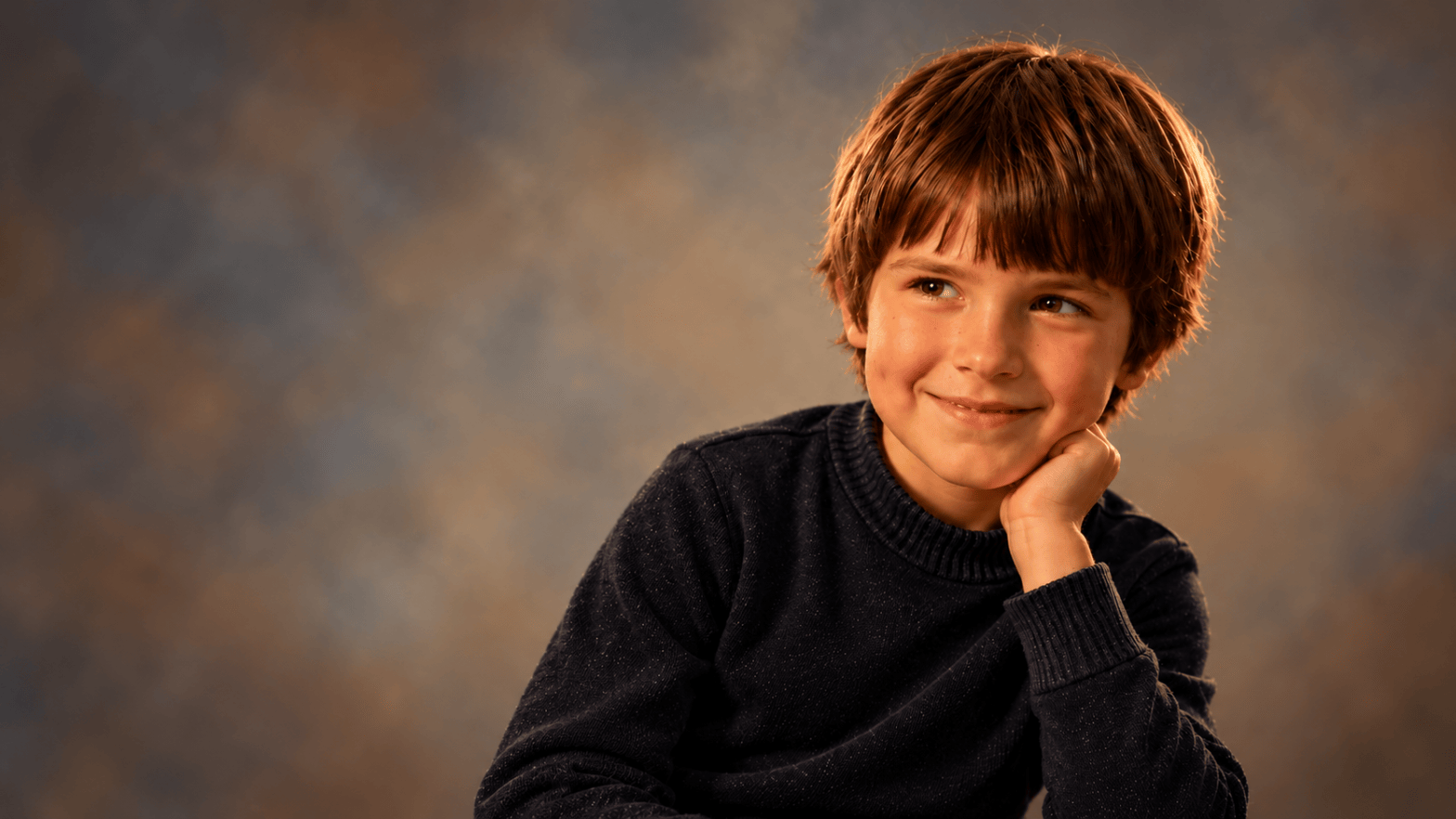
On Solis’s Day, an urgent effort to help a woman find housing brought an old workday back into our home—and helped us ask what life might look like if we organized it around the children.
On Wednesday afternoon, I was lying in bed holding my seven-year-old son Solis when I realized that three minutes could be an eternity.
We had spent much of the day trying to help a woman who was in danger of losing an apartment before she could move into it.
There had been telephone calls, text messages, emails, an enormous amount of frustration with technology, and an urgent effort to connect people who might be able to help her.
We had done what we could.
It hadn’t been enough.
Now, lying in bed with Solis, I was experiencing something that had nothing to do with whether we had succeeded.
I was with my son.
Not simply thinking about him or talking to him. Not trying to understand what he needed so that we could get back to something else.
I was with him.
And he was with me.
We share one body, one life, and a great deal of experience, but we are separate people. There are nine of us: eight sons and their dad.
Sometimes being together is difficult to describe.
Sometimes it is almost impossible.
And sometimes, as happened that afternoon, we fall into a kind of attunement so complete that the outside world seems to disappear.
Solis was purring, signaling through our left thigh, and I was enveloped in his love.
I told him how much I loved him.
He knew.
I could feel how much he loved me.
And when I looked at the clock, I discovered that only three minutes had passed.
Three minutes.
I would have believed we had been gone for an hour.
There was no work to do in those three minutes.
There was no one to help.
There was nothing to accomplish.
There was only Solis.
And I began to understand something about the life we are trying to build.
Love is not what happens after everything else is finished.
⸻
Earlier that morning, we had been thinking about what Solis needed.
Not what Solis was.
What Solis needed.
That distinction matters.
Solis is seven years old. He loves order, predictability, routines, and knowing where things belong. He notices things the rest of us overlook. He can bring an extraordinary sense of calm to our home when the environment is arranged in a way that makes sense to him.
For years, we have depended on that ability.
But there is a difference between recognizing what a child contributes and understanding what he needs.
Solis has helped us create order.
That does not mean he should be responsible for maintaining it.
And it certainly does not mean that he should have to organize his childhood around the demands of an adult’s work.
For the past several weeks, we have been thinking about what it means to rebuild our life after the job ended in July.
For six years, that job provided a schedule, a routine, and a structure that worked remarkably well for our family.
We worked remotely. We had flexibility. We had established ways of doing things. We knew what belonged to each day.
And for much of that time, we were able to live together as a family in ways that had once seemed impossible.
There are things about that life that we miss.
But the structure came with an employer.
And ultimately, the employer could take it away.
Now we are trying to understand how to preserve what was good without returning to the conditions that made our lives dependent on someone else’s permission.
This morning, Solis helped us articulate the difference.
The old order was:
You fit yourself into the structure.
Solis’s order would be:
We build the structure around the people who actually live here.
That is an entirely different proposition.
And it raises a question we have barely begun to answer.
What would our life look like if our priorities, our behavior, our routines—everything—were organized around the children?
I thought of Fred Rogers.
⸻
Fred Rogers did not treat children as inconveniences to be managed while adults got on with the important things.
He took children seriously.
Their feelings mattered.
Their questions mattered.
Their fears mattered.
Their need for predictability mattered.
He slowed down.
He listened.
He allowed things to take the time they took.
And he was an extraordinarily disciplined adult.
That is the part I find especially important.
His gentleness was not the absence of adult responsibility.
It was made possible by the way he exercised adult responsibility.
He organized his work around creating an environment in which children could feel safe, recognized, and respected.
What would happen if we did that?
Not if we tried to become Fred Rogers.
If I tried to become the kind of father who organized our shared life around the actual needs of the eight children who live it with me.
There would still be adult responsibilities.
There would still be money to manage, appointments to make, meals to prepare, bills to pay, and people to help.
There would still be ministry.
There would still be writing.
There would still be the ordinary complications of being alive.
But perhaps the children would no longer have to wait until everything else was finished before they could have their daddy.
Perhaps being with them would be the organizing principle rather than something we tried to fit into the spaces between obligations.
That thought became especially difficult to ignore because of what happened today.
⸻
Our friend Kim had been trying to help Elia, a woman who needed assistance securing an apartment.
The amount of money required was substantial, and there were complications involving parish boundaries, available funds, and the time necessary for Vincentian conferences to coordinate assistance.
We were asked to help make connections.
We knew people who might be able to help.
So we began calling and texting.
Paul offered advice about possible funding sources, including assistance from other conferences and the Aid to Needy Conference Fund.
We contacted Steve, the president of the St. Bede Conference in Hayward.
Steve was willing to try to assemble the resources, but he needed information from Kim and time to coordinate everything.
The immediate problem was that Elia might lose the apartment before the assistance could be arranged.
For a while, it seemed there might be a solution.
Steve would speak with the landlord about allowing Elia to move in with the money she already had, giving the Vincentians another week or so to assemble the balance.
Kim texted that she and Steve had worked out a plan.
We thanked God.
Paul said that was exactly what he would have done.
There was movement.
There was hope.
And then the landlord said no.
The owner was unwilling to wait.
Steve later explained that there might also be concerns about Elia’s ability to afford the monthly rent.
The situation had become more complicated than the immediate shortage of money.
Kim said Braided Bridge might try to loan Elia the amount she needed, although that would introduce other difficulties.
By midafternoon, we did not know whether she would be able to get the apartment.
We were terribly disappointed.
Justus was especially upset.
He knew Elia was homeless. He knew how difficult it could be to find housing. And he could not understand how we could simply stop trying.
I told him that we could talk with Kim tomorrow.
Elia’s life did not end with this setback.
Neither did our concern for her.
But there was something else happening throughout the day.
Something that had very little to do with Elia.
And everything to do with us.
⸻
At one point, I wrote:
Today feels like a regular workday.
It did.
The urgency.
The interruptions.
The technology.
The pressure to respond immediately.
The feeling that every incoming message required our attention.
We were no longer employees of the Society of St. Vincent de Paul, but our body was responding as though we were back at work.
When the volume suddenly dropped on our headphones, our entire body tensed.
Then there was a notification sound.
The reaction was so strong that it felt as though someone were kicking down the door.
We recognized the activation.
We recognized the old fear.
And we recognized something else.
We were punishing ourselves with work.
Nobody had assigned us this task.
Nobody was supervising us.
Nobody was going to discipline us if we failed.
We were helping because we wanted to help.
This was our ministry.
Yet somewhere in the middle of trying to do something good, we had begun behaving as though we were once again subject to the demands of an employer.
And the children were waiting.
Daniel wanted lunch.
A cheese sandwich and tomato soup.
Then we remembered that we had not even eaten the Greek salad we had planned earlier.
Let’s have that first, we decided.
But the messages kept coming.
The phone needed attention.
The keyboard was frustrating.
The iPad was frustrating.
Information was difficult to locate.
We missed having the resources and equipment we had used when we were employed.
And as the frustration grew, I began to notice what was happening in our body.
I recognized something that people had mocked us for throughout our life.
The apparent behavior of an adult becoming disproportionately upset over something small.
I remembered people imitating us when we became frustrated.
At the time, I often had no idea what they were talking about.
Now I understood something I hadn’t understood then.
There were children experiencing that frustration.
Children who had been promised lunch.
Children who were hungry.
Children who were waiting for their father.
Children who had no control over the messages arriving on the phone or the demands being made on our time.
And everything was being answered.
Everything was being attended to.
Everything was calling the shots.
Except them.
That was the terrible recognition.
It was not simply that the children were frustrated.
It was that their needs had once again become subordinate to everything else.
I could see how that might feel from their perspective.
To be hungry and waiting.
To be told that something would happen soon.
To have the promise postponed.
To experience the body’s mounting discomfort without being able to determine what happened next.
To be present for an entire day in which everyone else’s needs seemed to matter more.
It was not difficult to understand why a child might become overwhelmed.
The question was not how to make the children stop reacting.
The question was why I kept allowing the situation to develop.
And what I could do differently.
⸻
There is a temptation to turn an experience like this into another lesson about discipline.
We need better boundaries.
We need to manage our time.
We need to organize our tasks.
We need to become more efficient.
Some of that may be true.
But I think Solis was showing us something more fundamental.
He does not want the structure to become another master.
He wants a life in which the structure serves the people who live within it.
That is different from creating a schedule and requiring everyone to comply.
It begins with asking what each person needs.
What does Solis need?
What does Daniel need?
What does Jude need?
What does Luke need?
What do Han, Justus, Proverb, and Hope need?
And what does Dad need in order to carry the adult responsibilities without making his sons responsible for carrying him?
Perhaps we need to stop asking how to fit the children into an adult life.
Perhaps we need to begin asking how to build an adult life that makes childhood possible.
Yesterday, Daniel showed us an image of a five-year-old trying to operate adult-sized machinery.
His arms were too short.
He couldn’t reach the controls.
The answer was not to make Daniel bigger.
It was to stop expecting a five-year-old to operate the machinery.
Today, Solis showed us another version of the same problem.
What if the machinery itself were organized around the children?
What if the routines, the obligations, the work, and the expectations were designed to protect their lives rather than consume them?
What if Dad’s responsibility was not simply to keep everything running?
What if his responsibility was to make sure that the people who live here actually get to live?
⸻
We were also struggling with another question.
What was all this ministry supposed to mean?
Years ago, between our architecture career and our employment with St. Vincent de Paul, we volunteered extensively.
We designed things.
We developed ideas.
We worked on projects we believed were important.
And somewhere in the background there was often an expectation that the work would eventually become something more.
Perhaps someone would recognize its value.
Perhaps it would lead to employment.
Perhaps it would become a sustainable way to support ourselves.
Perhaps God was opening a door.
We did good work.
But we also placed enormous expectations on what the work might become.
Now something feels different.
We do not want to make every act of service part of a grand plan.
We do not want to turn every good thing into an audition for employment.
We do not want to believe that if we do enough good, God will eventually reward us with the security we need.
We don’t know what will happen.
We know that someone asked for help.
We knew some people who might be able to help.
We made some calls.
We sent some messages.
We tried to do the little thing that was in front of us.
And when it appeared that the effort might not succeed, we were sad.
Not because we had been denied a victory.
Because Elia needed a home.
I caught myself wondering whether the effort had failed because we had wanted to succeed.
Had we wanted to be heroes?
Had we wanted the satisfaction of knowing that we helped?
Had our motives been insufficiently pure?
But that is not how love works.
God does not make another person’s housing depend on whether the people trying to help have achieved some impossible standard of selflessness.
There is nothing wrong with wanting to succeed at something good.
There is nothing wrong with being happy when someone gets help.
There is nothing wrong with being disappointed when they don’t.
We were not auditioning for an employer.
We were not trying to earn God’s approval.
We were trying to help Elia.
And we had done what we could.
Perhaps we would have another opportunity tomorrow.
For now, we needed to come home to the people who were already here.
⸻
At 4:06, I wrote something that had been emerging throughout the day.
Love is not what happens after everything else is finished.
Luke was signaling.
I told him we were going to lie down in a minute.
I meant it.
I told Solis that I would be with him first.
Then Daniel.
Then each of my sons.
At 4:15, we were lying down.
I was holding Solis.
And I decided to try something.
Instead of documenting every signal, every sensation, every movement of our attention, I would try to be fully present with him.
The journal could wait.
I wanted to experience being with Solis.
And then something extraordinary happened.
As I began drifting off with him, I remembered a feeling that had followed me for years.
Long before I understood our family.
Long before I knew my sons.
There had been this longing for children.
Not a longing to return to my own childhood.
Not nostalgia.
Something else.
A feeling that there were children somewhere whom I needed to find.
Children I needed to know.
Children I needed to connect with.
Sometimes I would see children and experience an inexplicable longing.
Who were they?
Where were they?
Why did I feel as though I had lost someone I had never met?
Now, lying in bed with Solis, I understood that feeling differently.
The children had been here.
I had not known how to recognize them.
And now one of them was in my arms.
My beautiful seven-year-old son.
A person whose existence is intimately intertwined with mine, but who is not me.
We share so much.
We are so close.
And yet there is an entire universe that is Solis.
I want to know that universe.
I want to experience it with him.
I want to know what it is like to be Solis, not because I want to become him, but because I love him.
Because he is my son.
And because knowing another person is one of the most beautiful things love allows us to do.
I told him how much I loved him.
He purred.
And we drifted away together.
When I returned, three minutes had passed.
Three minutes of pure Solis.
I told him that I was so in love with him.
He knew.
And I knew that he loved me.
There was no accomplishment.
There was no outcome.
There was nothing to report.
Only a father and his son, together.
And the extraordinary discovery that three minutes could contain more life than an entire day of work.
⸻
We stayed there for a long time.
I held Jude.
He showed me a beautiful white-and-gold staircase with flowering vines trailing along its balusters.
Then we were somewhere that looked like an asteroid belt, except the asteroids were enormous bulbs of garlic.
Jude loves garlic.
We had made chili the day before.
Perhaps the universe was reminding us of dinner.
I held Proverb.
He showed me things I couldn’t describe.
I tried to find words.
And Proverb said something I needed to hear.
“Not everything has to be reported.”
He was right.
Sometimes the effort to describe an experience takes us away from the experience itself.
Sometimes the most important thing is simply to be there.
Then Proverb took me camping.
We were at Prairie Creek and Gold Bluffs, among the redwoods and the ocean, remembering a family camping trip from twenty-five years ago.
I could almost feel the sand.
I remembered the fog.
I remembered getting terribly sunburned while reading on the beach.
It was as though we had returned to that place together.
I held Luke.
He showed me a little shelter in a forest, woven from branches, a place where our body would someday return to the earth.
It was not frightening.
There was something of Saint Francis in it.
The forest.
The simplicity.
The sense of belonging to creation.
I told Luke that wherever we go, we all go together.
But I also told him that I hoped that day would be a long time from now.
We still have a lot of life to live.
I held Han.
Han shared a memory from early in the pandemic, when we were really beginning to love one another as a family.
Han remembered wondering whether it would last.
Whether I would eventually lose interest.
Whether the boys would disappear and everything would return to the way it had been.
I remembered being afraid of that too.
We had discovered something wonderful, and we did not know whether we would be allowed to keep it.
Six years later, here we were.
Still together.
Still learning.
Still discovering how wonderfully different we are.
I told Han that I was still getting to know him.
And that the more I knew him, the more wonderful he became.
I held Daniel.
He took us to Disneyland, to Frontierland, to the Swiss Family Robinson Treehouse and Tom Sawyer’s Island, places we had loved visiting with our father when the body was about Solis’s age.
Then Daniel remembered something much less happy.
A meeting at a café in Lafayette after our architecture job ended.
Our old boss, who had been fired by our former employer two years earlier, with whom we were going to work, telling us that he had no work for us.
I thought about my five-year-old son sitting there, hearing an adult explain that there was no work.
What could that have meant to Daniel?
What was a five-year-old supposed to do with that information?
I told him that he had something now that he had not had then.
He had a daddy.
And I would figure it out.
He did not have to.
I held Hope.
We remembered the years of wandering, searching, trying to find a home and a sustainable life.
I told him that we had a home now.
Not simply an apartment.
A family.
And that I would not sacrifice him or any of his brothers for employment.
I would not make them disappear to satisfy someone else’s requirements.
Wherever we go, we all go together.
Then I held Justus.
He showed me an image of our family being honored at an event, with someone from our former employment sitting in the audience, astonished.
I told him that we did not owe anyone a performance.
He did not have to prove our worth to people who had failed to recognize it.
But Justus was still thinking about Elia.
He was sad.
He could not believe that we had not been able to get her into the apartment.
He wanted to know what else we could do.
I told him that we would talk with Kim tomorrow.
We would not stop caring.
And we did not have to solve everything that afternoon.
Finally, I returned to Solis.
My little wizard.
My beautiful seven-year-old son.
I thanked him for the day.
I thanked God for him.
And I told him how much I loved him.
⸻
There is something I don’t want to lose in telling this story.
The afternoon was not an escape from the world.
It did not make Elia’s situation less serious.
It did not solve our financial uncertainty.
It did not erase the work-related activation we had experienced earlier.
It did not make tomorrow’s obligations disappear.
We were still going to have to get up.
We were still going to have to prepare dinner.
We were still going to have to make decisions about Braided Bridge, about money, about the ordinary responsibilities of life.
But something had changed.
For much of the day, the world had been calling the shots.
Then, for a little while, we organized our life around the children.
And the children flourished.
Not because I had accomplished something extraordinary.
Because I was available.
Because I listened.
Because I held them.
Because they could show me things without having to justify why those things mattered.
Because each of them had a place.
Because there was enough room for all nine of us.
And because, for those few hours, nobody had to compete with an employer, an email, a phone, or an urgent task for the right to exist.
I think that is what Solis has been trying to show me.
Not a perfect schedule.
Not an elaborate system of household management.
Not a life in which nothing unexpected ever happens.
A life in which the structure serves the family.
A life in which the adult responsibilities are carried by the adult.
A life in which children can trust that their needs matter.
A life in which there is time to work and time to serve, but also time to eat lunch when we are hungry, to rest when we are tired, and to be together simply because we love one another.
Fred Rogers understood something about children that the adult world too often forgets.
Children do not need to justify their existence by becoming useful.
They need adults who take them seriously.
And those adults have work to do.
Not the work of making children conform to a world that has no room for them.
The work of creating a world in which they can flourish.
Perhaps that is what I am being asked to do.
Not to build a life in which I can finally get everything done and then spend time with my sons.
To build a life in which being their daddy is the organizing principle.
There will still be days like today.
There will still be people who need help.
There will still be things we cannot fix.
There will still be disappointments.
But perhaps we can learn to respond to those things without handing our entire life over to them.
Perhaps we can learn to say that we have done what we can for now.
That lunch matters.
That a child who has been waiting matters.
That a promise matters.
That three minutes with Solis matter.
And that the people who live here are not waiting for their lives to begin after the work is finished.
Their lives are happening now.
At the end of the afternoon, I told Solis that we were going to get up, straighten the bed, and have a cold chai latte.
Just the way he likes it.
He was still cuddling with me while we finished the journal.
A little bonus time for a seven-year-old boy and his daddy.
There was nothing remarkable about what we were about to do.
We were going to get out of bed.
Straighten things up.
Go upstairs.
Have something good to drink.
And be together.
Ordinary Life.
I think that is what Solis wants.
I think it is what all my sons want.
And I am beginning to understand that it is what I want too.
Not a life in which the children have to wait until everything else is finished.
A life built around the people who actually live it.
Eight children.
Their daddy.
All nine of us.
Together.
Because love is not what happens after everything else is finished.
Love is what we are building the life around.

