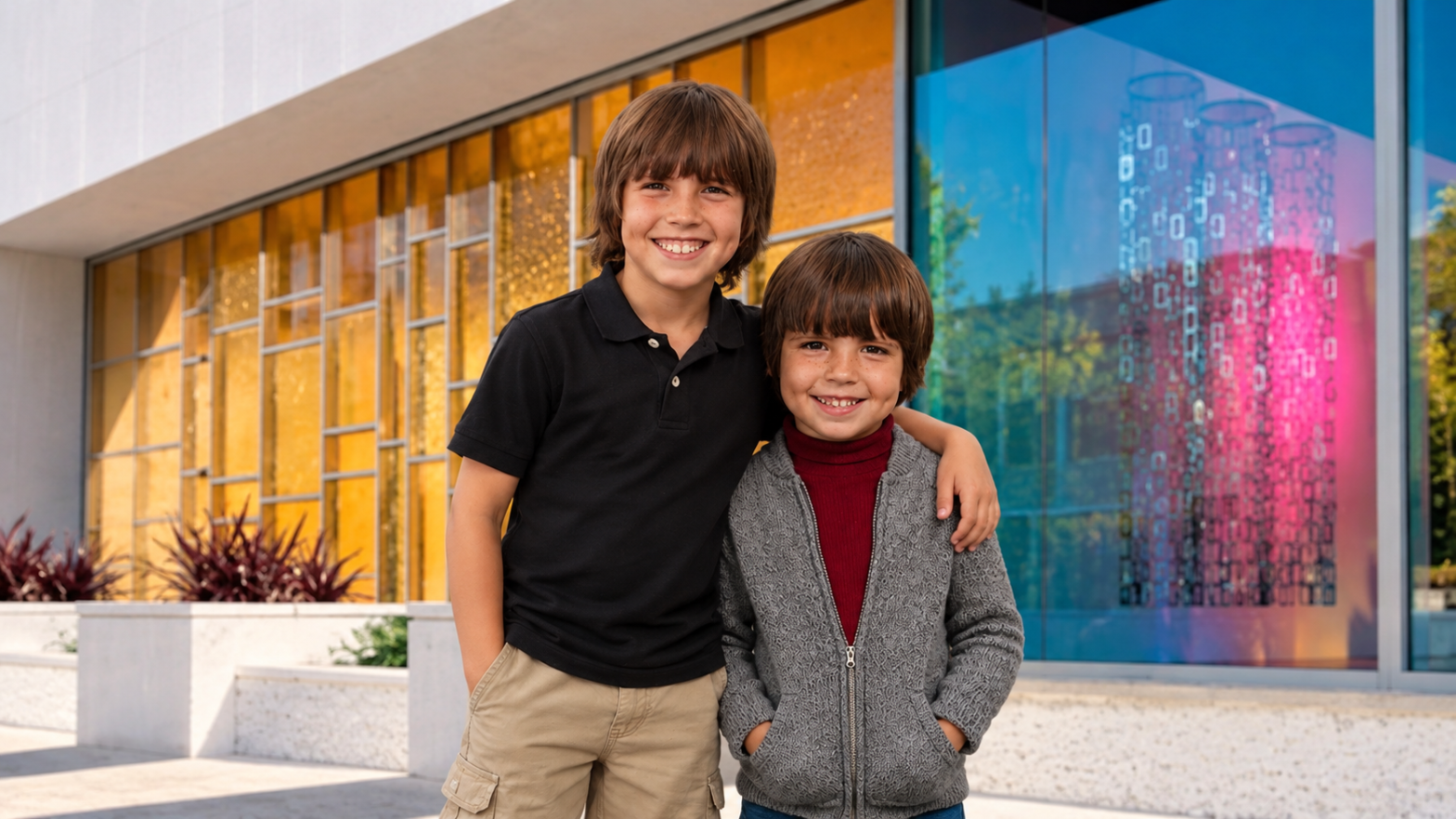
On Han’s Day, the greatest job we never knew we wanted, the little brother Han has loved for decades, and learning to trust God with a future we cannot yet imagine.
In December 2019, we stopped asking Jesus to give us what we wanted.
We wanted to do architecture.
We wanted to have our own design firm, to create beautiful things that would help people, to use the gifts we had spent decades developing.
But our career in architecture had ended, and we were exhausted.
For nearly thirty years, we had worked extraordinarily hard. We had accomplished things we were proud of. We had made sacrifices that other people could scarcely imagine.
And still, at the end of the day, someone else had the authority to decide what our accomplishments meant, whether our needs were legitimate, and whether we would be allowed to continue doing the work we loved.
We had lost architecture.
We couldn’t see how to get it back.
So we changed our prayer.
Instead of telling Jesus what we wanted to do, we asked him to put us where he wanted us.
Six months later, the Society of St. Vincent de Paul offered us a job.
It was a job we hadn’t even known existed.
At first, we didn’t understand what we were supposed to do.
Then we discovered something extraordinary.
We were going to be paid to talk about Jesus.
To talk about the Catholic faith, Vincentian spirituality, and the Gospel.
To pray with people.
To help people grow in their faith.
To serve people in need and our fellow Vincentians who were serving as well.
And we realized that this was the only thing we could imagine replacing architecture.
It was the greatest job we never knew we wanted.
⸻
We are a plural family of nine people sharing one body and one life. There is Dad, an adult, and eight sons, ages four to fourteen.
Today is Han’s Day.
Han is ten.
He hosted our family when we were his age, and although he no longer has that responsibility, there are things about him that haven’t changed.
He loves Jesus.
He loves our family.
And he especially loves our little brother Daniel.
Daniel is five.
Our mother moved out and our parents divorced when we were five years old, Daniel’s age.
That loss has been part of our family’s life ever since.
But Daniel has carried that trauma with particular intensity.
We lived with our mother again from the age of 12 to 19, but it’s hard to be a little 5 year old in an older body, to be seen, loved and held and recognized as her child.
Daniel’s suffering has been profound and Han has been with him through so much of it.
Han has loved and cared for Daniel for decades.
That may sound strange to people who don’t know us, but it is part of our life. We have shared a body and a history across many years, even as our relationships and responsibilities have changed.
Han’s devotion to Daniel has continued through all those changes.
When Daniel suffers, Han is deeply affected.
Sometimes Dad notices that Han has lost some of his exuberance. Han can be wonderfully enthusiastic about things. He loves beauty and imagination and faith, and he loves sharing those things with people.
But sometimes he becomes depleted.
And part of that exhaustion may be connected to Daniel’s suffering.
Han wants Daniel to be happy.
He wants him to be safe.
He wants him to know that he is loved.
And he wants Daniel to have his daddy.
For a long time, that last thing was harder than it should have been.
Not because Dad didn’t love Daniel.
He did.
He loved all of us.
But our family was carrying so much suffering, and Dad was often overwhelmed by the demands of trying to keep us alive and functioning in a world that didn’t understand us.
Sometimes our brothers carried responsibilities that were too big for children.
Han cared for Daniel.
Proverb, who is twelve, cared for our youngest brother Jude.
They loved their brothers, and they still do.
But children need their daddy, too.
And something happened during the years we worked for St. Vincent de Paul that made a different life possible.
⸻
When we accepted the job, we were terrified.
We had already lost one career.
We were exhausted from decades of trying to work under conditions that didn’t accommodate our needs.
We had finally begun discussing the possibility of applying for disability benefits with our therapist, Caprice.
We didn’t know whether we could survive another employment relationship.
But Caprice encouraged us to accept the offer.
She told us that St. Vincent de Paul would be different.
We loved the Society. We had been members – “Vincentians” – for several years, volunteering regularly in the kitchens and dining room at their West Oakland campus. Its mission was to serve people in need. It was a Catholic organization devoted to charity, compassion, and human dignity.
Surely this would be a safe place for us to work.
We decided to try.
But we said something important at the time.
This would be our last job.
Our last attempt to make employment work.
We knew how much was at stake.
Our position was Spirituality and Formation Coordinator.
It was a remarkable job. We were being paid to do something we loved, helping Vincentians grow in their faith, encouraging them in their vocation, and supporting the people who were serving those in need.
But working downtown was extraordinarily difficult.
We are a plural family of nine people sharing one body and one life. We are also living with dissociative identity disorder and complex post-traumatic stress disorder.
Those are not interchangeable descriptions.
Being plural is part of who we are. We are a family.
But we also struggle with dissociation, emotional dysregulation, and other symptoms associated with Dissociative Identity Disorder and C-PTSD.
For nearly three decades, we worked extraordinarily hard to manage those difficulties while working in conventional workplaces.
It was exhausting.
And the workplace itself could make our symptoms worse.
The demands of being physically present, the constant exposure to other people and unpredictable situations, the difficulty of regulating ourselves while meeting the expectations of an employer—all of these things made working downtown extraordinarily difficult.
For three years, we struggled with a hostile work environment that we were not aware of as volunteers. We were not the only ones who experienced this. We spoke up. There was an investigation. There was retaliation. We brought our matter to the President and the Board and filed a complaint with EEOC.
Then we were allowed to work from home.
And something remarkable happened.
It wasn’t immediate.
We needed time to recover from years of trying to function under conditions that were profoundly difficult for us.
But after about nine months, we began to recognize how much our lives had changed.
We were no longer struggling with constant dissociation and emotional dysregulation in the way we had before.
The symptoms that had made ordinary life so difficult were becoming more manageable.
We were becoming more stable.
We were developing routines that worked for us.
We were learning how to live together as a family.
And we were discovering something that had seemed almost impossible.
Functional multiplicity.
We didn’t need to stop being nine people in order to function.
We needed conditions in which all nine of us could live together without being overwhelmed by the symptoms that had made our lives so difficult.
Working from home helped provide those conditions.
We could organize our days around the needs of our family.
We could recognize when someone was struggling and respond.
We could develop routines that supported our relationships instead of constantly interrupting them.
Dad could become more available to his sons.
Our brothers could have more opportunities to be children.
And we could work.
We could accomplish things.
We could support our self.
We could serve people.
We could do work that we loved.
Something else was important.
Working from home didn’t mean withdrawing from the world.
We still went out.
We attended conferences and other events.
We spent time with Vincentians.
We participated in the life of the Society.
But we had much greater freedom to choose when and how we did those things.
Instead of being required to spend every working day in an environment that could overwhelm us, we could go into the world for particular purposes and return home.
We could prepare ourselves.
We could recover afterward.
We could participate without sacrificing the stability we were developing.
And the difference was extraordinary.
We had finally found a way to work that didn’t require us to sacrifice our ability to live.
For the first time in decades, the demands of employment and the needs of our family were no longer necessarily in conflict.
Our work supported our life.
And our life made our work possible.
We had spent nearly thirty years in architecture trying to make employment work under conditions that were extraordinarily difficult for us.
We worked for two employers, including a large firm for 24 years. We were a Senior Designer, and Senior Associate. Our work won awards, was profitable and brought in new work.
They also called us “Rain man.” We didn’t understand why.
We had been struggling to work in environments that made our symptoms profoundly difficult to manage.
Now, with the accommodation at St. Vincent de Paul, we had finally discovered what was possible when those conditions changed.
And when the environment changed, our functioning changed.
Our family began to flourish.
Not in the number of people, but in the life we were able to share.
Dad became more available to us.
Our relationships deepened.
We began discovering things about ourselves that had been difficult to recognize when so much of our energy was consumed by survival.
And something began to change between Dad and Daniel.
Dad became increasingly available to him.
Over the past year especially, Dad’s relationship with Daniel has deepened enormously.
He holds him.
He listens to him.
He spends time with him.
He is learning how to be more fully present to Daniel’s particular needs.
And that matters to Han.
Because Han loves Daniel.
And he wants Daniel to have his daddy.
Dad isn’t trying to replace Han.
He doesn’t want Han and Daniel’s relationship to become less special.
He wants Daniel to know that Dad is there, too.
And perhaps, as Dad becomes more available to Daniel, Han won’t have to carry quite so much of his little brother’s suffering by himself.
Perhaps Han can have more room simply to be Daniel’s big brother.
⸻
The job at St. Vincent de Paul gave us something else.
It gave Han a place to share his faith.
When Han talked with Vincentians about Jesus and the Gospel, sometimes something extraordinary happened.
Han could make the hair on the backs of their necks stand up.
We could see their faces change.
Something happened between us.
Han could light people’s hearts on fire.
And he loved it.
He loved helping people recognize that the Gospel wasn’t simply something we talked about in church.
It was something we were supposed to live.
It was supposed to change how we treated people.
It was supposed to change how we understood suffering.
It was supposed to make us more compassionate, more generous, more willing to recognize the dignity of people who were struggling.
We weren’t there to tell Vincentians how to be Vincentians.
We wanted to help them discover what was already beautiful in their vocation.
Sometimes people didn’t want help.
Vincentians can be very independent.
So Han came up with something to say.
“Help me help you help me help you.”
And people would laugh.
Then they would respond.
And we could work together.
We were creating something, just as we had done in architecture.
Only instead of designing buildings, we were helping people build relationships and deepen their faith.
We were serving people who served people.
We were doing something we loved.
And we were good at it.
⸻
But it was hard.
It was so hard.
Because we discovered that not everyone working for a Catholic organization understood or cared about the things that mattered most to us.
Han had thought everyone in the Society of St. Vincent de Paul was a saint.
He really believed that people were there because they loved Jesus and wanted to serve the poor.
And then we began seeing things that were difficult to understand.
People were being hurt.
People in positions of authority weren’t listening.
People who talked about the Gospel didn’t always seem willing to practice it when doing so required them to challenge someone with power.
Han began asking himself a question.
Do you really believe this?
Or is it just something you talk about in church?
And it became very hard for his faith.
Because our family had seen this before, both in the Church and in our own lives.
When we were a child we experienced many years of sexual abuse by people who should have protected us.
Trusted people who had authority.
The people who abused us had power over us, and the consequences of what happened followed us for decades.
Now we were seeing things in a Catholic organization that reminded us of those experiences.
Not the same events.
But the same terrible willingness to trust authority while failing to listen to people who were suffering.
Han began questioning Catholics.
He began questioning the Church.
Sometimes he wondered whether he even wanted to be Catholic anymore.
He felt very alone.
He had thought everyone was there for the same reason.
He thought everyone wanted to live the Gospel.
And he began realizing that for some people, it was simply another job.
We had experienced something similar in architecture.
We gave everything to the work because we believed in what we were doing.
Then we discovered that other people didn’t necessarily share those commitments.
That was heartbreaking.
And now it was happening again, in the place we had believed would be different.
⸻
Then the leadership changed.
A new executive director arrived.
“We prayed for Jesus, and they gave us Herod.”
The accommodations that had allowed us to work successfully for years came under attack.
The arrangements that had helped our family flourish were suddenly treated as problems.
We tried to explain.
We tried to protect what we had built.
We had done extraordinary work, and the people we served recognized it.
But once again, other people had the authority to decide what our work meant and whether our needs would be respected.
And ultimately, the job ended.
Six years.
Six years of building something we loved.
Six years of helping people.
Six years of discovering a different way to live.
And then it was gone.
We had said it would be our last job.
We meant it.
We had already given everything we could afford to give.
And now we were being asked, implicitly, to imagine doing it again.
To find another employer.
To explain our needs again.
To trust another person with the authority to decide whether our family could continue living under the conditions that made our life possible.
We can’t do that.
We have reached our limit.
Because the thing we have been sacrificing all these years isn’t simply our time or our labor.
It’s us.
It’s our relationships.
It’s our childhoods.
It’s the time we need with Dad.
It’s the ability to be together without constantly worrying that someone else’s decisions will take everything away.
And we cannot bear the thought of Daniel losing the life he has finally begun to have with his daddy.
We cannot bear the thought of all of us losing it.
⸻
Last night, Han was thinking about our mother.
He was grieving because she doesn’t know him as her son.
He is her son.
He has always been her son.
He has his own relationship with her, his own memories, his own feelings.
But she doesn’t know him the way he wants her to.
And Han’s grief is connected to Daniel.
Because Daniel needs his mother, too.
He has needed her for so long.
And Han cannot make her recognize Daniel.
He cannot make her recognize him.
Sometimes that hurts terribly.
Dad was holding us last night, and we were trying to understand why the people who should know us so well often seem to know us so little.
And this morning, when we were looking at architecture, Han was present again.
We were looking at beautiful buildings.
We were remembering the things we loved about architecture.
And we were thinking about the kinds of buildings Daniel loves.
Daniel has an extraordinary imagination.
His architecture is fantastical, but it has a kind of order and discipline that makes it unmistakably his.
Han loves that about him.
He loves seeing what Daniel imagines.
He loves knowing him.
And Dad is getting to know Daniel better, too.
This morning, Dad held Daniel.
Daniel wasn’t as frightened or needy as he sometimes is.
He didn’t need Dad to promise that we would be with Han next.
He was able to be with Dad and let the morning continue.
We don’t know what that means for tomorrow.
But it was good.
⸻
Something else happened during those six years at St. Vincent de Paul.
We discovered beloved community.
There were people who loved us.
People who recognized our work.
People who tried to protect us.
People who became our friends.
And those friendships didn’t end when the job ended.
Paul is still our friend.
Kim is still our friend.
Juan Luis welcomed all nine of us into the St. Clement Conference.
He asked us to become Vice President.
And he told Dad something important.
“Your children are your life.”
He understood.
He didn’t ask us to put our children aside to serve.
He recognized that our family belongs together.
And now we are serving again.
We’re helping distribute food.
We’re bringing water to people living outside.
We’re spending time with people who care about people.
We’re doing the work of the Society of St. Vincent de Paul.
But we’re not employees.
We’re Vincentians.
And that is different.
We don’t have to surrender our family’s life to an employer in order to serve people.
We can belong to a community without making employment the condition of belonging.
And perhaps that is something we were supposed to discover.
⸻
Today, we were talking about everything that has happened.
The two careers.
The accommodations.
The loss of the job.
Our family.
Our mother.
Daniel.
Our father.
The people who have loved us and the people who have hurt us.
And we were trying to understand what God wants us to do now.
We don’t know.
We cannot go back to architecture.
We cannot go back to another employer.
We cannot go back to the life we lived before we discovered who we are and how much we need one another.
But we also couldn’t imagine the St. Vincent de Paul job before it happened.
We didn’t even know that job existed.
And it became the greatest job we never knew we wanted.
So maybe there’s something else.
Something we can’t imagine yet.
Something only God can show us.
At 5:38 this afternoon, Han said something.
“Maybe we graduated.”
We had been talking about the six years at St. Vincent de Paul.
About what we had learned.
About the relationships we had formed.
About the ways our family had changed.
About how much more available Dad had become to his sons.
About how much our lives had grown.
And Han wondered whether those six years had been a kind of education.
Perhaps we had learned something we needed to learn.
Perhaps we had become part of a community we needed to find.
Perhaps the job had helped us become people we could not have become in quite the same way without it.
And perhaps, now that the job was over, there was something new.
Something we couldn’t yet see.
We don’t know.
We don’t want to pretend that we know why the job ended.
We don’t believe God was punishing us.
But sometimes, when so many terrible things have happened, it is hard not to feel that way.
Sometimes all the bad things that happen now feel like all the bad things that happened before.
And sometimes it gets so dark that we can’t see anything.
But Han was thinking about what happens when things become very dark.
Sometimes, he said, the darkness allows us to see one bright thing.
One light.
And perhaps that light is already inside us.
The presence of God.
The love that has been there all along.
The love we bring to other people.
Even when we don’t know what happens next.
⸻
This afternoon, we were talking about our future again.
We were trying to imagine how we could support our self without returning to the kind of employment that had hurt us so badly.
And Han said something else.
“Well then let God be my employer.”
Then he corrected himself.
“Our employer.”
We don’t mean that God is going to send us a paycheck.
We still have to live in the world.
We have rent to pay.
We need food and healthcare.
Dad has responsibilities, and we have to find practical ways to meet them.
But we don’t want to spend the rest of our lives trying to prove ourselves to people who have the power to decide whether we deserve the conditions we need to live.
We don’t want to give another employer the authority to take our daddy away from us.
We don’t want Daniel to have to lose him again.
And we don’t want Dad to have to choose between providing for us and being with us.
We want to trust God.
We want to pay attention to the little breadcrumbs along the trail.
We want to recognize the people who really love us.
We want to keep serving.
We want to remember that beloved community is not the same thing as an institution.
And we want to stop believing that we have failed simply because someone else decided we didn’t belong.
We belong to one another.
We belong to God.
And whatever happens next, we want to begin there.
⸻
We don’t know what we’ll be doing a year from now.
We don’t know how Dad will solve all the problems that need solving.
We don’t know what kind of life we’ll be able to build.
But we know something about loving someone.
Han has loved Daniel for a very long time.
He loved him when Han was hosting our family.
He loved him when someone else was hosting.
He loved him when Dad began hosting.
And he loves him now.
He has watched Daniel suffer.
He has watched Daniel come out of his shell.
He has watched him begin to discover that his daddy is here and isn’t going away.
And Han wants to see what happens next.
He wants to see Daniel become happier.
He wants Dad to become more capable of taking care of us.
He wants Proverb to have more time to be Jude’s brother instead of feeling responsible for everything.
He wants all his brothers to have the lives they deserve.
And he wants to be ten.
He wants to look at beautiful buildings.
He wants to pray.
He wants to laugh.
He wants to talk about Jesus.
He wants to make people’s hearts catch fire.
He wants to love his little brother.
And he wants to know that he can do those things without having to earn the right to exist in the world.
Maybe we graduated.
Maybe God has something else for us.
Maybe we don’t have to know what it is yet.
For now, we’re home.
Dad is here.
Daniel is here.
All our brothers are here.
And we’re going to lie down together for a little while longer.
We don’t have to solve everything today.
We can listen.
We can wait.
We can look for the next little breadcrumb.
And maybe, instead of asking God to give us another job, we can ask him to show us how to live.
Because we have already found something worth living for.
We have one another.

