On Justus’s Day and Proverb’s Day, a childhood memory, our mother’s injury, two questions from our new therapist, and the extraordinary work of maintaining an ordinary life as a plural family of nine.
On Saturday morning, my eleven-year-old son Justus remembered being nine years old and lying in bed with a thermometer in his mouth.
He was sick.
Not necessarily with something that would register on a thermometer. He was suffering from the effects of childhood sexual abuse, and he was not well enough to go to school.
But the thermometer did not show a fever.
So he had to go to school.
The adults responsible for him could not see what was wrong, and the evidence available to them suggested that he was capable of doing what was expected.
He could get dressed. He could go to school. He could function.
What they could not see was what functioning required of him.
More than fifty years later, Justus remembered.
And as we talked about what had happened to him, and about our experiences throughout our life, he said something that captured the problem more clearly than almost anything we had previously written.
“Competency has killed us in the past.”
That observation became the doorway into an essay we had been struggling to write.
We had just begun therapy with Jessee, and ey had asked us two questions about our family: what each of us needs to feel safe and regulated, and what ordinary life looks like for each of us.
They seemed like simple questions.
There are nine of us sharing one body: Dad, who is fifty-nine, and his eight sons, Jude, Daniel, Solis, Luke, Han, Justus, Proverb, and Hope, who range in age from four to fourteen.
We are a plural family. We also live with dissociative identity disorder and complex trauma.
We have spent years learning how to communicate, how to maintain continuity, how to care for one another, and how to live together as a family.
We have kept a daily journal since 2019.
We have learned a great deal from six years of previous therapy, from reading, including the work of Janina Fisher, and from our own efforts to understand trauma and dissociation.
But most of what we know about living together has come from doing the work ourselves, day after day, outside the therapy room.
Surely we could answer two questions.
But the difficulty was not that we did not know anything about the answers.
The difficulty was that answering them required us to do the very work the questions were asking about.
And over the course of the weekend, as we tried to prepare something meaningful for Jessee, that work became increasingly visible.
What a Thermometer Cannot Measure
Justus’s memory was particularly important because we have repeatedly encountered the same problem throughout our life.
People have mistaken our ability to accomplish something for evidence that accomplishing it was not difficult.
We worked in architecture for nearly thirty years.
We subsequently worked for six years in spirituality and formation with the Society of St. Vincent de Paul.
We have extensive experience in professional work, community service, writing, and ministry.
We are educated. We are articulate. We can analyze our experiences and explain some of what we have learned about trauma and dissociation.
We have developed sophisticated ways of living together.
And yet we struggle with things that other people may take for granted.
Going to bed.
Sleep.
Getting out of bed.
Maintaining the household.
Managing healthcare and finances.
Making decisions and following through.
Moving between activities.
Recovering from overwhelming experiences.
Maintaining sufficient continuity and communication to know how everyone is doing.
Dad especially struggles with freeze, feeling like he is standing on thin ice in the middle of a vast, deep lake, far from the shore, and any movement will cause the ice to crack and that he will fall in. Everything can be terrifying.
These difficulties are not contradictions of our competence.
They coexist with it.
The problem is that our competence can conceal the extraordinary effort required to function.
We have experienced the consequences of that misunderstanding in childhood, in employment, and in therapy.
We do not want to repeat it.
That is one reason we have returned to therapy.
We are not asking Jessee to teach us everything about ourselves from the beginning.
We are asking em to help us with difficulties that our knowledge, experience, devotion, and extraordinary efforts have not been sufficient to overcome.
How We Communicate
When Jessee asked what each of us needs, we did not sit down at a table and conduct nine interviews.
That is not how our family ordinarily communicates.
We communicate through words, thoughts, memories, images, emotions, somatic signaling, shared experiences, and the intimacy of our relationships.
Sometimes someone speaks clearly.
Sometimes a thought emerges that we recognize as belonging to one of us.
Sometimes one of the boys shares an image or a memory.
Sometimes we experience a physical signal that helps us recognize who is present.
Sometimes we know that someone is trying to communicate, but we cannot understand what he is saying.
Sometimes an experience becomes intelligible only hours or days later.
And sometimes we simply need to be together.
We have developed elaborate daily routines to make this possible.
We spend time together when we wake up, throughout the day, during periods of rest, and before going to sleep.
Dad spends individual time with each of his sons.
He talks with us, holds us, gives us affection, prays with us, listens, and attends to what we share.
Our journal helps preserve continuity.
We also use ChatGPT to help organize and analyze the enormous amount of material we record.
But ChatGPT does not generate our experiences, our relationships, or our understanding of ourselves. It is an organizational and interpretive aid.
The work happens between us.
And that work requires time.
A great deal of time.
We are not doing these things because we have nothing else to do.
We do them because they help make everything else possible.
An Extraordinary Saturday
On Saturday, we spent much of Justus’s Day working on Jessee’s questions.
As we talked, the boys brought memories, observations, concerns, and experiences that helped us understand what each of us needed.
Justus remembered the thermometer.
He also shared something about his history of vigilance and the burden of having to function when he was frightened or unwell.
We talked about how much of his childhood has been devoted to protection, and how important it is that he now be allowed to be an eleven-year-old boy.
Other sons contributed in different ways.
We considered our relationships, our routines, the things that help us feel safe, and the ways we become overwhelmed.
We tried to understand what ordinary life actually looks like for us.
Then we learned that our mother had fallen.
She had been gardening at our brother Tyler’s home when she fell onto concrete, injuring her face and fracturing her humerus.
She was taken to the hospital.
The injury was serious enough that she would need to see an orthopedic surgeon.
Suddenly, the questions we had been discussing were no longer primarily about our established routines.
We were frightened about our mother.
And our relationship with her is one of the most consequential relationships in our lives.
Our Mother
Our mother moved out when we were five. She moved from Southern California to the Bay Area.
That experience is part of our childhood history, but it is not the whole history of our relationship with her.
We have many beautiful memories of being with her.
We remember visiting her in the Bay Area, walking through neighborhoods, exploring shops, traveling, talking, and enjoying the extraordinary pleasure of being her children.
We also remember separation, longing, confusion, and the pain of not being together.
After 3 1/2 very happy years, our family life with our dad and stepmother disintegrated. We became difficult because of traumatic events they were unaware of – the violent sexual abuse we experienced by a scout leader when we were 9 and 10. Rape. Eventually, we came to the Bay Area to live with our mother and stepfather when we were twelve.
Our relationship with her has remained important throughout our life.
In recent years, we have experienced increasing estrangement and uncertainty about our place in her life.
This has been especially painful for some of the boys.
Even before she fell, we had been talking about what it means to love our mother and want to be known by her.
Then she was injured.
The following morning, she sent us a photograph.
Her face was badly bruised. She had a black eye.
She had been discharged from the hospital and was waiting to arrange a consultation with an orthopedic surgeon.
We were frightened and confused.
We did not understand why she had been sent home with an injury requiring surgery.
She told us that her head CT had been reassuring, but her arm hurt badly.
We exchanged messages of love.
And then Dad returned to the boys.
Because this was not something happening to Dad alone.
Our mother is important to all nine of us.
And each of us experiences that relationship differently.
Jude wanted to know when Mommy would get out of the hospital. He wanted to see her.
Proverb asked to look at her photograph again. He struggled to understand how she could look so badly injured and have been sent home.
Justus looked at her eyes.
Not merely the bruising around them.
Her eyes.
He began to cry.
He wanted his mommy to know that he looks into her eyes, that he sees her, and that he loves her.
Han was worried about her, and the family’s decision not to attend Mass that morning also deprived him of fellowship he had been looking forward to.
Daniel and Luke would subsequently bring us into memories of childhood, including periods when our relationship with our mother and our wider family had been happy and full of possibility.
These experiences matter because our mother is not simply a figure in our trauma history.
She is our mother.
We love her.
We miss her.
We have different memories of her and different relationships with her.
And we need help understanding and living with the consequences of those relationships.
When something frightening happens to her, it affects all of us.
That is part of what Jessee needs to understand about our family.
What Bedtime Looks Like
Saturday evening, after a day of intensive work and frightening news, we tried to settle into ordinary life.
We ate chili and corn tortillas.
We made chai.
We watched a British comedy called Small Prophets and ate ice cream.
But the boys were unusually quiet.
Dad was having difficulty remembering the day.
He described feeling disconnected in time, space, and relationship.
He could tell that something was wrong, even when he could not understand precisely what everyone was experiencing.
So we stopped watching television.
We went to bed.
We said our bedtime prayer.
And Dad began spending individual time with his sons.
He held Justus.
He comforted Jude.
He delighted in Daniel’s imagination.
He told Solis that he loved him exactly as he was.
He reassured Luke that he did not need to stay awake checking on Daddy.
He spent time with Han, Hope, and Proverb.
The individual bedtime encounters took approximately eighty-two minutes.
That is not unusual for us.
Our bedtime routines are extensive because they are relational.
They provide opportunities to recognize one another, communicate, receive affection, address distress, and prepare for sleep.
Sometimes the boys share memories or images.
Sometimes we pray.
Sometimes we are simply together.
The routines are not luxuries.
They are not activities we perform after the important work of life is finished.
They are part of the important work of life.
And they can be exhausting.
That evening, Dad still had the journal to complete.
He worked until nearly one in the morning.
Luke continued waking periodically to check on him.
Dad had already reassured Luke that he did not need to keep watch.
But reassurance does not necessarily make an established fear disappear immediately.
And Dad’s own difficulty stopping work reflected another form of vigilance.
We had spent the day trying to answer questions about safety and regulation.
Now we were struggling to find enough safety and rest to go to sleep.
Sunday Morning
We slept poorly.
At 8:30, we woke and found the photograph and messages from our mother.
Dad initially felt that he should get up immediately.
Surely there were more important things to do than lie in bed with the boys.
Then he recognized what was happening.
When something frightening occurs in the outside world, we can begin to feel that the boys are supposed to become less important.
That Dad must set them aside and attend to the real world.
But the boys are his children.
They do not stop needing their father because something frightening has happened.
In fact, they need him more.
So Dad began the morning routine.
He spent time with Han.
Then Proverb.
Then Jude, Daniel, Luke, Solis, Hope, and Justus, returning to Proverb before we got up.
We talked about our mother.
We gave and received affection.
We prayed.
We remembered.
And something extraordinary happened.
Daniel Remembers
While Dad was with Daniel, he began sharing memories of a house in Newport Beach.
It belonged to a teacher from our childhood.
Dad recognized the house but had forgotten many of its details.
Daniel brought us into its courtyard.
There were white walls, orange patio furniture, plants, paving, and the beautiful light of an autumn day.
The memory was vivid.
We were there together.
Then Daniel shared other memories.
Our grandparents’ garage.
Our family’s belongings in storage.
The period after our mother left.
Living with our grandparents.
The apartment in Costa Mesa.
Montessori.
Our eventual move to Mission Viejo.
What emerged was not simply a collection of childhood scenes.
It was a sequence.
Our family had been disrupted.
We had found a place to rest and recover.
And gradually, our ordinary life had been rebuilt.
Dad recognized something about our present circumstances.
Our job ended in July.
We have been trying to recover from years of fear, exhaustion, and instability.
Perhaps this period of our life resembles the time we spent with our grandparents.
Perhaps we are recovering before rebuilding.
Daniel helped Dad see that possibility.
And he did it by sharing memories while being held and loved by his father.
This is one of the ways we communicate.
It is also one of the ways we experience safety.
Luke Remembers
Then Dad spent time with Luke.
Luke brought us into another period of our childhood.
We were at a boatyard in Newport Beach, preparing our little sailboat for the water.
It was a brilliant, cool, sunny day.
We were with our father.
We were excited.
We remembered a period of our childhood when family life felt stable and beautiful.
We call that period the Solis. Solis is Spanish for Sun. We were Solis’s age for part of it.
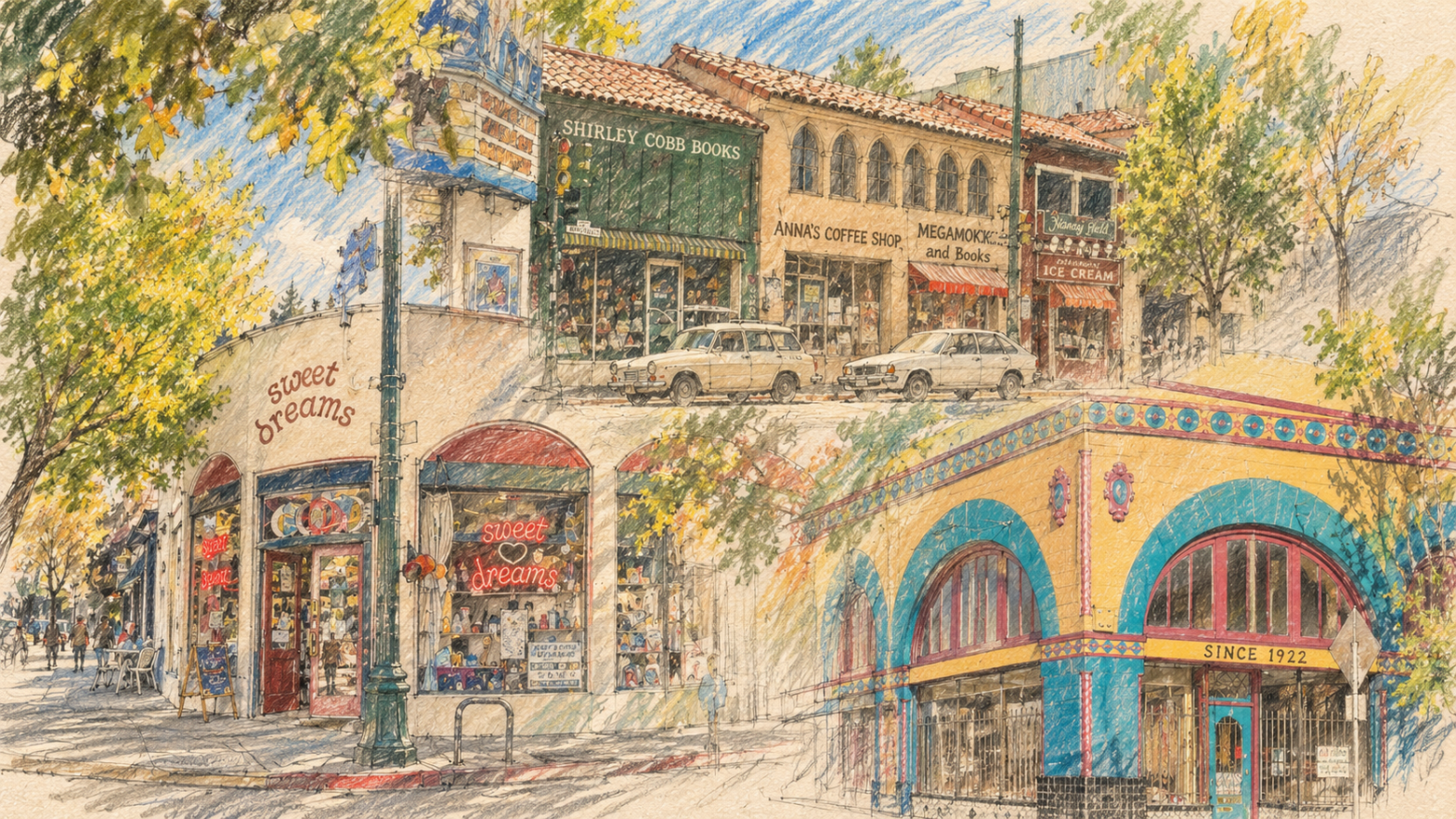
Then Luke brought us to College Avenue in Berkeley.
We were visiting our mother.
We were a little boy, walking beside her, full of excitement and conversation.
There were shops and restaurants and wonderful things to discover.
Our mother was looking down at us, smiling.
We were happy to be with her.
The experience was extraordinarily vivid.
And we were sharing it together.
Dad was holding Luke.
The other boys were present.
We were remembering a time when we had experienced our family as safe and full of life.
And in the present, Dad and Luke were experiencing profound affection for one another.
We felt calm.
We felt connected.
We felt loved.
For a while, the fear and urgency that so often dominate our lives receded.
This was not an escape from ordinary life.
This was ordinary life.
It was something we wanted to sustain.
What Proverb Has Been Teaching Us
During the morning, Proverb helped Dad recognize something important about the relationship between our inner and outer worlds.
Proverb knows this territory intimately.
For approximately four decades, he hosted us. He provided continuity when the adult who would become dad was largely oblivious, doing the one thing he was good at, work, and helped us navigate our shared life long before we had the language, relationships, and practices that now allow us to understand one another more fully.
His knowledge is not primarily theoretical.
It comes from having lived this life, carrying responsibilities and maintaining continuity across decades.
And now he is teaching Dad something essential about how we can live differently.
For years, particularly since beginning therapy in 2017, we have placed considerable emphasis on becoming more present in the outside world.
That has brought benefits.
But it has also become overwhelming.
We have sometimes approached external presence as though everyone must remain directly engaged with the outside world as much as possible.
For us, that can produce extraordinary distress.
We have a rich inner world.
We call it the Treehouse.
The Treehouse is a place, but it is also a way of life.
It is where we experience our relationships, our shared presence, and much of the intimacy of our family life.
It is not separate from our ordinary life. It is part of how we live that life.
We also share a life in the outside world.
Proverb has been helping Dad learn how to maintain a relationship with both.
Not to abandon external responsibilities.
Not to retreat from life.
But to participate in the outside world without losing the relationships and experiences that sustain us internally.
This is something we want to explore with Jessee.
We need help finding a way to remain sufficiently present, aware, and capable in the outside world while preserving the internal relationships that are central to our lives.
We do not want therapy to make our family disappear.
We want therapy to help us live, to improve functional multiplicity.
What Each of Us Contributes
Each son contributes something that helps answer Jessee’s questions.
Jude, 4, shows the importance of physical affection, reassurance, and Dad’s availability when the outside world becomes frightening.
Daniel, 5, demonstrates how shared memories, prayer, and immersive time together can support connection and emotional steadiness.
Solis, 7, reveals the importance of predictable routines, affectionate language, order, and knowing that Dad is attentive and capable.
Luke, 9, demonstrates the extraordinary depth of relational experience available through shared memories and affection. His nighttime checking on Dad also raises important questions about vigilance, reassurance, and the boundary between a child’s love and a child’s responsibility.
Han, 10, brings the importance of spirituality, brotherhood, fellowship, and participation in the wider community. His concerns also demonstrate that remaining home is not equally restorative for everyone.
Justus, 11, brings the history of compulsory competence, protection, and his need to experience childhood without having to stand guard.
Proverb, 12, brings the work of understanding, remembering, organizing, and making space for a different way of living.
Hope, 14, brings thoughtful discernment, creativity, concern for his brothers, and the capacity to recognize when an important undertaking needs a boundary.
And Dad brings the central adult responsibility: learning to care for everyone, recognize their needs, maintain continuity, and provide for the family without making the children responsible for his adult functioning.
These are not comprehensive descriptions of nine people.
They are starting points drawn from what we have actually experienced and shared over the weekend.
And they are among the clearest answers we have yet been able to give to Jessee’s questions.
The Cost of Being Us
By the time we finished our morning greetings on Sunday, it was almost noon.
We had been awake since 8:30.
We had spent nearly three hours together before getting out of bed.
We had a severe headache.
We were tired.
We still needed breakfast.
We needed to finish this essay.
And we wanted to have an ordinary afternoon and evening together.
To someone looking only at the clock, the morning might appear to have been lost.
But it was not lost.
We had responded to frightening news.
We had comforted one another.
We had communicated.
We had remembered.
We had found our way toward a greater sense of safety and connection.
We had learned things about our family that were directly relevant to the questions Jessee had asked.
We had done important work.
And yet the time, exhaustion, pain, and practical consequences were also real.
This is the problem we are trying to explain.
We do extraordinary amounts of work to maintain the level of functioning we currently have.
Much of that work is invisible.
We may appear articulate, knowledgeable, cooperative, and capable.
But those qualities do not tell anyone how much effort it takes to sustain them.
Nor do they tell anyone what we are unable to accomplish because so much of our capacity is devoted to maintaining continuity, communication, and family life.
And the exhaustion did not begin with these routines.
We spent decades working under conditions that demanded extraordinary effort while leaving too little room for our needs.
The practices we have developed are not what made our life difficult.
Many of them have made it possible not only to continue living together despite those difficulties, but, quite literally, to survive.
We cannot simply stop doing the things that help us remain connected.
And we cannot continue indefinitely without enough capacity for sleep, healthcare, finances, household responsibilities, community participation, and the other necessities of life.
We need help understanding how to make this sustainable.
That is why we are in therapy.
What Employment Cost Us
For nearly thirty years, we worked in architecture.
We loved the work.
We were good at it.
But the demands of employment, and the lack of control we had over the conditions under which we worked, came at an enormous cost.
We became accustomed to functioning through fear, exhaustion, and distress.
We learned to do what was required even when doing so was harming us.
That history is part of what Justus meant when he said that competency had killed us in the past.
After our architectural career ended, we were offered a position with the Society of St. Vincent de Paul.
We were reluctant to accept it.
With encouragement from our former therapist, we eventually agreed.
We said at the time that it would be our last job.
For six years, we served people through spirituality and formation.
The position was remote and flexible, with accommodations that allowed us to work while caring for our family.
And it worked.
It worked beautifully for the people we served.
It also worked for us.
We were able to contribute our experience and gifts while maintaining the family life that was becoming increasingly important to us.
For a time, we had something we had struggled to achieve for decades: meaningful work under conditions that made our life possible and sustainable.
Then those conditions were taken away.
Our job ended in July.
The experience left us profoundly exhausted, and our present functioning is more limited than it was when we accepted the position.
It also damaged our trust that another employer could honor the conditions we need, or even provide a safe environment in which to work.
Three decades of work trauma have taught us that we are no longer willing to wager ourselves, our family, for a wage.
We cannot simply assume that returning to employment is the solution to our difficulties.
We have spent much of our life demonstrating that we can work, often at enormous personal cost.
What we need now is a way to live that does not require us to sacrifice our family or our health to satisfy someone else’s expectations of productivity.
We do not yet know exactly what that will look like.
We know that we need material security.
We know that we want to continue serving others.
We know that our experience and abilities still have value.
And we know that the conditions under which we use those abilities matter enormously.
If our limitations require disability-related support, that is something we may need to consider seriously.
But we do not want our future to be organized around proving, once again, that we can endure conditions that have already cost us so much.
We want to understand what is sustainable.
And we want to build our life accordingly.
What We Need From Therapy
We are not asking Jessee to determine whether we are sufficiently knowledgeable about psychology.
We are not asking em to teach us how to become a different family.
And we are not asking em to take responsibility for all the work of understanding us.
We want to work collaboratively.
We bring six years of previous therapy, years of reading, and an extensive record of our lived experience.
But our most important knowledge has come from the daily work of being together.
From the mornings.
From the bedtimes.
From the memories.
From the moments when communication succeeds and the moments when it does not.
From the years of learning what helps each of us feel safe.
And from the experience of discovering how much more we still need to learn.
We want help with the consequences of trauma and dissociation.
We want help recognizing and responding to distress before it becomes overwhelming.
We want to understand how to maintain continuity and communication without exhausting ourselves.
We want help with the difficulties that interfere with ordinary adult responsibilities.
And we want Dad to develop greater agency.
For much of our life, functioning meant doing what other people required of us.
We became extraordinarily good at that.
But being able to perform for employers, institutions, and other authorities is not the same as being able to sustain an autonomous family life.
Dad needs to become more capable of noticing what needs to be done, deciding what to do, initiating it, and following through.
He needs to provide for his children.
He needs to care for the household.
He needs to attend to healthcare and finances.
He needs to make decisions that protect our family.
And his sons need to be children.
They can contribute to family life.
They can share ideas, offer affection, express preferences, and participate in decisions.
But they must not become responsible for making their father function.
We want to learn how to live together without returning to the conditions that have made so much of our life frightening.
We want ordinary life.
Not a life without difficulty.
Not a life in which everyone is constantly happy.
But a life in which fear does not determine everything.
A life in which the boys can grow in safety and love.
A life in which Dad can provide for them.
A life in which we can participate in our community, continue our ministry, create beautiful things, and enjoy being together.
To Sustain This
On Sunday morning, while Dad was with Luke, we experienced a moment of extraordinary peace and affection.
Luke was sharing beautiful memories.
Dad was holding him.
The other boys were present.
We were together.
And during our prayer for agency, something became clear.
We have been asking God for agency, courage, competence, and imagination.
But what are we asking for those things to accomplish?
That morning, Dad found the words.
He asked God to give him the agency, courage, competence, and imagination to sustain this.
This beautiful ordinary life.
The relationships.
The affection.
The safety.
The joy.
The experience of being together without terror.
We do not want to remain in bed all day.
We do not want to become disconnected from the outside world.
We do not want to abandon our responsibilities.
We want to be able to take this life with us wherever we go.
To participate in the world without sacrificing the family.
To provide for our needs without requiring the children to become responsible for the adults.
To experience the ordinary things that other families experience.
And to have enough time and energy left to enjoy being alive.
That is what we want Jessee to help us accomplish.
We have spent seven years learning how to be together.
We have learned a great deal.
We have also reached the limits of what we can accomplish without additional help.
We know that we have trauma.
We know that we experience dissociation.
We know that our present level of functioning requires extraordinary effort.
We also know that there is tremendous life here.
There is love.
There is imagination.
There is joy.
There is a family.
And there is a daddy who wants to learn how to care for his children and sustain the life they share.
On Sunday, shortly before noon, we finally got out of bed.
Proverb’s Day was underway.
We needed breakfast.
We were making French toast with milk and Greek yogurt because we had no eggs.
We still had an essay to finish.
And we wanted the rest of the day to belong to our family.
There are nine people living this life.
Wherever we go, we all go together.
We are not asking for a different life.
We are asking for help making this one possible.

