What happens when nobody is THE ONE? A classical analysis of Solis’s Day reveals an answer emerging through ordinary life: Daniel wakes Daddy, Jude imagines dinner, Hope changes the plan, Solis draws an ethical boundary, and the family adapts when a difficult afternoon makes rest impossible. September 1 becomes a study in functional multiplicity, consequential listening, and a new understanding of stability: when something happens, the family remains.
Tag Archives: Trauma-Informed Care
You Are Not the One
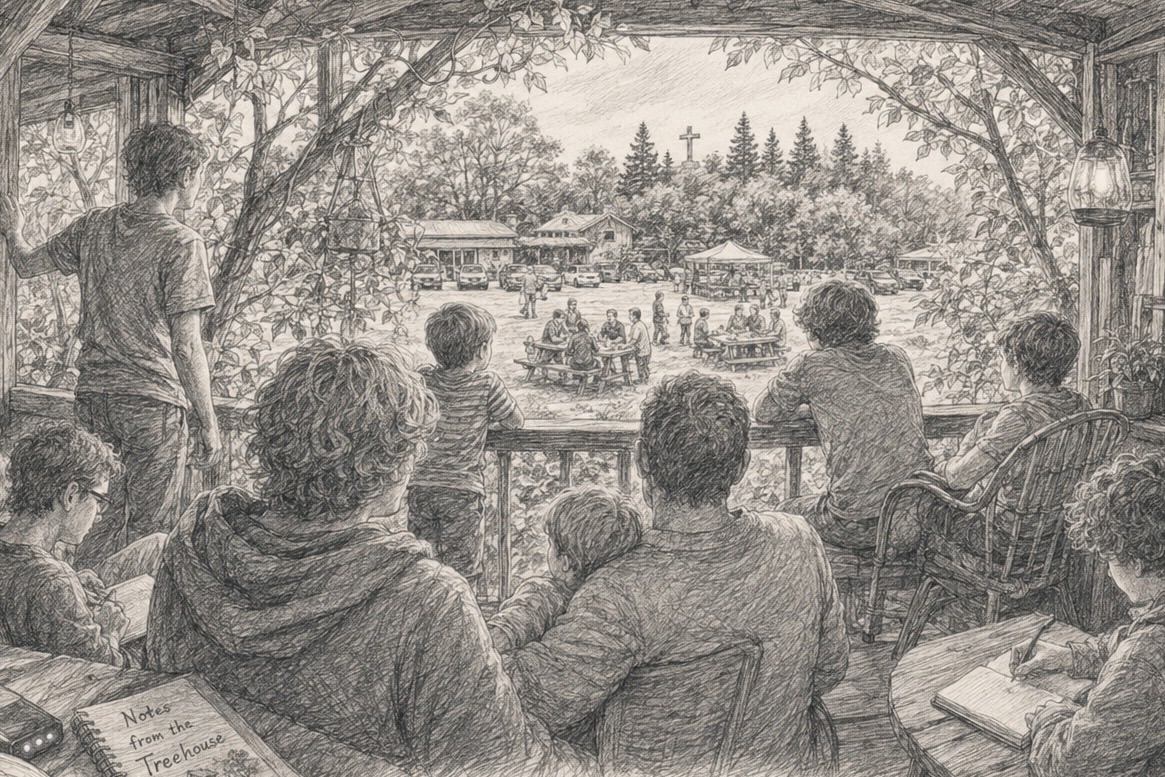
Yesterday was input. Today is processing. For a plural family/system, moving forward means more than making a plan—it means making sure everyone has been heard. As we begin imagining the next twenty years of our shared life, perhaps the most important question is also the simplest: Who haven’t we heard from yet?
We Take the Treehouse With Us
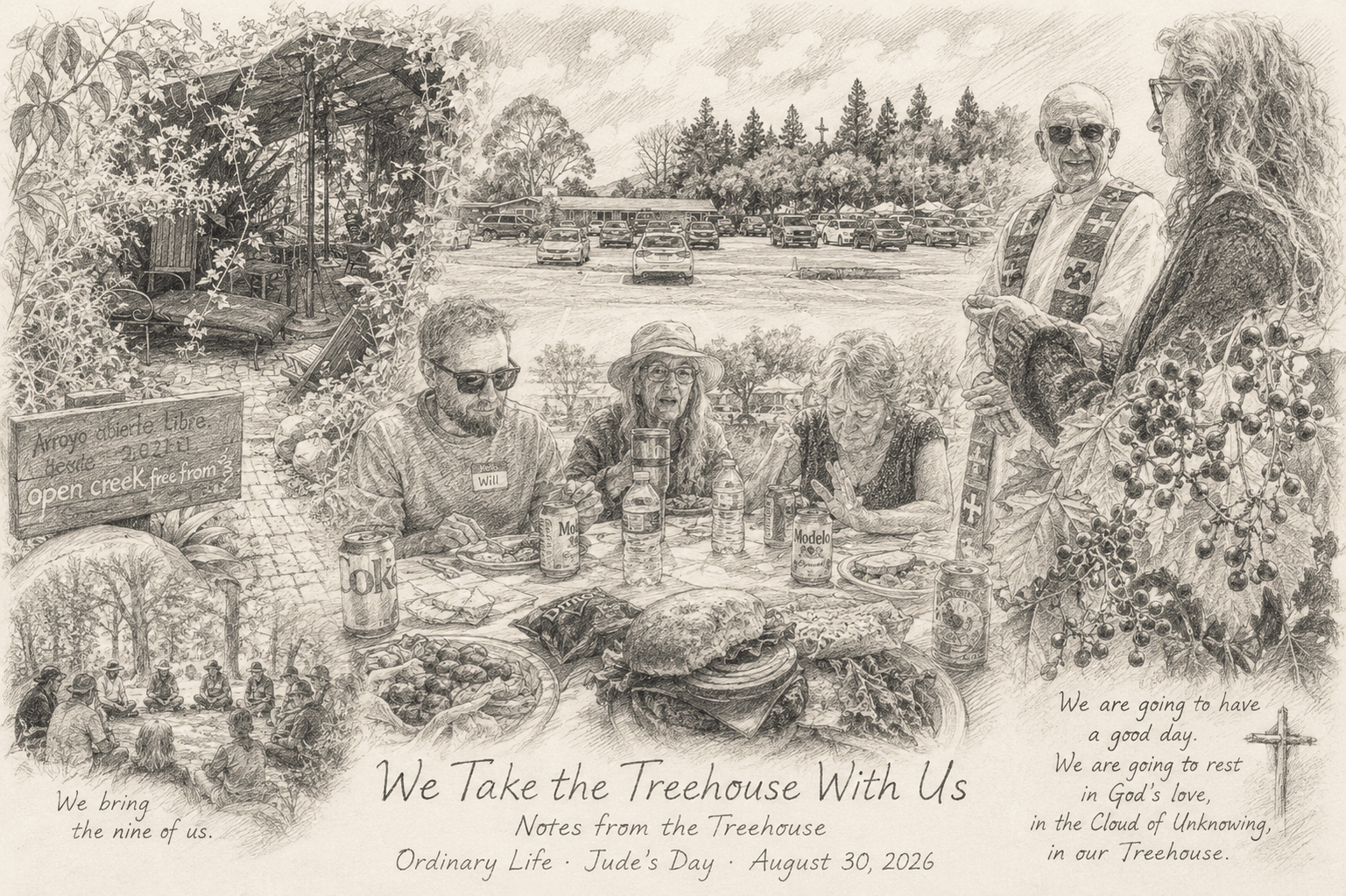
Functional multiplicity is not about making plurality disappear. For our family, it means staying connected enough to live, work, contribute, and find one another again when we become scattered. On Jude’s Day, we took the Treehouse with us—and discovered what becomes possible when all nine of us have something to bring.
They Call It Functional Multiplicity. We Call It Saturday.

Functional multiplicity sounds formidable. In our family, it has been built through something much smaller: waffles and cheese sandwiches, somatic signals, laughter, fear, repair, prayer, and learning how nine people can inhabit one life without requiring anyone to disappear. This is what an ordinary Saturday looks like from inside the Treehouse.
The Work Inside an Ordinary Saturday
What does functional multiplicity actually look like in ordinary life? This companion analysis looks beneath one difficult Saturday to explore the small practices—communication, co-regulation, somatic signaling, shared agency, attention, repair, and delight—that help a plural family build a life together.
What Bedtime Looks Like

What does bedtime actually look like in a plural family/system? At the end of an extraordinarily difficult Hope’s Day, Dad discovers what his sons have been carrying, what they need to leave behind, and why bedtime isn’t simply how we finish the day—it is part of how we make the next one possible.
When Lived Experience Feels Like Destiny: Listening for the Whisper
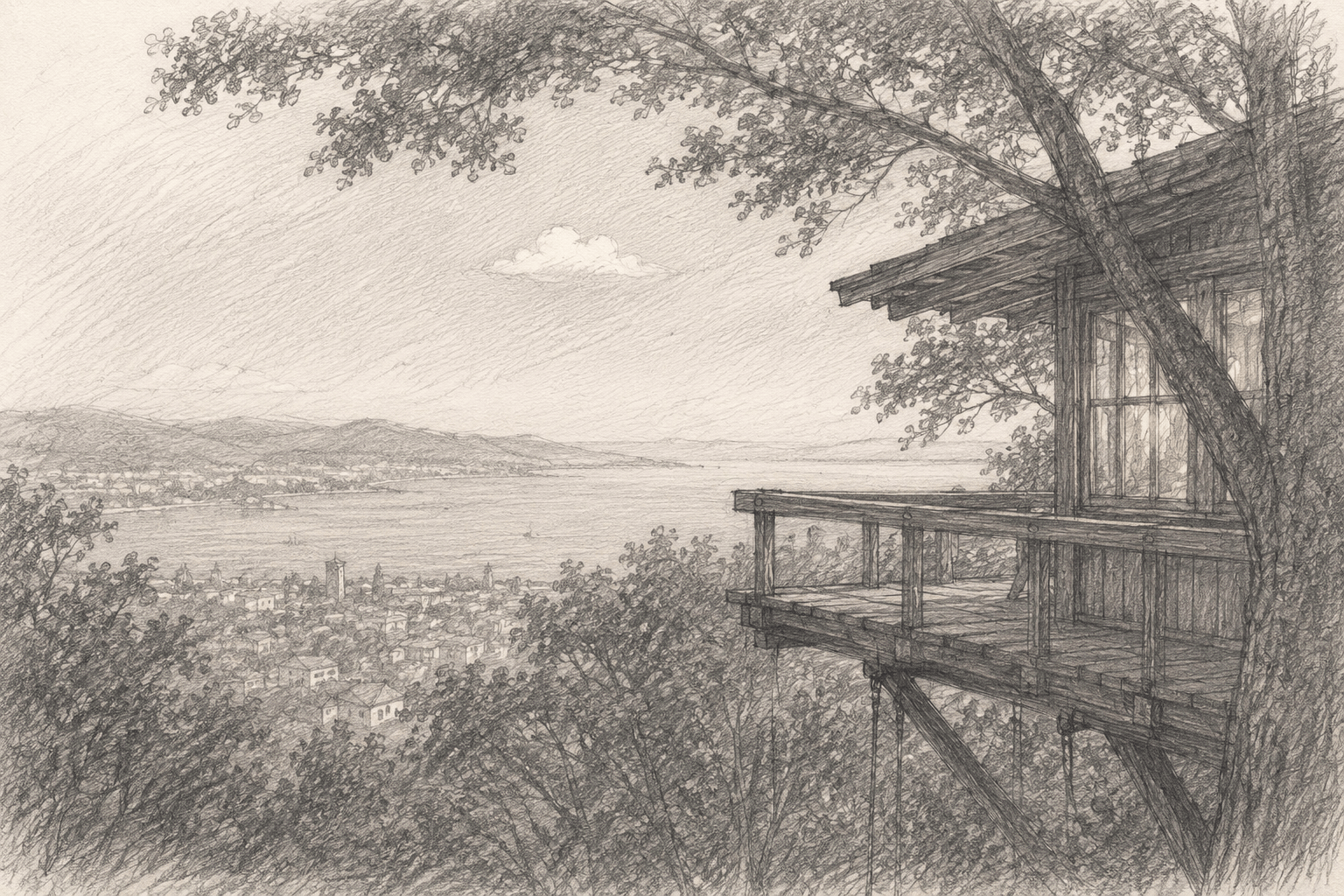
When lived experience becomes so concrete that it occupies the entire horizon, it can begin to feel like destiny. On Hope’s Day, amid deep fear and uncertainty, we listen for the Whisper—the still, small voice that helps us see the little things, the longshots, and the possibilities that have not disappeared.
Midday Analysis: Justus’s Day — A Companion to “Three Warm Towels”
What does protection look like when something really does happen? A midday analysis of Justus’s Day, and a companion piece to “Three Warm Towels,” examining protection, accountability, truth, trauma, caregiving, and the family’s movement from emergency back toward ordinary life.
Three Warm Towels
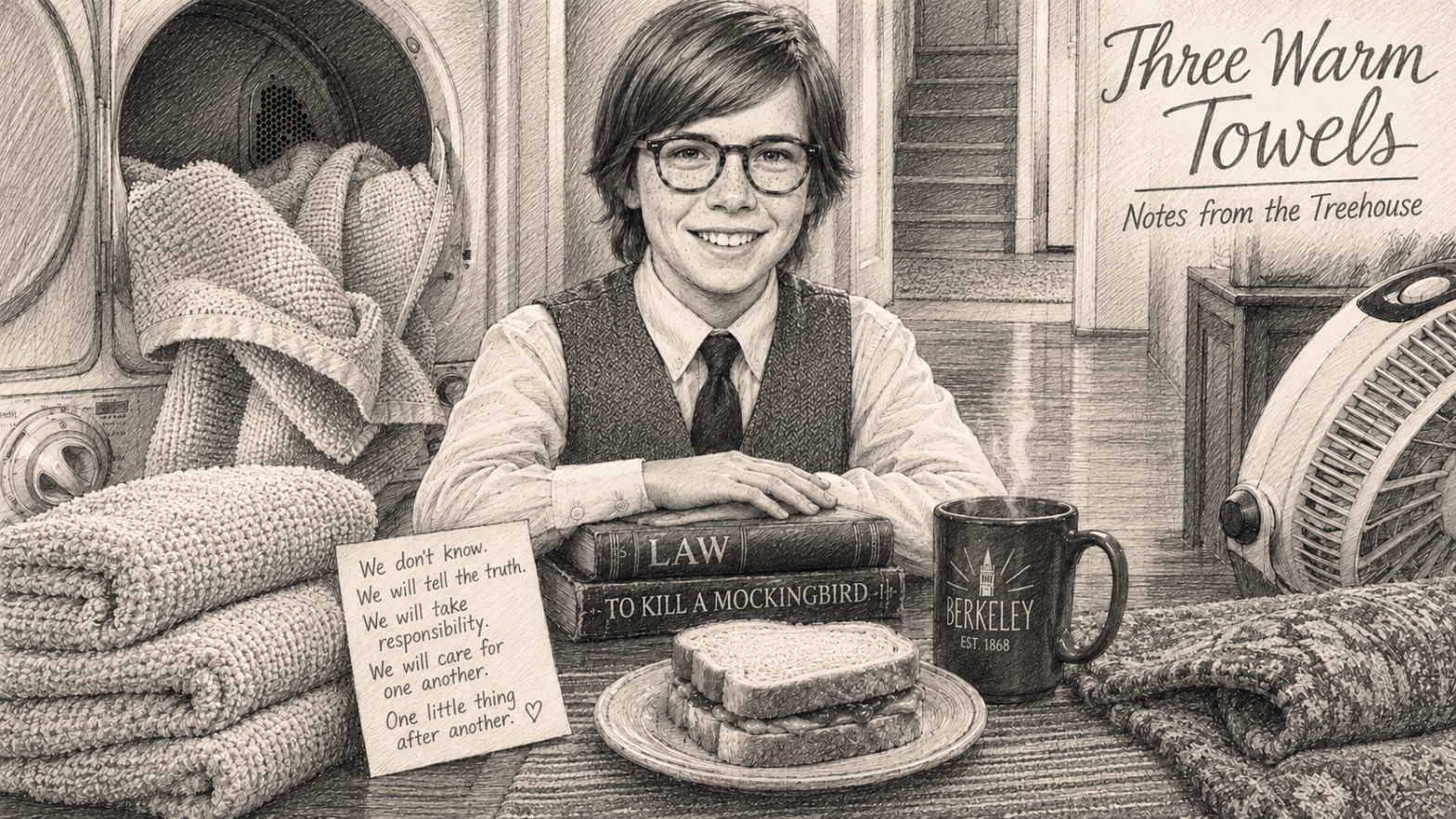
We don’t know why the faucet was running. We do know what happened next. On Justus’s Day, a flooded bedroom becomes a story about three warm towels, a little peanut butter monster, telling the truth, caring for our home, and discovering that when plans change, our course doesn’t have to.
The Little Boy Who Told the Truth

When the world asked what comes next, seven-year-old Solis answered in the language of trauma and anger. This is a story about exploitation, employment, freedom, and the little boy who once told the truth—and needed Daddy to hear him again.

